























































































Study finds these 4 areas of fitness are linked to living longer after 65
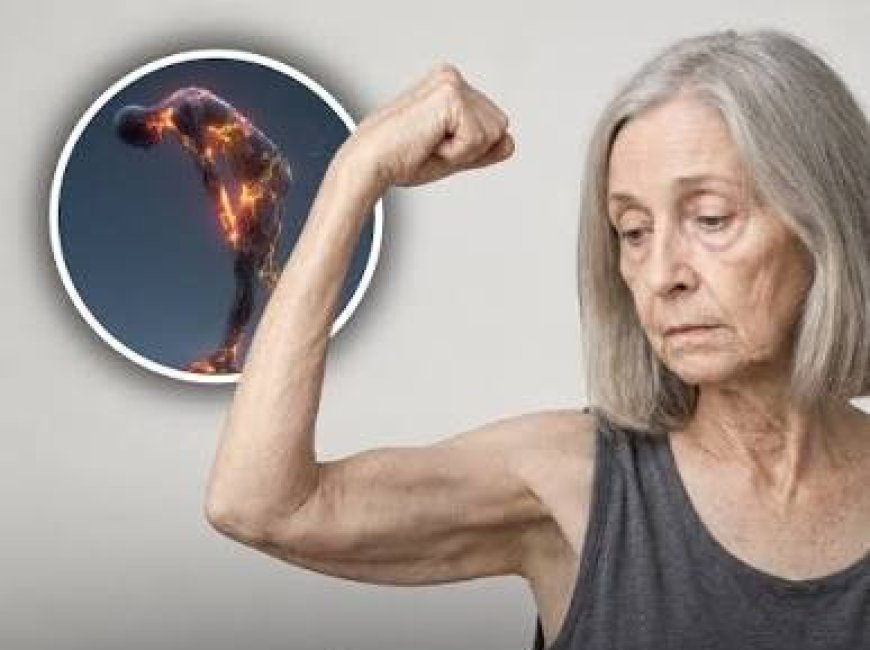
YOU don’t need expensive tests or high-tech gadgets to get a sense of how well you’re ageing. Simple fitness tests you can do at home may offer clues about your health and longevity.
A recent study found that older adults who performed better on tests measuring aspects of fitness such as strength, mobility, and flexibility had a lower risk of death.
Poor performance on these tests isn’t a reason to panic, however. It may simply indicate “that your fitness might be a bit lower,” said Domenic Angelino, MS, MPH, CSCS, a certified personal trainer and chief exercise scientist at FitCraft who was not involved in the new study.
Which Fitness Tests Did the Study Focus On?
For the study, published in JAMA Network Open, researchers set out to measure the connection between physical assessments and mortality by using objective test scores rather than self-reported experiences.
Participants included 13,000 mostly female Taiwanese adults ages 65 and older. They completed seven fitness assessments between January 2015 and November 2016 spanning four key areas of physical fitness:
Cardiorespiratory fitness: Participants completed a two-minute step test, standing in place and lifting one leg at a time.
Muscular strength: Participants performed arm curls with weights—5 pounds for women and 8 pounds for men—for 30 seconds. They also repeatedly rose from a seated position without using their arms, keeping their arms crossed over their chests.
Flexibility: In one test, participants reached both hands behind their backs. They also completed a sit-and-reach test, reaching their middle fingertips toward the toes of one extended leg while keeping the other leg bent. For both tests, overlapping fingers were recorded as a positive value, while a gap between them was recorded as a negative value.
Balance and agility: For the balance test, participants stood on one leg with their eyes open for up to 30 seconds. For the agility test, they rose from a chair, walked eight feet around a cone, returned to the chair, and sat back down. Participants completed two trials of each test; the longer time was recorded for the balance test and the shorter time counted for the agility one.
What the Study Found
A review of participant health insurance records revealed that, compared to participants in the lowest performance category, those with the highest scores had a lower risk of death from any cause over the median seven-year follow-up.
High scores in balance and agility, lower-body strength, and cardiorespiratory fitness were associated with the greatest reduction in mortality risk.
That’s likely because balance, agility, and strength play a “central role” in fall prevention and injury avoidance, said Milica McDowell, MS, DPT, C-EP, a physical therapist and exercise physiologist who was not involved with the study.
Falls are the leading cause of injury among adults ages 65 and older, and the risk of dying from a fall increases with age.
The findings also revealed some notable sex-based differences, according to Christopher Anderson, PhD, an exercise physiologist and lecturer at Torrens University in Australia, who was not affiliated with the research.
Among men, the lowest mortality risk was associated with strong performance on the balance-and-agility tests, while among women, it was associated with greater lower-body strength. Both groups had similar risks based on cardiovascular fitness.
Some Important Caveats
While the link between these measures of fitness and longevity isn’t entirely new, the study “helped reaffirm their position as valuable markers of overall health status and mortality risk,” Anderson said.
Still, it’s important to remember that, as an observational study, the research doesn’t definitively show that poor performance on these tests causes early death. It established only an association between high test scores and a lower risk of mortality.
The fitness tests also offered a snapshot of participants’ physical abilities at a single time rather than tracking changes over time, so it’s possible another factor may have influenced the results.
Plus, most participants had a BMI in the healthy range, so the findings may not apply to older adults with frailty or other chronic illnesses, Anderson noted.
Should You Try These Tests?
According to McDowell, the study’s results don’t necessarily imply that you should try these tests at home to evaluate your ageing status. Instead, they raise the possibility that these assessments could be incorporated into routine evaluations of older adults.
“Simple physical fitness tests could help us to identify community members that are at risk for falls and ultimately death related to falls,” McDowell said. “This also helps us to identify those with lower functional capacity and cardiovascular reserve, which is a notable predictor of cardiovascular events like heart attack and stroke.”
But if you’re curious, attempting the tests on your own certainly can’t hurt—provided you have a stable chair and enough space. However, Anderson recommended speaking to a physician before trying any unsupported or timed challenges if you have a history of falls, unsteadiness, or pain.
Just keep in mind that these tests aren’t replacements for regular aerobic exercise and strength training, both of which are linked to healthier ageing. Rather, as Angelino pointed out, your results can help identify areas of fitness that may be worth working on.