




































































India’s electoral credibility at a crossroads

INDIA’S Election Commission is not merely another constitutional institution. It is the custodian of the electoral process through which the people exercise their sovereign right to choose their governments. Its greatest asset, therefore, is not its administrative authority but public confidence in its neutrality and fairness.
That confidence is now facing an important test.
The Election Commission has come under intense scrutiny over the revision and verification of electoral rolls. Opposition parties and civil-society groups have alleged that the exercise could result in the exclusion of legitimate voters. The Commission, for its part, has defended the process as a lawful effort to clean and update the rolls, and has announced measures to address cases in which eligible voters may have been left out.
More troubling for public confidence are reports of disagreements within the Commission itself. The media have reported that the Chief Election Commissioner has faced repeated objections from his deputies over aspects of the voter-registration and digital systems. The Commission has said that internal differences are a normal part of institutional decision-making.
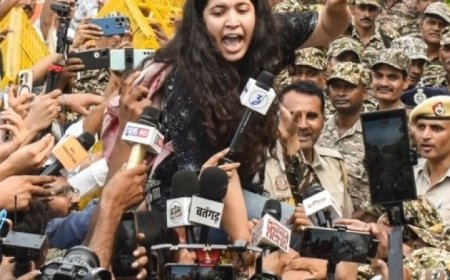
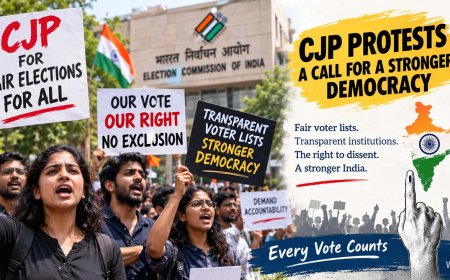
Meanwhile, protests demanding the resignation of Chief Election Commissioner Gyanesh Kumar have intensified. On October 6, opposition lawmakers were detained during a march towards the Election Commission headquarters. The allegations made by political parties remain contested, and the BJP and the Election Commission have rejected claims that the electoral process has been politically manipulated.
This is precisely why the issue should not be reduced to a confrontation between the government and the Opposition.
The credibility of an election cannot depend solely on the assurance of the institution conducting it. It must also be visible in the transparency of its procedures.
There is a larger institutional question here. In 2023, the Supreme Court directed that, until Parliament enacted a law, a committee comprising the Prime Minister, the Leader of the Opposition, and the Chief Justice of India recommend appointments to the Chief Election Commissioner and Election Commissioners.
Parliament later enacted legislation creating a selection committee comprising the Prime Minister, a Union Cabinet Minister and the Leader of the Opposition.
Whatever one's political position, reasonable citizens can ask whether the safeguards surrounding the Election Commission are sufficiently strong to inspire confidence across the political spectrum.
The answer should not be found in louder political accusations. It should be found in greater transparency, verifiable data, accessible voter-roll procedures, timely correction of genuine errors and clear explanations of controversial decisions.
The Commission itself says that its constitutional mandate is to conduct free and fair elections. That mandate carries a responsibility beyond the technical conduct of polling. It requires the institution to ensure that citizens, candidates and political parties can reasonably believe that the rules are being applied impartially.
Democracy does not collapse merely because one institution is criticised. But democratic confidence can gradually weaken when citizens begin to believe that important institutions are unwilling or unable to answer legitimate questions.
India has conducted elections on a vast scale for decades. That achievement deserves to be protected. The best way to protect it is not to dismiss every criticism as politically motivated nor to accept every allegation as fact. It is to investigate credible concerns, publish evidence and let facts withstand scrutiny.
The Election Commission must therefore recognise that public trust is not an entitlement. It is earned continuously.
At a time when political divisions are already deep, the country needs an Election Commission that is not merely independent in law but seen to be independent in practice.
For the world's largest democracy, that distinction matters enormously.