

















































From New Delhi, BRICS finds its voice — but can it find its way?
THE 18th BRICS Summit that just concluded in New Delhi will be remembered not for what it broke, but for what it managed to hold together.
In a world fracturing under trade wars, two active conflicts in West Asia and Europe, and a multilateral system gasping for credibility, India did something difficult: it got 11 disparate members to sign the same 140-point document. The New Delhi Declaration 2026, running 45 pages, is the longest BRICS declaration in a decade.
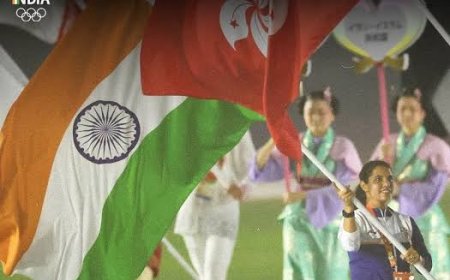
It was hosted under India's theme — "Building for Resilience, Innovation, Cooperation and Sustainability" — and closed with India handing over the BRICS chairmanship to China, which will host in 2027.
That handover itself is symbolic. The summit's success will be judged by whether what was agreed in New Delhi survives the transition to Beijing.
Five takeaways define this summit:
1. A shield against economic coercion. The Declaration voiced "serious concern over unilateral tariff and non-tariff measures" inconsistent with WTO rules, and called for restoration of a fully functioning WTO dispute settlement mechanism. It explicitly condemned unilateral economic sanctions not authorised by the UN Security Council. The message, clearly aimed at Washington's recent tariff spree, is that BRICS is a trade-defence bloc.
2. De-dollarisation without delusion. Talk of a single BRICS currency was quietly buried. Instead, leaders endorsed cross-border payments and trade settlements in local currencies and pushed the BRICS Payment Task Force to link domestic payment systems. Pragmatic, incremental, and far more workable.
3. Terrorism, named. In a diplomatic win for the host, the declaration explicitly condemned the April 2025 terror attack in Pahalgam and reaffirmed zero tolerance for cross-border terrorism, safe havens and terror financing. For a grouping that includes China and Pakistan's close partners, getting that language unanimously is not trivial.
4. Reform, or irrelevance. The call for UN Security Council expansion, with Russia and China reiterating support for India and Brazil to play a greater role, including permanent seats, and for urgent IMF and World Bank reforms to increase voting power for emerging economies, is now standard BRICS fare. But its urgency has grown.
5. A middle path on West Asia and AI. Navigating the Iran-UAE rift that had earlier blocked even a foreign ministers' statement, the leaders found consensus: an immediate Gaza ceasefire, unhindered humanitarian access, and a two-state solution based on 1967 borders. On technology, they adopted a Global South framework for inclusive, energy-efficient AI.
The New Delhi test
As Prime Minister Modi said at the close, BRICS must now move "from files to real-life impact". He is right.
The New Delhi Declaration also announced practical outcomes on logistics and supply chains, startups and infectious disease control. Yet BRICS has a history of ambitious declarations and thin implementation.
Two contradictions will haunt it:
First, can a bloc that opposes unilateral sanctions forge internal trade trust when its two largest members, India and China, have a $100+ billion trade imbalance and unresolved border tensions?
Second, can a group demanding multilateral reform become an effective multilateral actor itself? A BRICS payment system is technically feasible; political trust to use it at scale is not.
What India proved in New Delhi is that BRICS can still achieve consensus when steered patiently. As South Africa's President Ramaphosa noted, India hosted "a very successful BRICS Summit".
But consensus is not coherence. With the chair now passing to Beijing, the test will be whether BRICS remains a platform where the Global South negotiates with the world — or becomes a platform where it negotiates against it.
For now, New Delhi has given BRICS a blueprint. It is 140 points long. The next year will show how many points actually become roads.