













































































Actor Imran Khan issued Leave India Notice by Mumbai Police after protest over CEC Gyanesh Kumar
Mumbai Police issued a Leave India Notice to actor Imran Khan, nephew of Aamir Khan, directing him to leave the country by October 28 after he joined CJP protest against CEC Gyanesh KUmar.

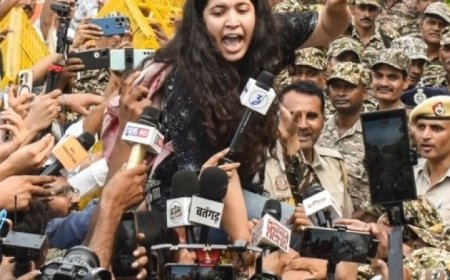
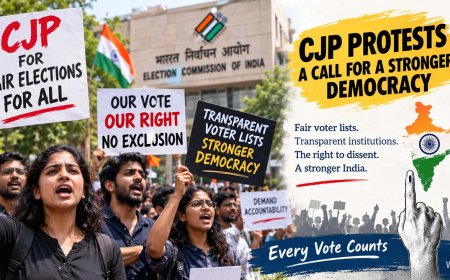
MUMBAI Police have issued a Leave India Notice (LIN) to actor Imran Khan, nephew of actor Aamir Khan, directing him to leave the country by October 28. The move comes after actor Imran Khan participated in a protest at Mumbai’s August Kranti Maidan demanding the resignation of Chief Election Commissioner Gyanesh Kumar.
Actor Imran Khan was detained by Mumbai police following the agitation.
Actor Imran Khan is an Overseas Citizen of India (OCI) cardholder.
Earlier, BJP leader Kirit Somaiya had written to Mumbai Police seeking the detention and deportation of actor Imran Khan for joining a protest supporting the Cockroach Janta Party (CJP). Somaiya alleged that Khan was a foreign citizen and questioned whether his participation violated OCI rules and visa conditions.
What did Mumbai Police Say?
According to ANI report, Mumbai Police said, "Mumbai Police have issued a Leave India Notice (LIN) to actor Imran Khan, who is the nephew of actor Aamir Khan. As per the notice, he has been told to leave the country by 28th October. Imran Khan had participated in the agitation at August Kranti Maidan in Mumbai, demanding the resignation of CEC Gyanesh Kumar. Following the protest, he was detained by the Police. Imran Khan had participated in the agitation, despite not being an Indian citizen."
Imran Khan explains why he joined the Mumbai protest
During the protest against CEC Gyanesh Kumar, actor Imran Khan said he had attended in his personal capacity and was not representing any organisation.
“I don't have demands. I am here as a citizen, as a person who lives in this city. I am here to see why freedom of movement is being restricted. Why are people's voices being suppressed? That is why I am here,” he said.
Khan also said he had no authority to make demands on behalf of others. After being detained, he posted on social media, “Apparently, I am going for a drive.” In a video recorded during his detention, he was heard asking police, “What have I done? Why am I being manhandled?”
Imran Khan’s nationality: Where was the actor born?
Born in Madison, Wisconsin, on January 13, 1983, Imran Khan is an American citizen by birth. His mother, Nuzhat Khan, belongs to the family of filmmaker Nasir Hussain and is a cousin of actor Aamir Khan.
Following his parents’ divorce during his childhood, he grew up partly in Mumbai and California before returning to India to train as an actor.
OCI card explained: What rights do foreign citizens of Indian origin have?
India introduced the Overseas Citizenship of India (OCI) scheme in 2005 for eligible people of Indian origin who hold foreign citizenship. An OCI card does not grant Indian citizenship but provides benefits such as a multiple-entry, lifelong visa, subject to applicable rules.
OCI cardholders cannot vote in Indian elections, contest parliamentary or state legislative elections, or exercise political rights reserved for Indian citizens. Their status is governed by the Citizenship Act, 1955, and related rules.
Can OCI cardholders participate in protests?
OCI cardholders are foreign nationals and do not enjoy the constitutional rights to freedom of speech and peaceful assembly under Article 19 on the same basis as Indian citizens.
However, restrictions on voting and contesting elections do not automatically make attending a peaceful protest illegal.
Whether a particular person’s participation breaches any law depends on the circumstances and applicable rules. The OCI framework also provides grounds for cancelling registration, including certain matters involving national security and sovereignty.
- When can India cancel OCI status or remove a foreign national?
- OCI cardholders remain subject to Indian immigration laws and other applicable legislation. Section 7D of the Citizenship Act sets out grounds on which OCI registration may be cancelled.
However, detention, cancellation of OCI status and removal from India are distinct legal actions. A police complaint or allegation of a visa violation does not, by itself, establish that an offence has occurred or that deportation is warranted.