










































































After 36 years, verdict looms for Antony Raju MLA in infamous undergarment tampering case
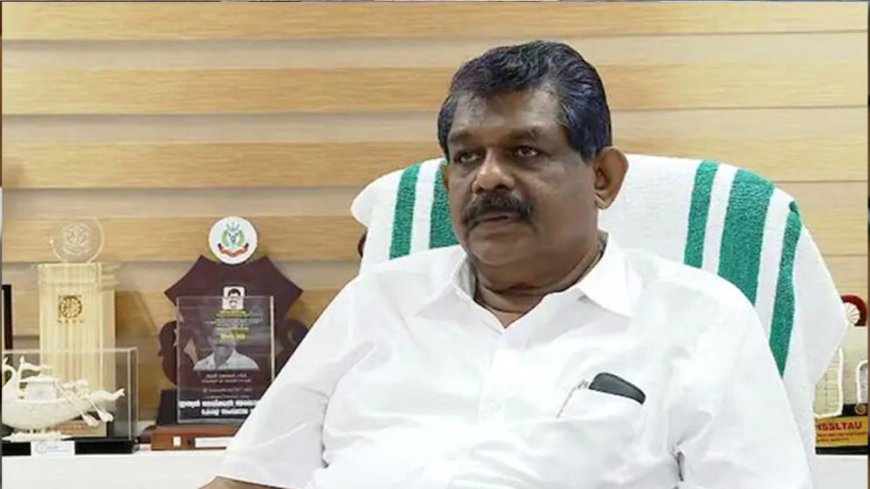
SATURDAY marks a crucial moment for Kerala’s Left Front legislator and former Transport Minister Antony Raju, as a trial court in the state capital is set to deliver its verdict in the notorious underwear evidence tampering case, bringing to a close a legal saga that has stretched over three-and-a-half decades.
The verdict comes nearly a year after the Supreme Court in November 2024 set aside a Kerala High Court order that had quashed the criminal proceedings against Raju.
The apex court restored the trial court’s decision to take cognisance of the police charge sheet and directed that the long-pending trial be completed within a year.
In compliance with the order, Raju appeared before the trial court on December 20, 2024, paving the way for the final judgment.
The case dates back to 1990, when Australian national Andrew Salvatore Cervelli was arrested at the Thiruvananthapuram airport for allegedly attempting to smuggle 61.5 grams of contraband concealed in his underwear.
Raju, then a young lawyer at the start of his political career, appeared as Cervelli’s counsel.
The trial court convicted Cervelli and sentenced him to 10 years’ imprisonment.
However, in a dramatic turn, the Kerala High Court acquitted Cervelli on appeal after finding that the underwear produced as evidence was too small to fit him, raising serious doubts about the prosecution’s case.
Cervelli subsequently returned to Australia. Years later, following information received from the Australian National Central Bureau, the investigating officer approached the High Court seeking a probe into the alleged tampering of material evidence.
This led to the registration of a criminal case in 1994 against Raju and a court clerk.
After a prolonged investigation lasting 12 years, the Assistant Commissioner of Police filed a charge sheet in 2006 before the Additional Chief Judicial Magistrate Court, Thiruvananthapuram, accusing Raju of criminal conspiracy, cheating, dishonestly inducing the delivery of property, and causing the disappearance of evidence.
Raju challenged the proceedings, arguing that the disputed underwear was in the custody of the trial court at the relevant time and that only the court could have initiated action under Section 195(1)(b) of the CrPC.
He contended that the police lacked the authority to investigate or file a charge sheet in such a case, rendering the proceedings legally untenable.
While the High Court accepted this argument, the Supreme Court disagreed, reviving the prosecution and clearing the way for the verdict that now awaits.
For Raju, the outcome could carry significant legal and political ramifications, ending a case that has followed him for most of his public life.(Agency)