











































































Has Iran activated ‘Code 100’ as tensions reach a tipping point? What could this mean?
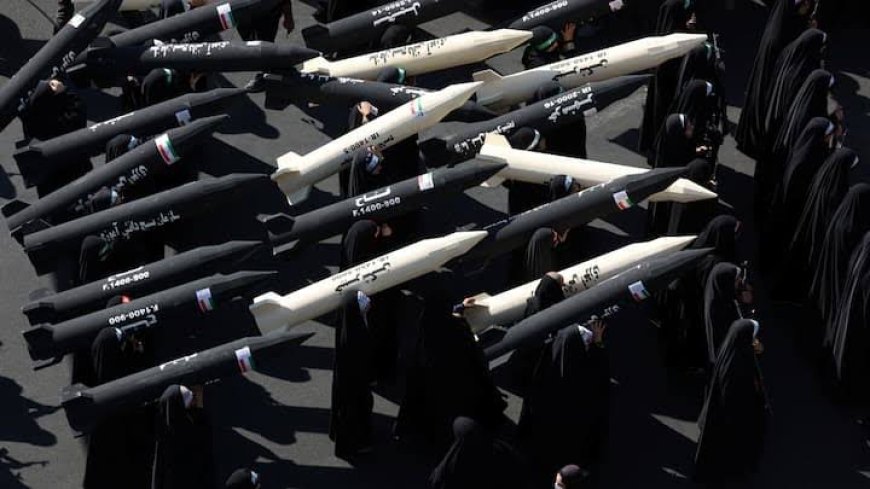
TENSIONS across West Asia seem to have escalated to critical levels following reports that the Islamic Republic of Iran has activated its highest national military alert protocol, internally designated as "Code 100."
The activation reportedly places all branches of the Iranian Armed Forces — including the Islamic Revolutionary Guard Corps (IRGC), the regular army (Artesh), air defence commands, and internal security services — on maximum operational readiness ahead of potential military action.
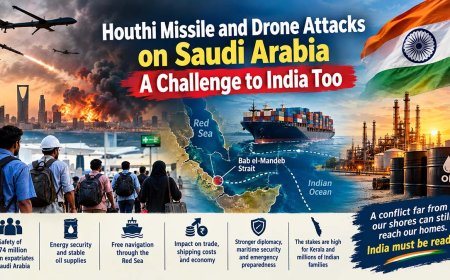
The sudden alert follows a series of developments over the weekend, headlined by a major ballistic missile and drone attack launched by Iran-aligned Houthi forces in Yemen against the Saudi capital of Riyadh.
In response, the United States State Department issued urgent security warnings across the region, advising American citizens to prepare for sudden escalation, commercial flight cancellations, and potential regional airspace closures.
The gravity of the situation was underlined when US President Donald Trump abruptly cut short his stay at Camp David to return to the White House for unannounced national security briefings.
While official Iranian state media has maintained operational silence regarding the precise terminology of "Code 100," experts and open-source intelligence (OSINT) networks claim that military movements inside Iran mirror a force posture typically reserved for imminent direct conflict.
What Is Iran's 'Code 100'?
In the military taxonomy of the Islamic Republic of Iran, Code 100 represents the supreme tier of emergency defence readiness.
Equivalent in many respects to the Western concept of DEFCON 1 or full-spectrum mobilisation, Code 100 is designed to transition the nation’s entire defence structure from a state of deterrence to immediate wartime preparation.
When Code 100 is declared or enacted across military command sectors, several high-priority directives are automatically initiated across Iran's dual-tier military system:
Underground missile silos, known as Iran’s "missile cities," and mobile launcher units managed by the IRGC Aerospace Force are moved into secondary launch positions to avoid preemptive destruction by enemy airstrikes.
Integrated air defence networks — including Russian-supplied S-300 systems alongside domestically produced Khordad-15 and Bavar-373 anti-aircraft batteries — transition to active, high-frequency tracking modes across all border regions and strategic infrastructure sites.
Under Iranian military doctrine, maximum alert triggers "Mosaic Defence" protocols. Regional IRGC commanders are granted autonomous authority to conduct asymmetric operations and counter-strikes in the event that central command communications in Tehran are disrupted or destroyed by hostile electronic warfare or precision strikes.
Security around key nuclear installations — including Natanz, Fordow, and Isfahan — is elevated to maximum readiness, accompanied by heavy GPS jamming and airborne surveillance countermeasures.
While Western military intelligence has monitored heightened activity consistent with these steps, the specific label "Code 100" has primarily surfaced through defence publications and OSINT monitoring networks tracking IRGC communications.
Independent verification of internal Iranian military codes remains inherently challenging due to strict operational security within Tehran’s defence ministry.
What could have led to Iran's Code 100?
The immediate catalyst could be the major offensive launched from Yemen by Houthi forces, who fired a barrage of ballistic missiles and long-range attack drones toward Saudi Arabia.
Saudi air defence forces confirmed that multiple incoming threats targeting the capital, Riyadh, were successfully intercepted by Patriot missile defence systems.
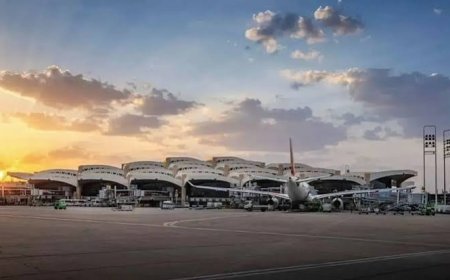
However, witnesses in the Saudi capital reported hearing series of heavy explosions, with visible smoke and flashes rising near the perimeter of King Khalid International Airport.
For Washington and its regional allies, the Houthi strike was viewed not merely as an isolated action by Yemeni rebels, but as a coordinated escalation directed or enabled by Tehran's broader "Axis of Resistance."
Military strategists note that the sophisticated long-range liquid- and solid-fuelled ballistic missiles utilised in such attacks rely on technology, components, and guidance systems supplied by Iran's IRGC Quds Force.
The timing of the strike — amid ongoing negotiations and heightened military posturing in the Persian Gulf — signalled a deliberate willingness by pro-Iranian proxy networks to hit high-value civil and economic targets within Gulf Arab states.
Saudi Arabia, which maintains a Level 3 security advisory from the US State Department, placed its eastern and central military commands on high alert, while coordinating closely with US Central Command (CENTCOM) to bolster airspace tracking across the Arabian Peninsula.
Meanwhile, as reports of the Houthi attack and Iranian military movements reached Washington, Trump abruptly altered his schedule, returning to the White House a day earlier than planned from Camp David.
Although administration officials refrained from giving an explicit public reason for the sudden scheduling change, insider accounts strongly link the president's return to urgent national security briefings regarding Iran and regional troop protection.
How is the US moving in West Asia recently?
Shortly after the Trump's arrival at the White House, the US Department of State released an expansive security advisory targeting all American personnel and citizens residing in or travelling through West Asia.
The warning highlighted several critical threat factors:
The alert explicitly warned that regional security conditions are subject to rapid and unpredictable deterioration, with heightened potential for direct kinetic conflict between state actors.
American citizens were urged to anticipate sudden flight cancellations, commercial airline rerouting, and total airspace closures throughout the Gulf region.
The State Department warned that Iranian state forces or affiliated proxy groups might target US diplomatic facilities, military bases, or commercial interests outside the immediate West Asian theatre.
Simultaneously, military flight trackers recorded notable forward movements of US airpower.
Multiple US Air Force B-1B Lancer heavy bombers were reported taking off from airbases in the United Kingdom, including RAF Fairford, manoeuvring toward forward operating locations within the USCENTCOM area of responsibility.
Naval assets, including carrier strike group deployments and guided-missile destroyers operating in the Red Sea and Arabian Sea, also adjusted positions to ensure ballistic missile defence coverage for US installations across Qatar, Bahrain, Kuwait, and the United Arab Emirates.
How have Israel and Gulf states reacted?
In Israel, military leadership conducted emergency situational assessments. The Israel Defence Forces (IDF) reinforced its multi-layered air defence array — encompassing Iron Dome, David's Sling, and Arrow 2 and Arrow 3 missile interception systems.
High-ranking Israeli defence officials, alongside Prime Minister Benjamin Netanyahu and defence leads, adjusted their itineraries to remain in continuous contact with Washington.
Israel has previously conducted precision strikes against Iranian infrastructure and proxy leadership in Syria, Lebanon, and within Iran itself.
Reports indicating that the IDF targeted key installations near Tehran in related operational windows suggest that a tacit state of active engagement is already underway, further raising the stakes of Iran’s Code 100 activation.
For the Gulf Cooperation Council (GCC) nations — particularly Saudi Arabia, the United Arab Emirates, and Qatar — the potential for direct missile or drone exchanges poses extreme risks to economic stability and civil aviation.
Civil aviation authorities across the Gulf began implementing contingency routing protocols.
Major international carriers operating out of regional hubs such as Dubai, Doha, and Abu Dhabi began preparing alternate flight corridors avoiding western Iranian and northern Iraqi airspace to mitigate the risk of accidental missile engagements.
How does Iran's alert system function under crisis?
Iran's military architecture is divided into two distinct arms:
The Artesh (Regular Armed Forces): Responsible for traditional territorial defence, air defence, and naval border patrol.
The Islamic Revolutionary Guard Corps (IRGC): An elite, ideological military organisation that commands Iran's ballistic missile arsenal, asymmetric warfare assets, offensive drone fleets, and external expeditionary operations via the Quds Force.
Under standard peacetime conditions, Iranian forces operate under baseline readiness. Escalation protocols typically follow a tiered framework:
Level 3 (routine vigilance): Standard operational posture across border outposts and naval patrols.
Level 2 (heightened deterrence): Activated during major regional exercises or when foreign military exercises occur near Iranian maritime boundaries. Missile units are fuelled, and radar coverage is expanded.
Level 1/Code 100 (maximum wartime readiness): Activated when central military leadership perceives an attack as imminent or when launching a major, coordinated military campaign. Under this protocol, civil-military coordination is enforced, cyber units initiate preemptive defence routines, and offensive missile batteries are brought to immediate launch authority.
Historically, Iran has moved its forces toward maximum alert during pivotal moments like the immediate aftermath of the 2020 strike on General Qasem Soleimani, the April and October 2024 direct missile engagements with Israel, and during the recent high-intensity US naval buildups in the Strait of Hormuz.
Has Iran actually activated Code 100?
Reports of Code 100 have spread rapidly across open-source intelligence accounts on X, Telegram channels affiliated with regional armed groups, and international news outlets.
While defence experts acknowledge that Iran’s military movements unambiguously reflect maximum readiness, official state channels in Tehran — such as Islamic Republic News Agency (IRNA) and Tasnim News Agency — have refrained from publicly confirming or naming the internal code designation.
This lack of public confirmation by Iranian state media is standard practice.
Authoritarian regimes rarely publish explicit internal alert designations to preserve operational secrecy and avoid triggering internal public panic.
However, Western intelligence assessments confirm that physical force posture shifts — such as missile movement, electronic jamming, and troop concentration — are actively occurring on the ground regardless of official nomenclature.
Compounding the uncertainty in Washington was the speculation surrounding Trump’s sudden return from Camp David which generated various theories regarding imminent US action and even rumours of a ground invasion.
However, officials pointed out that strategic decisions are dictated strictly by real-time intelligence.
What should you watch out for?
Several key indicators will determine whether the current crisis de-escalates or spirals into full-scale regional war:
Airspace NOTAMs (Notice to Airmen): Official notices issued by Iran, Saudi Arabia, or neighbouring states restricting commercial flights over specific military sectors are clear indicators of impending missile tests or active combat operations.
Diplomatic evacuations: Any decision by foreign governments to order non-essential diplomatic staff to evacuate embassies in Baghdad, Beirut, Tel Aviv, or Gulf capitals would signal that intelligence agencies assess kinetic strikes as highly probable.
Satellite imagery of missile bases: Commercial and military satellite tracking of Iran’s IRGC missile fields and underground bases will reveal whether mobile launchers remain deployed in launch positions or return to hardened underground storage.
Direct presidential and Supreme Leader addresses: Formal public addresses by the US President Donald Trump or Iran’s Supreme Leader will provide the clearest diplomatic indications of whether conflict deterrence holds or military retaliation is authorised.