












































































America’s long summer break: An opportunity to shape children, not just occupy them


By Pinto Kannampally
FOR millions of students across the United States, the arrival of summer marks the beginning of one of the longest school breaks in the world. Depending on the state and school district, schools typically close between late May and late June and reopen in August or early September, giving children nearly 75 to 100 days away from the classroom.
While children eagerly anticipate this extended vacation, many parents quietly ask the same question every year: “What should my children do during these three months?”
This question has become increasingly relevant in today’s fast-changing world. Summer vacation is no longer just about taking a break from school. It is an opportunity to build character, discover talents, strengthen family relationships, develop life skills, and prepare children for the future.
Different States, Same Challenge
School calendars vary across the United States. States such as Texas, Florida, and Georgia often begin summer vacation in late May, while New Jersey, New York, Maryland, and Pennsylvania generally dismiss students in mid-to-late June. Most schools resume classes between early August and early September. Before returning, many school districts also require updated immunization records and health documentation.
Regardless of where families live, the challenge remains the same: how can parents ensure that these 75 to 100 days become meaningful rather than merely passing time?
The Generation Gap Is Real
Today’s parents largely belong to Generation X (1965–1980) or Millennials, also known as Generation Y (1981–1996). Their children belong to Generation Z (1997–2012), Generation Alpha (2013–2024), and now the emerging Generation Beta (2025 onward).
These generations have grown up in completely different worlds.
Generation X spent childhood outdoors—playing in neighborhoods, climbing trees, riding bicycles, reading books, and interacting face-to-face with friends. Today’s children, however, are growing up surrounded by smartphones, artificial intelligence, social media, streaming platforms, online gaming, and virtual communities.
As a result, many homes experience the same conversation when summer begins.
“It’s our vacation. Please don’t control us. We’ll decide how we spend our time.”
Parents naturally struggle to balance freedom with responsibility, especially when technology occupies such a dominant place in children’s lives.
Summer in America Is Not Like Summer Back Home
For many immigrant families, particularly those from countries like India, summer vacation once meant spending weeks at grandparents’ homes, visiting uncles and aunts, playing outdoors with cousins, and creating lifelong memories.
In the United States, that lifestyle is often difficult to replicate.
Extended families frequently live hundreds or even thousands of miles apart. Most parents work full-time, and relatives may be unable—or unwilling—to assume childcare responsibilities. Strict child protection laws and liability concerns also discourage many families from caring for children outside their immediate household.
Consequently, many children spend much of their vacation indoors.
Parents Worry About More Than Boredom
Modern parenting comes with challenges previous generations never imagined.
Parents worry about excessive screen time, social media addiction, cyberbullying, dangerous online challenges, exposure to inappropriate content, substance abuse, unhealthy peer pressure, violent gaming, and risky behavior influenced by online trends.
When children spend hours alone in their rooms, parents often wonder whether they are learning, creating, gaming, or simply scrolling endlessly through social media.
These concerns are understandable in an increasingly digital world.
Summer Camps Offer Opportunities—but at a Cost
Across America, thousands of summer camps offer valuable experiences in sports, science, robotics, coding, engineering, music, art, theater, leadership, nature exploration, and community service.
Many prestigious universities and colleges also conduct Summer Enrichment Programs for middle and high school students. These programs expose students to fields such as artificial intelligence, engineering, medicine, business, law, scientific research, entrepreneurship, and public speaking.
Although these programs can be expensive, they often provide exceptional value. Students experience college campuses firsthand, interact with faculty and peers from diverse backgrounds, explore potential career paths, and gain exposure to academic environments that can influence future educational choices.
For many students, these experiences become turning points that shape their aspirations and confidence.
However, affordability remains a significant challenge. Weekly camp fees often range from $150 to well over $1,500, making participation difficult for many middle-income families, especially those with multiple children.
Valuable Experiences Don’t Always Require Expensive Programs
Meaningful summer experiences do not have to come with a high price tag.
Children can learn swimming, photography, cooking, gardening, chess, music, bicycle maintenance, financial literacy, video editing, creative writing, public speaking, coding, or a new language.
Local libraries frequently offer free reading clubs, STEM workshops, arts programs, and educational activities. Community parks provide opportunities for hiking, cycling, fishing, sports, and outdoor exploration.
Sometimes the simplest experiences become the most memorable.
Lessons from My Childhood
Whenever I think about summer vacations, I remember my own childhood.
My father was a busy man, but every night during vacation he never forgot to ask one question:
“What are the ten new English words you learned today?”
Learning those ten words became the “price” we paid for spending the day outdoors playing with friends in the fields and playgrounds. Looking back, it was almost a barter system—learning first, play afterward.
He had another rule.
If we visited relatives during vacation, we had to write a travelogue immediately after returning home. To be honest, there were times when we deliberately avoided visiting relatives simply because we didn’t want to write that report.
At the time, those requirements felt demanding.
Today, however, I realize those small habits helped develop our vocabulary, observation skills, writing ability, discipline, and communication skills. Those simple exercises may have played a greater role in shaping our careers than we ever imagined.
Sometimes it is not grand educational reforms that shape a child’s future, but small daily habits practised consistently at home.
Entrepreneurship Should Begin in Childhood
One important lesson that our education system often overlooks is entrepreneurship.
Education should not exist solely to prepare children to become employees. It should also inspire them to become innovators, problem-solvers, and job creators.
Entrepreneurial thinking begins much earlier than many people realize.
A science fair project, designing a simple mobile app, creating handmade crafts, organizing a neighborhood fundraiser, running a lemonade stand, launching a small online store, or solving a community problem can all plant the seeds of future businesses.
Many of today’s successful entrepreneurs started experimenting while they were still teenagers.
Parents and schools should encourage children not only to ask, “What job do I want?” but also, “What problem can I solve?” and “What value can I create for others?”
That mindset can change lives.
Beyond Academics
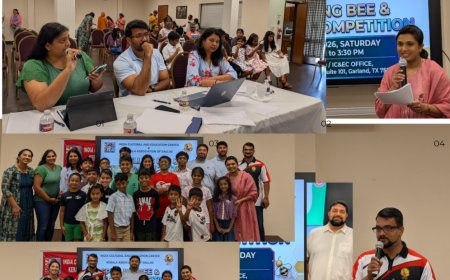
Organizations such as the World Malayalee Council (WMC) are working to create meaningful opportunities for young people through initiatives like the WMC Students Engagement Platform, which aims to make vacations enjoyable, educational, and productive through leadership development, public speaking, cultural activities, volunteerism, creative learning, and community engagement.
Similarly, service organizations including Rotary and Lions Clubs sponsor youth leadership conferences, community service projects, scholarship programs, public speaking competitions, and leadership development initiatives that help students build confidence, teamwork, and civic responsibility.
These experiences often teach lessons that cannot be found in textbooks.
Not Every Child Travels Abroad
Another reality deserves attention.
When schools reopen, one of the first questions children ask each other is:
“Where did you go during summer vacation?”
Some children excitedly talk about trips to Europe, Disney World, Hawaii, or international vacations. Others have little to share because their families simply could not afford such travel.
Unfortunately, some children feel left out, and occasionally classmates use these differences to tease or exclude others.
Parents should remind children that meaningful vacations are not measured by airline tickets or passport stamps. They are measured by experiences, relationships, personal growth, and memories.
Strengthening Families
Summer is perhaps the best season for families to reconnect.
Simple traditions such as family game nights, cooking together, movie nights, camping, hiking, picnics, volunteering, documenting family history, interviewing grandparents, visiting museums, or simply sharing meals without digital distractions can strengthen relationships that often become strained during busy school months.
Children rarely remember expensive gifts.
They remember time spent together.
Reconnecting with Heritage
For immigrant families, summer also presents an opportunity to reconnect children with their cultural roots.
Visiting ancestral homes, spending time with grandparents, learning their mother tongue, understanding family history, and experiencing cultural traditions help children develop a stronger sense of identity and belonging.
In an increasingly global society, cultural awareness is not a limitation—it is an advantage.
Making Summer Count
Summer vacation should not become three months of endless screen time, nor should it become three months of nonstop academic pressure.
The real challenge is finding the right balance between freedom and responsibility, recreation and learning, independence and guidance.
If parents can help children discover new interests, build meaningful habits, strengthen family relationships, serve their communities, explore entrepreneurship, and reconnect with their heritage, those 75 to 100 days may become some of the most valuable days of their lives.
Ultimately, the greatest gift we can give our children is not an expensive summer camp or an overseas vacation. It is our time, our guidance, our encouragement, and the opportunity to discover who they are capable of becoming.
Next week, we will explore more practical ideas, educational opportunities, leadership programs, and resources that can help families make every summer vacation both enjoyable and transformative.