






































I, Nobody: Prithviraj-Parvathy’s engrossing thriller loses itself in political theatre
Follow TNM's WhatsApp channel for news updates and story links.I, Nobody (Malayalam)There’s a broken three-seater chair at a police station in I, Nobody. Rajeevan, the film’s titular ‘nobody’ played by Prithviraj Sukumaran, attempts to sit on it while waiting through yet another visit to the station, nearly losing his balance as one of the seats gives way. His wife Meera (Parvathy Thiruvothu) makes the same mistake days later, while waiting to bail Rajeevan out in a case he has been unwittingly pulled into. Nobody fixes the chair, just as nobody seems interested in fixing the institutions that keep failing the couple throughout the film.This is the kind of understated visual detail that director Nisam Basheer and writer Sameer Abdul get right. Reuniting after Rorschach (2022), the duo builds I, Nobody around a simple but compelling premise: what happens when an ordinary man is caught in circumstances far beyond his control, and every institution he turns to only tightens the noose around him? For a good hour or so, the film answers that question with exceptional confidence.Rajeevan is a government employee living an unremarkable life, up until he ends up at the wrong place at the wrong time, and is pulled into the centre of a crime he had no part in. The screenplay is at its strongest when it trusts the audience to observe rather than be told. It patiently immerses us in Rajeevan’s growing helplessness, his endless waits at police stations, the creeping suspicion around him, and the quiet indignities of being treated like a suspect before he has even had the chance to explain himself. The film does such a convincing job of grounding Rajeevan in the everyday that we instinctively begin rooting for him, hoping that reason will eventually prevail over bureaucracy and public hysteria.In its first hour or so, I, Nobody soars on the strength of its sharp storytelling, efficiently setting up the plot while steadily building tension. The craft is evident in how some of the early sequences are staged, with Jakes Bejoy’s music doing a lot of the heavy lifting. One particularly effective sequence follows Rajeevan as suspicious glances, television cameras, and mobile phones begin to trail his every movement, turning an anonymous citizen into the object of relentless public scrutiny. Later, when Rajeevan is forced to brandish a knife against an encircling crowd, the scene briefly evokes memories of the 1989 classic Kireedam, another tragedy about an ordinary man pushed towards violence by circumstances beyond his control.Prithviraj delivers one of his more restrained performances in recent years, allowing Rajeevan’s mounting exhaustion and helplessness to emerge quietly rather than through dramatic outbursts. Parvathy too brings emotional conviction to Meera, becoming a steadying presence in the film even when the screenplay threatens to drift. Hakim Shajahan, Ashokan, Beena R Chandran, and the two child actors, Nakshatra and Ayra, among others round off a uniformly dependable supporting cast.Interestingly, the film also has a sly running joke about a digital news outlet called ‘Palanadan Malayali’, fronted by one ‘Palanadan Varghese’ — a thinly disguised jab at a certain real Kerala portal, infamous for its outrage-driven journalism.But all that said, at just under three hours, I, Nobody simply runs too long, and the cracks start showing well before the end. Threads that seemed purposeful early on stop making sense. Ideas about crowd mentality and public complicity, which the film handles well early on, get buried under plotting that takes bigger and bigger swings, most of which don’t land. Even the otherwise slick action choreography occasionally undermines the grounded realism established earlier. An effectively staged elevator fight, for instance, has Rajeevan struggling against two opponents he should realistically be able to overpower, only for later sequences to ask viewers to accept this ‘nobody’ taking on far greater odds with relative ease. It’s a small thing, but it’s symptomatic of a film that stopped checking its own internal logic.The bigger issue, however, is a tonal swerve nobody asked for. Somewhere past the midpoint, the film abandons its personal, human story and turns into something closer to political theatre, complete with a chief minister character whose mannerisms will be instantly recognisable to anyone who’s followed Kerala politics this past decade. While the parody is unmistakable, it proves surprisingly unimaginative, replacing the film’s nuanced observations with an on-the-nose climax that feels more like a copout than an earned conclusion.It’s also in this stretch that the film makes its most questionable choice. Without giving away how it’s staged, I, Nobody introduces a fictional MLA accused of sexual assault, but the parallels to a real, still-unfolding case involving a (then) sitting MLA and the women who have accused him are difficult to miss. The film folds this allusion into its plo
Follow TNM's WhatsApp channel for news updates and story links.
I, Nobody (Malayalam)
THERE'S a broken three-seater chair at a police station in I, Nobody. Rajeevan, the film’s titular ‘nobody’ played by Prithviraj Sukumaran, attempts to sit on it while waiting through yet another visit to the station, nearly losing his balance as one of the seats gives way.
His wife Meera (Parvathy Thiruvothu) makes the same mistake days later, while waiting to bail Rajeevan out in a case he has been unwittingly pulled into. Nobody fixes the chair, just as nobody seems interested in fixing the institutions that keep failing the couple throughout the film.
This is the kind of understated visual detail that director Nisam Basheer and writer Sameer Abdul get right. Reuniting after Rorschach (2022), the duo builds I, Nobody around a simple but compelling premise: what happens when an ordinary man is caught in circumstances far beyond his control, and every institution he turns to only tightens the noose around him? For a good hour or so, the film answers that question with exceptional confidence.
Rajeevan is a government employee living an unremarkable life, up until he ends up at the wrong place at the wrong time, and is pulled into the centre of a crime he had no part in. The screenplay is at its strongest when it trusts the audience to observe rather than be told.
It patiently immerses us in Rajeevan’s growing helplessness, his endless waits at police stations, the creeping suspicion around him, and the quiet indignities of being treated like a suspect before he has even had the chance to explain himself.
The film does such a convincing job of grounding Rajeevan in the everyday that we instinctively begin rooting for him, hoping that reason will eventually prevail over bureaucracy and public hysteria.
In its first hour or so, I, Nobody soars on the strength of its sharp storytelling, efficiently setting up the plot while steadily building tension. The craft is evident in how some of the early sequences are staged, with Jakes Bejoy’s music doing a lot of the heavy lifting.
One particularly effective sequence follows Rajeevan as suspicious glances, television cameras, and mobile phones begin to trail his every movement, turning an anonymous citizen into the object of relentless public scrutiny.
Later, when Rajeevan is forced to brandish a knife against an encircling crowd, the scene briefly evokes memories of the 1989 classic Kireedam, another tragedy about an ordinary man pushed towards violence by circumstances beyond his control.
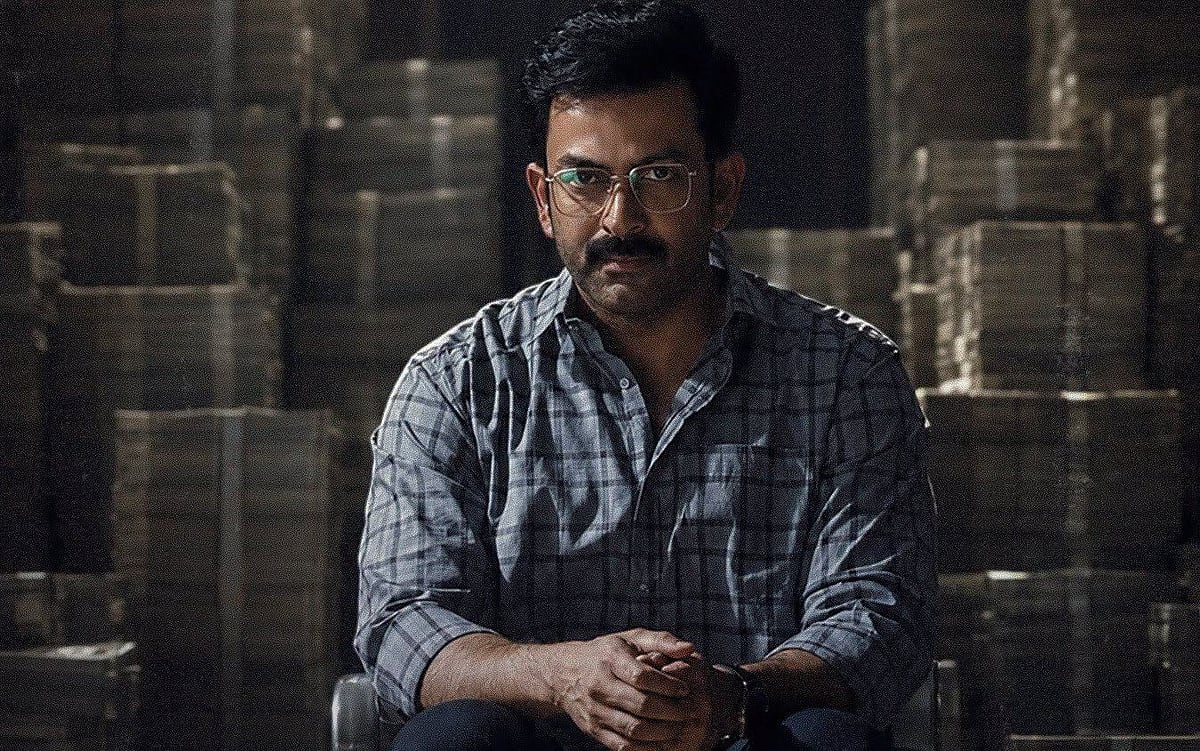
Prithviraj delivers one of his more restrained performances in recent years, allowing Rajeevan’s mounting exhaustion and helplessness to emerge quietly rather than through dramatic outbursts.
Parvathy too brings emotional conviction to Meera, becoming a steadying presence in the film even when the screenplay threatens to drift. Hakim Shajahan, Ashokan, Beena R Chandran, and the two child actors, Nakshatra and Ayra, among others round off a uniformly dependable supporting cast.
Interestingly, the film also has a sly running joke about a digital news outlet called ‘Palanadan Malayali’, fronted by one ‘Palanadan Varghese’ — a thinly disguised jab at a certain real Kerala portal, infamous for its outrage-driven journalism.
But all that said, at just under three hours, I, Nobody simply runs too long, and the cracks start showing well before the end. Threads that seemed purposeful early on stop making sense. Ideas about crowd mentality and public complicity, which the film handles well early on, get buried under plotting that takes bigger and bigger swings, most of which don’t land.
Even the otherwise slick action choreography occasionally undermines the grounded realism established earlier. An effectively staged elevator fight, for instance, has Rajeevan struggling against two opponents he should realistically be able to overpower, only for later sequences to ask viewers to accept this ‘nobody’ taking on far greater odds with relative ease. It’s a small thing, but it’s symptomatic of a film that stopped checking its own internal logic.
The bigger issue, however, is a tonal swerve nobody asked for. Somewhere past the midpoint, the film abandons its personal, human story and turns into something closer to political theatre, complete with a chief minister character whose mannerisms will be instantly recognisable to anyone who’s followed Kerala politics this past decade. While the parody is unmistakable, it proves surprisingly unimaginative, replacing the film’s nuanced observations with an on-the-nose climax that feels more like a copout than an earned conclusion.
It’s also in this stretch that the film makes its most questionable choice. Without giving away how it’s staged, I, Nobody introduces a fictional MLA accused of sexual assault, but the parallels to a real, still-unfolding case involving a (then) sitting MLA and the women who have accused him are difficult to miss.
The film folds this allusion into its plot as a device to make a point about media manipulation and political optics. Whatever it is trying to say about how power controls a news cycle, drawing so heavily from an ongoing case involving real complainants to make that point leaves a genuinely sour aftertaste. It is an uncomfortable creative choice in a film that otherwise has something thoughtful to say about how institutions fail ordinary people.
This is also ultimately what makes I, Nobody a somewhat frustrating watch. Nisam Basheer and Sameer Abdul set up an intelligent, engrossing thriller about broken institutions, sensationalist media, and the vulnerability of the ordinary citizen, only to lose sight of that intimate story in pursuit of something grander that ultimately proves far less compelling.
Disclaimer: This review was not paid for or commissioned by anyone associated with the film. Neither TNM nor any of its reviewers have any sort of business relationship with the film’s producers or any other members of its cast and crew.