










































































Indian workers in UAE navigate job risks as US-Israel war on Iran intensifies
Home deliveries taking longer than usual, GPS navigation leading drivers onto entirely different routes.These, however, could be the least of the problems residents of Abu Dhabi, the capital of the United Arab Emirates, are facing now, in the middle of the US-Israel-Iran war. The confusion, however, was not accidental. It is part of the several strategies adopted by the UAE to protect its sensitive locations. As per a media report, techniques such as GPS jamming or GPS spoofing, used for security reasons, give inaccurate or misleading locations in the app. The Indian diaspora in the countries of the Gulf Cooperation Council (GCC), caught in the middle of the war zone since Iran began targeting civilian areas, have bigger concerns to deal with.Regions like Dubai and Abu Dhabi which were considered as safe, tax-free havens suddenly became the centre of the new conflict since it began on February 28. Some UAE-based firms have provided work from home options, but uncertainty in the job sector is looming large over Indian expats. While several British and US nationals have left the country due to safety concerns, Indians have not considered the option of leaving even temporarily. Many expats that TNM spoke to said they were initially worried about the attack, but normalcy returned to life after successful interception of drones and missiles. According to media reports, UAE has successfully intercepted 278 ballistic missiles, 15 cruise missiles and 1540 UAVs till March 12. The region witnessed six deaths, including those of two pilots from the UAE armed forces, and 141 persons were injured. Though the capital region experienced turmoil in the initial days, most emirates are witnessing air attacks now. Employees of a logistics and a vehicle dealer firm TNM spoke to said their companies announced a work from home option, but with a payment of only 15 days in the month. “I haven't decided whether to stay here or go home. This mail came on March 11. This is like a forced annual leave, that too with just half the salary. So far the firm has announced its plan for March. It is still unknown what happens from next month,” said a woman employee of a Dubai-based logistic firm. Several multi-national firms with robust business continuity plans have asked their employees to take measures to send their families from the UAE as an immediate option. Some have provided work from home options, allowing employees to leave for their home countries. However, small and medium firms are still in the process of figuring out. A large chunk of workers still go to the offices regularly. Even employees of reputed MNCs, who are not facing any imminent crisis and are given flexible work options, are not planning to leave. “Several employees from Western countries have left. This could be an Indian trait, leaving our company at the time of crisis is the last thing we could think of. Also we have never thought of going back home as there is no clarity over the current situation,” said an Abu Dhabi resident hailing from Kerala. Leading financial firm Citibank has closed its branches in the UAE and has asked its employees to work from home. Other firms like Standard Chartered and HSBC too have closed branches in Dubai and Qatar respectively. The move came following threats to target economic and financial institutions backed by the US and Israel. Fear of sharing informationMany Non Resident Indians (NRI) expressed fear in disclosing information to the media after UAE authorities issued a warning against clicking or sharing pictures of drone / missile attacks or sharing unverified information. A UAE resident said on condition of anonymity that authorities have begun random inspection of phones, causing fear among them. A British tourist was reportedly detained for recording footage of a drone attack in Bur Dubai on March 9. The media reported the arrest of 45 persons in Abu Dhabi for filming drone attacks and sharing pictures of sensitive areas. The UAE authorities have referred for urgent trial of around 10 expats, including two Indians, for sharing interception videos. If found guilty, they will have to face a minimum jail term of one year or a fine of Dh 100,000, which is around Rs 25 lakh. Radha Sterling, CEO of ‘Detained Dubai’, a firm which assists foreign nationals with legal processes in UAE, said on social media that 21 persons were charged under UAE cybercrime laws since the start of war. As per her latest post, a Dubai university student was detained for sharing a video of a missile on his private family group. “People fear disclosing information due to the threat of fines and detention. No one wanted to take risks at the time of crisis. Over-the-top coverage by Indian channels makes matters worse,” an NRI hailing from Kerala opined. Despite such strict measures, many expats said that they experience a sense of safety and security under the UAE government. “Initially, we were scared. Now the alerts, drones and interceptors became pa
HOME deliveries taking longer than usual, GPS navigation leading drivers onto entirely different routes.These, however, could be the least of the problems residents of Abu Dhabi, the capital of the United Arab Emirates, are facing now, in the middle of the US-Israel-Iran war.
The confusion, however, was not accidental. It is part of the several strategies adopted by the UAE to protect its sensitive locations.
As per a media report, techniques such as GPS jamming or GPS spoofing, used for security reasons, give inaccurate or misleading locations in the app.
The Indian diaspora in the countries of the Gulf Cooperation Council (GCC), caught in the middle of the war zone since Iran began targeting civilian areas, have bigger concerns to deal with.
Regions like Dubai and Abu Dhabi which were considered as safe, tax-free havens suddenly became the centre of the new conflict since it began on February 28.
Some UAE-based firms have provided work from home options, but uncertainty in the job sector is looming large over Indian expats.
While several British and US nationals have left the country due to safety concerns, Indians have not considered the option of leaving even temporarily.
Many expats that TNM spoke to said they were initially worried about the attack, but normalcy returned to life after successful interception of drones and missiles.
According to media reports, UAE has successfully intercepted 278 ballistic missiles, 15 cruise missiles and 1540 UAVs till March 12.
The region witnessed six deaths, including those of two pilots from the UAE armed forces, and 141 persons were injured. Though the capital region experienced turmoil in the initial days, most emirates are witnessing air attacks now.
Employees of a logistics and a vehicle dealer firm TNM spoke to said their companies announced a work from home option, but with a payment of only 15 days in the month.
“I haven't decided whether to stay here or go home. This mail came on March 11. This is like a forced annual leave, that too with just half the salary. So far the firm has announced its plan for March. It is still unknown what happens from next month,” said a woman employee of a Dubai-based logistic firm.
Several multi-national firms with robust business continuity plans have asked their employees to take measures to send their families from the UAE as an immediate option.
Some have provided work from home options, allowing employees to leave for their home countries. However, small and medium firms are still in the process of figuring out. A large chunk of workers still go to the offices regularly.
Even employees of reputed MNCs, who are not facing any imminent crisis and are given flexible work options, are not planning to leave.
“Several employees from Western countries have left. This could be an Indian trait, leaving our company at the time of crisis is the last thing we could think of. Also we have never thought of going back home as there is no clarity over the current situation,” said an Abu Dhabi resident hailing from Kerala.
Leading financial firm Citibank has closed its branches in the UAE and has asked its employees to work from home. Other firms like Standard Chartered and HSBC too have closed branches in Dubai and Qatar respectively. The move came following threats to target economic and financial institutions backed by the US and Israel.
Fear of sharing information
Many Non Resident Indians (NRI) expressed fear in disclosing information to the media after UAE authorities issued a warning against clicking or sharing pictures of drone / missile attacks or sharing unverified information.
A UAE resident said on condition of anonymity that authorities have begun random inspection of phones, causing fear among them.
A British tourist was reportedly detained for recording footage of a drone attack in Bur Dubai on March 9. The media reported the arrest of 45 persons in Abu Dhabi for filming drone attacks and sharing pictures of sensitive areas.
The UAE authorities have referred for urgent trial of around 10 expats, including two Indians, for sharing interception videos. If found guilty, they will have to face a minimum jail term of one year or a fine of Dh 100,000, which is around Rs 25 lakh.
Radha Sterling, CEO of ‘Detained Dubai’, a firm which assists foreign nationals with legal processes in UAE, said on social media that 21 persons were charged under UAE cybercrime laws since the start of war. As per her latest post, a Dubai university student was detained for sharing a video of a missile on his private family group.
“People fear disclosing information due to the threat of fines and detention. No one wanted to take risks at the time of crisis. Over-the-top coverage by Indian channels makes matters worse,” an NRI hailing from Kerala opined.
Despite such strict measures, many expats said that they experience a sense of safety and security under the UAE government. “Initially, we were scared. Now the alerts, drones and interceptors became part of the routine.
Also the authorities’ assurance to take care of the residents gives a sense of safety. Despite the crisis, there are no complaints of hoarding or price rise. There will be strict action, including hefty fines, for such actions,” an Abu Dhabi resident said.
Shaji Narayanan, a senior journalist working with a newspaper in Doha, echoed a similar sentiment. According to him, the initial worry over the war waned soon after seeing the government’s capability in handling the situation.
“Concerns eased after signs of the government's ability to manage the situation, both militarily and socially, became clear. For example, efforts to ensure stable food prices, establish an effective warning system, and steps to control misinformation are noteworthy,” he said.
Attacks in civilian areas
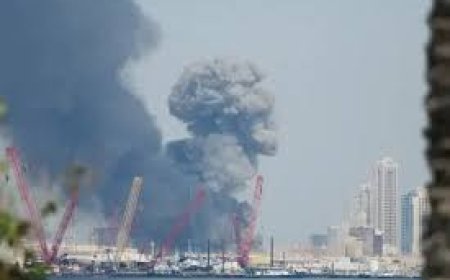
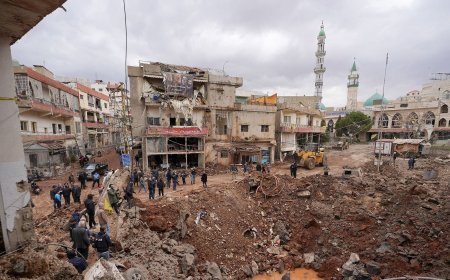
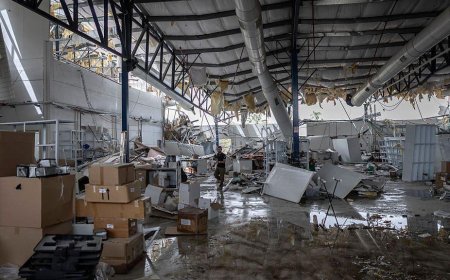
As per reports, prominent airports in several GCCs faced drone and missile attacks in the past few days. Though multiple persons were injured in these attacks, the full details are yet to come out. The incidents have global impact as most of these airports are transit locations for long haul passengers.
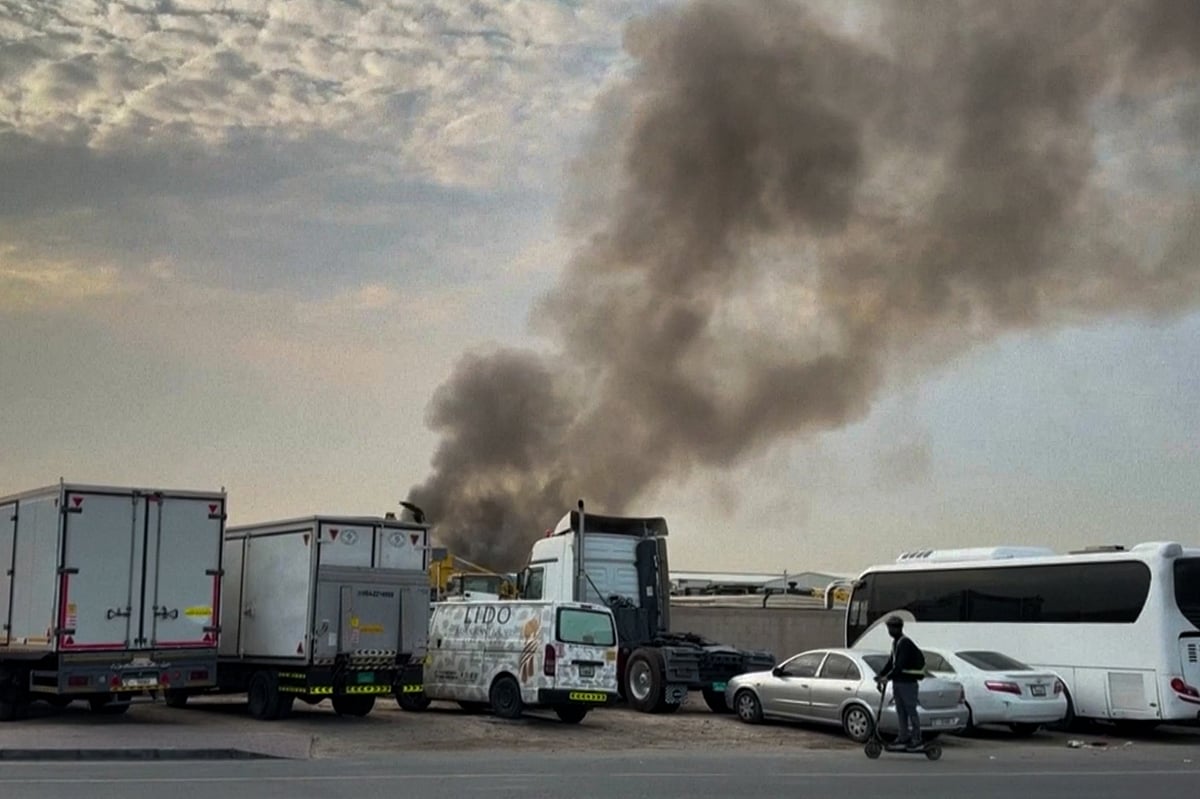
On March 13, UAE’s main artery Sheikh Zayed Road witnessed plumes of smoke, after facades of some buildings were hit by debris. Two people were killed after drone debris fell on them in Oman. Most of the ports in UAE have faced drone and missile attacks, the latest one being on the Salalah port in Oman on March 12.
A Bahrain resident hailing from Kerala said the alert message on his phone was keeping him awake in the night. He said that reports of casualties, including the death of a Bahrain national woman recently, is causing concern.
“In Bahrain, we are facing a unique situation. Apart from the Iranian airstrikes, the region is facing an internal conflict because of the high population of Iranian nationals settled in the region. They had recently organised protests over the killing of Iranian leader Ayatollah Khamenei,” he said.
Iran’s civilian targets included a water desalination plant in Bahrain. As per reports, this happened after an alleged US attack on a desalination plant in Qeshm island in the Strait of Hormuz. “So far there has not been a scarcity of essentials. However, attacks on ports might lead to shortage of food and other commodities,” he said.
Mohammed Ali (name changed), working with a food delivery start-up company in Dubai, said that the situation is not as bad as it is being portrayed in the Indian media channels.
“The government is providing assistance and helping out people who are in need. From time to time, the Dubai government informs people by sending out alerts to take shelter and once the threat is minimised, we would receive messages from the authorities when it’s normal,” he said.
Those working in the gas and petroleum industry have had their work halted due to the ongoing tensions. There is speculation that their salaries may be put on hold or they may lose their jobs. Nothing is certain as of now, but this has caused anxiety among migrant workers.
The biggest problem that the Indian population living in the UAE is facing right now is finding a smaller house. The fear of layoffs and economic distress is forcing people to take adequate precautions. “Those living in 2BHK apartments are looking out for 1BHK. Those living in 1BHK are planning to move into studio apartments. This is the major issue here,”
Akram, a Chennai-based man who is working with a petroleum company in Qatar, is settled with his family in Doha, close to Al Udeid air base, one of the largest United States military establishments in the Middle East.
The ongoing conflict has left Akram and his family in a state of anxiety. Speaking to TNM, Akram’s wife Tabassum said that the situation is somewhat manageable. They are not allowed to leave their residence as missiles are being continuously intercepted. “Even if you are inside your house, the impact can be felt. It’s terrifying,” she said.
Akram said anxious moments were felt after the attack started on Saturday, March 7. “Our work was stopped after military strikes on Qatar Energy’s LNG operating facilities. Employees and labourers who were working in all the oil facilities were evacuated from sea, land, offshore and onshore rigs. Around 4,500 people were evacuated from these facilities. Those working in offshore oil rigs were evacuated through large vessels,” he said.
Tabassum narrated her ordeal as her husband was stuck in one of these facilities (oil rigs), which could be potential targets. “He was stuck there for 4 days. There was no network and I was unable to contact him,” she said.
In Qatar, people from Western countries are being asked to leave to ensure their safety. “If someone wants to return to India from here, as of now the only option available here is to apply for a visa for Saudi, book tickets and take a bus to Riyadh and take off from Riyadh or Jeddah. Some people have left using this route.”
Air fare rises
Amid the crisis, several airline companies have fully or partially cancelled their operations to the GCC. Only airlines, such as Air Arabia and Emirates, are operating in the sector, that too with limited services. The air fare too has seen a sharp increase.
“My return flight from Kerala to Dubai was charged at Dh 600. It was cancelled due to the conflict. Now the price is over Dh 1400 (around Rs 35,000)” said a UAE resident from Kerala.
On March 13, IndiGo announced that it would levy fuel charges ranging from Rs 425 to Rs 2,300 on domestic and international flights due to the increase in fuel prices.
In the press statement announcing the hike, IndiGo stated that there was over 85% increase in fuel price. There is a Rs 900 increase for flights to West Asia while Rs 2,300 is the fuel charge for European countries.