















































.jpg?#)



A guide to the 4 minerals shaping the world’s energy future
IN the decade since the world pledged to combat climate change under the Paris Agreement, global energy systems have undergone a revolution. The United States experienced a sixfold increase in solar power, and wind power more than doubled. And there are now more than 40 million electric vehicles on the roads worldwide.
But ending our dependence on fossil fuels and adopting this new, greener technology requires a whole lot of metal.
It takes lithium and cobalt to build the batteries that power electric vehicles and e-bikes, nickel and rare earth elements to construct solar panels and wind turbines, and copper to build the wires that move renewable energy from the sunny and windy places it’s generated to the cities and factories where it’s most needed.
The faster we move away from fossil fuels, the more desperately we will need these metals and other so-called critical minerals. In an ambitious energy transition, global demand for them will quadruple by 2040, according to the International Energy Agency. That means digging vast new open-pit mines, building powerful new refineries to distill raw ore, and opening new factories to manufacture batteries and turbines.
Just as the 20th century was defined by the geography of oil, the 21st century could be defined by the new geography of metal — in particular by snarled industrial supply lines that often flow from the developing world to the developed world and back again.
On his first day in office, U.S. President Donald Trump signed two separate executive orders that mentioned so-called critical minerals, saying the country was mining them at a pace “far too inadequate to meet our nation’s needs.” He has since tried to fast-track permitting for domestic mining projects, while at the same time looking abroad for more supply — including in Greenland, which he has said should be under U.S. control, and in Ukraine, where he has attempted to secure mineral access in exchange for protection against Russia.
Though Trump is taking every step he can to stymie the development of renewable energy, his fixation on these resources reflects an undeniable reality: The world’s growing need for critical minerals has huge implications for geopolitics, as well as climate and environmental policy.
Below, Grist demystifies critical minerals and the race to extract them. We outline the ways the world currently mines, refines, and deploys a few key metals that are essential for renewable energy and electric vehicles. Bringing order to the world’s mineral chaos will be no easy task, but the fight against climate change depends on getting it right.
The minerals
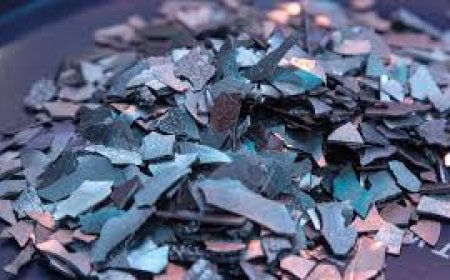
A renewable energy product, like an electric-vehicle battery or solar panel, contains dozens of minerals. Many of them aren’t difficult to find: Copper, for instance, which is a primary component in transmission wires, has been mass-produced around the world for more than 100 years. But many others needed for the technology are far more difficult to access, and governments and companies around the world are now rushing to shore up their supplies. Here’s the state of play for four of the minerals that are most critical to the energy transition: lithium, cobalt, and nickel, which are key components of energy-storing batteries, and rare earth elements, which help power wind turbines.
Hover over the gold circles below to see which minerals power modern society.
Illustration of a town scene with wind turbines, buildings, electric cars, people, electric bikes, and power lines.
Aluminum
Magnetic rare earth elements — a class of elements that are essential components in electric motors — include neodymium, praseodymium, dysprosium, and terbium.
LITHIUM
Lithium is essential to clean technology because it can contain huge amounts of energy, making it the ideal basis for the batteries that juice up EVs and store the power produced by solar and wind. While the element is somewhat common around the world, it’s only economical to mine it in a few places where deposits are large and easy to access.
Australia is by far the world’s largest producer of lithium, accounting for around 50 per cent of global supply. In 2021, the nation’s massive Greenbushes mine produced around one-fifth of the world’s raw lithium. Miners have been digging it in former tin quarries on the country’s southwest coast since the 1980s, well before it was a keystone of the energy transition, when the metal was mostly used for nuclear technology and to make items like heat-resistant glass.
The country now sees lithium as a key substitute for threatened exports like coal.
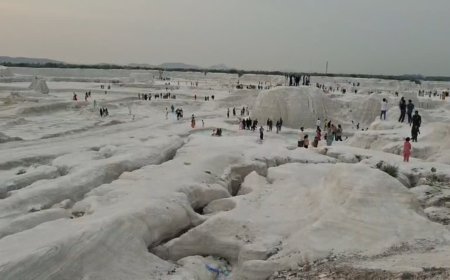
Bolivia, Argentina, and Chile make up the so-called “lithium triangle.” These three South American countries produce a relatively small amount of the mineral now, but together they hold well over half of the world’s proven lithium reserves. Unlike the hard rock resources in Australia, the deposits in Bolivia sit in the massive Uyuni salt flat, an ecological marvel that is also home to the Aymara, an Indigenous people.
The left-wing government of former president Evo Morales worked to transform Bolivia into a global leader in lithium production and redistribute the benefits — a plan his administration called “¡100 percent Estatal!” Current president Luis Arce has continued to champion the sector’s development. But residents in Uyuni have long protested the idea, saying they’re concerned about the environmental impacts of mining on the playa.
The United States’ ambitions to create its own lithium supply chain rest to a large extent on a remote desert in northern Nevada. The area, known as Thacker Pass, is home to one of the world’s largest known lithium deposits, estimated to contain more than 40 million recoverable tons of the metal. A company called Lithium Americas is now constructing what will be the nation’s largest lithium mine there. The project received support from both the Biden and first Trump administrations, as well as more than $600 million in financial commitments from General Motors, which has sole rights to the first mineral product from the mine. It too generated protests and lawsuits from Indigenous tribes as well as local ranchers — efforts that were ultimately unsuccessful.
COBALT
The Democratic Republic of the Congo, or DRC, dominates world production of cobalt, another critical ingredient of lithium-ion batteries. The DRC makes up 80 percent of global cobalt output, but China either owns or is a major stakeholder in the vast majority of the country’s mineral infrastructure, which has grown rapidly in recent years.
Mining operations have forced thousands of people out of their homes, polluted the air with toxic cobalt dust, and dumped poisonous tailings into rivers and streams. The mines rely extensively on human trafficking and child labor, according to human rights groups.
A key dilemma is that no other country contains comparable reserves of cobalt. The DRC contains more than half of the world’s untapped land supply of the mineral, twice as much as Australia, which is next highest on the list.
The other countries with known deposits, like Russia and Canada, only have enough proven supply to provide around one year of world cobalt production at current rates. Assuming that there are no major discoveries in other countries over the next few years, the path to a successful energy transition will likely run through the DRC.
International waters, however, are another thing. The Clarion-Clipperton Zone, a wide stretch of the Pacific Ocean between Hawaiʻi and Mexico, contains what are perhaps the world’s most robust reserves of cobalt.
The region’s seabed, more than 10,000 feet below the surface, contains an estimated 50 million tons of cobalt, at least several times more than what can be found in the DRC. But even if the depth wasn’t a factor, dozens of countries have called for a ban on deep-sea mining, and members of the International Seabed Authority last year voted in a leader who was critical of the practice.
NICKEL
Nickel is the Swiss army knife of energy transition minerals: It’s used not only in EV batteries but also in solar panels, wind turbines, and even in the production of green hydrogen.
Thankfully, supplies of the metal are far more distributed around the world than is the case for lithium and cobalt. All kinds of countries, from Russia to Australia to Brazil to Indonesia, boast huge nickel resources — and even some small island states like the French overseas territory of New Caledonia have gobs of the metal as well. Because nickel has long been used in stainless steel and other alloys, there are far more mature and production-ready mines than there are for cobalt.
Indonesia, the world’s fourth-most populous country, currently accounts for half of global nickel production. The country has been mining the metal since it was a Dutch colony at the turn of the 20th century. Here, as in other countries, the global nature of the supply chain has proven politically contentious: The country depends on China to refine its raw nickel ore and invest in its mining infrastructure. In an effort to reduce this dependence, Indonesia imposed a ban on the export of raw nickel ore in 2020, forcing producers to invest in smelting resources in the country.
Brazil is home to among the largest untapped nickel deposits in the world, but political turmoil has made the future of this resource uncertain. Much like the United States, the country has swung between left-wing and right-wing leaders with radically different environmental policies. The current president, Luiz Inácio Lula da Silva, has positioned himself as a defender of the Amazon rainforest and an environmental champion, unlike his conservative predecessor — but he seems to be warming to the industrial giant Vale, which hopes to invest billions of dollars in expanded copper and nickel mining.
RARE EARTHS
So-called rare earth elements are essential for modern wind power. They are major components of the ultra-powerful and long-lasting magnets through which turbines generate energy. While the substances aren’t quite as rare as we thought when we gave them that name, well over half of global production is concentrated in China, which has a stranglehold over the rare earth supply chain.
The country has been mining the elements for decades, including in massive open-pit mines in inland areas such as the autonomous region of Inner Mongolia. In Jiangxi province, which had a rare earth boom in the 1990s during the first tech boom, mining operations denuded forests and left behind contaminated wastewater pits.
China is far from the only country with a significant share of rare earth metals, but the other countries that have huge stores of the minerals have yet to extract much of them. Take Vietnam, for instance: The country has 22 million tons of rare earths underground, about 20 per cent of the world’s known supply and enough to build millions of wind turbines, but it produced a relatively microscopic 600 tons in 2023 — the very same year it entered into an agreement with the U.S. to develop the sector. With corruption scandals implicating top executives at domestic mining authorities, Vietnam is not poised to emerge as a serious alternative to the Chinese rare earth supply in the near future.
President Donald Trump appears to be serious about trying to seize Greenland from Denmark. The apparent aim of Trump’s recent diplomatic onslaught over the far northern territory is to secure a strategic military outpost in the Arctic, but the purchase would also have the added effect of giving the United States access to one of the world’s largest untapped reserves of rare earth metals. The European Union and China have also eyed these reserves.