






































































.jpg?#)









Celebrating women for her strength and success
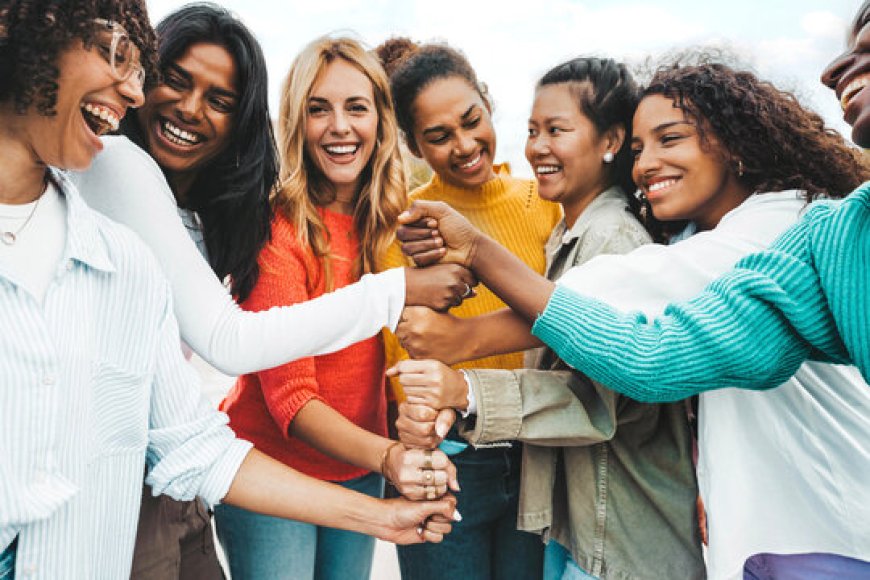
THE start of March marked the beginning of Women’s History Month, a time that most take to celebrate women and their accomplishments by recognising the contributions they have made to contemporary society.
The observance is rooted in the efforts of women's suffrage beginning in the early 1900s, emerging from feminists in the workplace who advocated for equality both socially and legally. As the movement grew, Women's History Week emerged in Santa Rosa, California, and grew into what is now recognised in the U.S. as a month-long recognition of women.
This year, the movement comes in the wake of a changing culture surrounding women’s freedom and the celebration of Women’s History Month. Almost three years ago, the Supreme Court's decision in Dobbs v. Jackson Women's Health Organization — which overturned the federal right to abortion — called into question whether the gains of earlier feminist movements could be considered final. Today, those questions are still unsettled, especially as the Trump administration engages in a rollback of certain rights shared by women.
"I think that events like this [month] are absolutely crucial for building connections with each other and building solidarity with each other, because I think that that's the most important part in building the fight back,” Sina Kramer, PhD, chair of the Women's and Gender Studies department.
In his first week in office, President Donald Trump issued executive orders limiting Diversity, Equity and Inclusion (DEI). His cuts to DEI programs have affected universities throughout the country, particularly in their Women’s and Gender Studies departments. Throughout the rest of his administration to the current day, Trump has continued to remove multiple protections for women in the workplace.
“The attacks have been sort of, I think, devastating to Women's and Gender Studies departments across the country and to ethnic studies departments across the country,” said Kramer.
In addition, Kramer noted that the cuts to DEI have affected women in the workplace, particularly women of colour.
“Black women had high representation in the federal workforce because the federal workforce actually has anti-discrimination protections that are enforced. So cuts to DEI were cuts to women's wages, and specifically, Black women's wages,” said Kramer.
Black women lost over 300,000 jobs between February and July due to the federal department cuts. Women in Business Co-Founder and President Samyuta Maradani, a finance and business analytics double major, reflected on how a culture of acceptance surrounding women of colour in the workplace has recently shifted.
“It's been interesting to see in business spaces, because now it's like we have to tone down ourselves even more,” said Maradani. “And I think that's like a direct result of … the limitations that are being put on us by our administration.”
Amid the actions from the Trump administration, Maradani described Women’s History Month as a time of resilience and reflection, thinking back to when women had little to no access to full citizenship at all.
“We didn't have access to those communities, so we had to create them ourselves,” said Maradani. “I hope that I'm [creating] that with Women in Business, because we want to create an alumni network that connects professional students … But that really only happens if people understand that this space is so needed.”
Nadia Bernal, health and human sciences major and president of Marians Service Organization — a service group focusing on the betterment of women and children — is also continuing to advocate for women’s rights on and off campus, specifically by addressing women’s reproductive freedoms.
“Historically, Marians has focused on breast cancer awareness … but I also want to look at endometriosis, at PCOS, at reproductive rights [and] at abortion care,” said Bernal.
Bernal noted how Women’s History Month is an important time of continued fight for women’s freedom and rights, and will continue to recognize the month through their event Feminists in Politics on March 24. The event will discuss women who have offered representation in leadership positions and provide an opportunity for attendees to contact their representatives.
“For our [organization] specifically, not only do we like to celebrate those accomplishments … but it's also a kind of a sign or an indication that we still had to fight for these rights," said Bernal. Speaking to the relevance of the holiday today, she emphasized the importance of "celebrating and uplifting and learning about the women who have gotten us here."