





























.jpg?#)


Raja Ravi Varma’s Yashoda and Krishna sells for $18 million, sets record for Indian art
The sale of Raja Ravi Varma’s 'Yashoda and Krishna' for $18 million at Saffronart sets a new benchmark for Indian art, underscoring rising collector wealth and a more sophisticated top-end market.

A RECORD $18 million (₹167.2 crore, including buyer’s premium) sale of Raja Ravi Varma’s Yashoda and Krishna at Saffronart’s Spring Auctions in Mumbai late on Wednesday has set a new record for Indian art, overtaking the $13.75 million fetched by M. F. Husain’s Gram Yatra at Christie’s in New York last March.
The sale, in which every lot was sold, underscores rising demand for rare, blue-chip Indian works and raises the question of whether the market is being structurally re-rated.
“The sale signals both the sophistication of India’s high-end art market and the growing financial power of Indian collectors. This is a benchmark for both value and market strategy,” independent art critic Uma Nair, speaking to Mint about the auction, said.
"It is a broader trend: the buoyant wave of wealth in Indian collectors’ hands and the country's emergence as an economic prosperity indicator. The question now is whether this is a one-off driven by rarity or the start of a re-rating for historically important Indian artists. The auction house's approach shows how a focused network of buyers and sellers can create world records," Nair said.
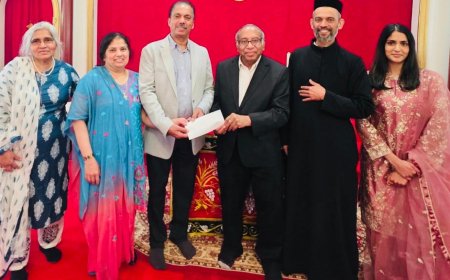
The painting, sold to Cyrus S. Poonawalla, managing director, Serum Institute of India, dates back to the 1890s, when Varma was at the peak of his career. Depicting the infant Krishna with his foster mother Yashoda, the work reflects the artist’s blend of realism and Indian mythology. Very few of his oil paintings remain in private hands, a rarity that contributed to the record price. The work is also a non-exportable national treasure and a registered antiquity.
“I am privileged to have the opportunity to acquire, preserve, and care for the iconic Raja Ravi Varma painting Yashoda and Krishna. This national treasure deserves to be made available for public viewing periodically, and it will be my endeavour to facilitate this going forward,” Poonawalla said in a statement.
“Great art has a way of reaffirming its timeless value. The record-breaking sale of Raja Ravi Varma’s work not only underscores the strength of the art market, but also sets a new benchmark as the highest-value work of Indian art ever sold. It is not just a milestone for the market, but a powerful reminder of the enduring cultural and emotional resonance of Indian art,” said Minal Vazirani, president and cofounder, Saffronart.
The sale builds on a series of high-value transactions in recent years, including Husain’s Gram Yatra and Amrita Sher-Gil’s The Story Teller, which sold for ₹61.8 crore in 2023. Together, these results point to a market where scarcity, capital, and curation are increasingly driving outcomes.
The painting was shown at the India Art Fair by Ashish Anand of Delhi Art Gallery. It also recalls Varma’s presence in major exhibitions, including the 1994 National Gallery of Modern Art Delhi show '100 Years NGMA Collection'. Art historian Geeta Kapur has called Varma the “father of modern Indian art,” and his works continue to be highly prized by collectors.
Ashish Anand, CEO and MD of DAG (formerly Delhi Art Gallery), said, “This sale is a defining moment for the Indian art market. Raja Ravi Varma’s Yashoda and Krishna at ₹167.2 crore not only sets a world record but also shows that top-tier Indian art is now a serious investment, with a sophisticated collector base driving demand and retaining cultural treasures within the country.”
For collectors, the appeal lies in a combination of rarity and historical weight. Varma’s technical skill, emotive content, and cultural resonance have long made his works blue-chip holdings—attributes that, in a tightening supply environment, are now translating into record prices.
“Scarcity, relationships, and strategy are as much a part of the business as the artworks themselves,” Nair added. “Ravi Varma has always been blue-chip, and this record underlines the growing professionalism and sophistication of the Indian market.”