

































































India, Japan deepen defence ties
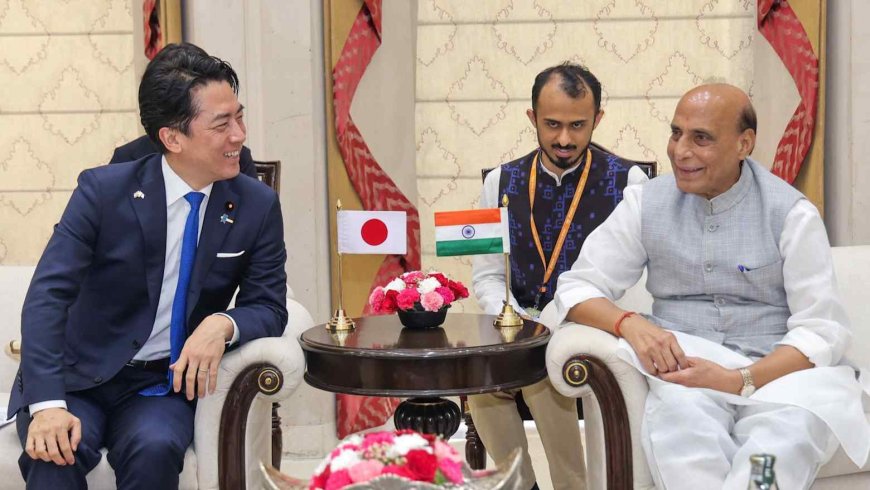
ON the heels of Japanese Prime Minister Sanae Takaichi's visit to India in July for talks with her counterpart Narendra Modi, their defence ministers -- Shinjiro Koizumi of Japan and Rajnath Singh of India -- last week signed a key pact to strengthen maritime security ties in areas such as information sharing in maritime domain awareness, search and rescue, and humanitarian assistance and disaster relief.
The two ministers also affirmed their commitment to deepening ties further to realize a "free and open Indo-Pacific" -- a euphemism for containing China's military and economic influence -- and their first co-development project of a communications system for naval warships called UNICORN (Unified Complex Radio Antenna).
Cooperation between the two countries is also growing. Farm and construction equipment maker Escorts Kubota, an India-based subsidiary of Japan's Kubota, last week broke ground on a 154-acre greenfield manufacturing facility in Uttar Pradesh. Kubota President Shingo Hanada told Nikkei Asia in an interview that exporting from India is "very important" to realize competitive pricing on farming equipment in the European and North American markets.
Moves such as these reflect Modi's Make-in-India initiative to turn the country into a manufacturing hub for both domestic and global demands.
In terms of exports, India is reaching further into Asian markets. According to the latest data from its Ministry of Commerce and Industry, the country's merchandise shipments expanded by 15.9%, or $17.75 billion, in the April-June quarter from a year earlier, with ASEAN making up a third of the total increase in value. India's exports to Japan alone marked a 22.4% rise to reach $1.75 billion the same quarter.
All these developments reflect the positive direction of India-Japan ties as they expand cooperation across myriad fields.