








































































Thousands are pulling a 400-tonne castle in Japan with ropes — but why?
Local authorities estimate that roughly 4,000 people, including participants from overseas, have taken part in the operation so far.

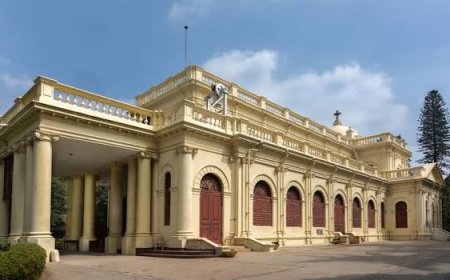
THOUSANDS of people in northern Japan joined forces on Wednesday to help return a 400-tonne castle tower to its original location, pulling it along with ropes while chanting together. The main tower of Hirosaki Castle was moved 80 metres (262 feet) in 2015 to enable repairs to the stone walls beneath it.
Rather than dismantling the three-storey wooden structure, engineers lifted it intact and moved it along metal rails to a temporary platform.
Since Saturday, thousands have taken turns pulling the tower forward by just a few centimetres at a time. Local authorities estimate that roughly 4,000 people, including participants from overseas, have taken part in the operation so far.
Their combined efforts have shifted the structure by almost five metres.
"It's like trying to move a mountain," said 56-year-old Hirosaki resident Takahiro Kogawa, speaking to AFP after spending several minutes pulling the heavy structure in the heat.
Volunteers travel from across Japan
Among those who joined the effort was Azusa Nimiya, a 46-year-old history and castle enthusiast who travelled from Shimane, located on the opposite side of Japan's main island.
"It's the experience of a lifetime, a precious and unique memory," she said.
The municipality plans to bring in heavy machinery in September to finish moving the tower. Officials are targeting November for its permanent installation at the site.
Further restoration will then be carried out on the castle's copper roof and facades. The landmark, which dates back to the Edo period (1603-1868), is expected to fully reopen to visitors in 2033.
‘Experience history physically’
The restoration project has deliberately involved members of the public in the traditional moving process.
"By involving the public, "we wanted everyone to be able to experience history physically," said Kensuke Hayasaka, who heads the restoration project.
"It's extremely significant for passing on the history of Hirosaki to future generations," he told AFP.
The castle tower has a long history of being moved. Lightning destroyed the structure in the 17th century, after which it was rebuilt in the early 19th century.
Several decades later, concerns over the stability of its stone foundations led authorities to move the tower again, this time using human strength. It was eventually returned to its original location in 1915.
Ancient Japanese technique used again
The latest operation is being carried out using a traditional Japanese method known as "hikiya", which involves moving buildings and other structures using human power.
"This large-scale, human-powered operation, known as "hikiya", "is a traditional technique for moving structures that has existed in Japan since ancient times," Hayasaka explained.
He said the project aims to protect the historic structure while ensuring that the main tower is firmly secured to its foundations before heavy snowfall arrives in the region during winter.
"Our goal is to preserve this unique heritage, while ensuring that the main tower is securely fixed to its base before the first snowfall," he said.
Hayasaka also described the completion of the project as an emotional moment after years of planning and work.
"Seeing all these discussions and the methods devised by our predecessors and our teams finally come to fruition this year is extremely moving. We feel a profound sense of accomplishment," he added.
82-year-old volunteer returns for second move
Among the most enthusiastic participants was 82-year-old Katsumi Terada, who joined the effort with two Japanese flags tucked into his headband.
Terada had also taken part in the castle's previous relocation 11 years ago. He recalled wondering at the time whether he would live long enough to see the historic tower returned to its original position.
"I wondered then, with some anxiety, if I would still be around to see it return to its base. But look, I persevered. I'm alive and well."
Click on Read More for watch video ↓