










































US visa interviews: ‘Last-minute digital clean-ups’ can be red flag, consistency is a key | What to follow and avoid
Immigration experts told Livemint Indian visa applicants should be cautious with online activity, avoid controversial posts, and maintain consistency to prevent red flags during US visa applications.

AS the United States has introduced stricter immigration checks — particularly social media vetting rules that require visa applicants to make social media accounts public for visa vetting — it has triggered deep anxiety among Indian families, who form the largest segment of America’s high-skilled migrant workforce.
For thousands of families whose legal status, income and children’s schooling hinge on timely visa renewals, the uncertainty has turned into panic.
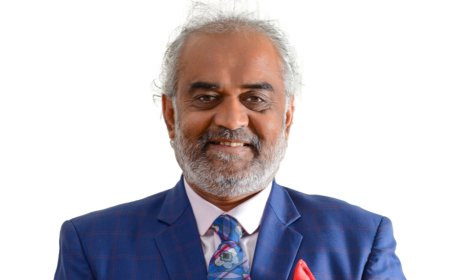
Amid the uncertainty, Saurabh Arora, founder & CEO of University Living — a firm that advises Indian students on housing planning when moving to places such as the US, Canada, among others — shared common mistakes that applicants must avoid.
“Before applying for or travelling to the US, Indian visa applicants should assume their online activity may be reviewed in context, not in isolation. Social media posts, LinkedIn profiles and public comments are often cross-checked against visa applications. Inconsistencies such as job roles that do not match official documents, posts suggesting long-term stay while applying for a temporary visa, or casual remarks about unauthorised work can create avoidable risk,” Arora said while speaking with Livemint.
He further warned about a common mistake that is often overlooked and can complicate the visa process. “A common mistake is last-minute digital clean-ups. Deleting accounts, changing usernames, or suddenly making profiles private rarely helps and can appear reactive," he said.
Another overlooked issue is engaging with speculative or misleading immigration narratives online, which can complicate how intent is perceived. That said, applicants who are travelling with a clear purpose, have secured admission or employment through proper channels, and are transparent in their applications generally have little to worry about. Consistency matters more than silence.
Can deleting posts before a visa interview backfire?
Deleting social media posts or deactivating accounts ahead of a US visa interview may do more harm than good for applicants, the immigration expert warned.
“It is generally not advisable for applicants to delete posts or deactivate social media accounts before a visa interview,” an expert said, adding that such actions “can raise red flags” during the vetting process.
US visa application forms require applicants to disclose all social media handles used over the past five years. “Sudden changes close to the interview can appear evasive to visa officers,” the expert noted.
Social media activity has increasingly played a role in intensifying scrutiny during US visa processing, even when applications are otherwise strong, immigration experts say.
“We’ve seen cases where online presence did not lead to an outright refusal, but it did trigger deeper questioning and administrative processing because something didn’t match the application,” the immigration expert said.
In one instance, the expert cited a case where “a LinkedIn profile hinted at ongoing freelance or side work that wasn’t reflected anywhere in the visa narrative or supporting documents”. While the application itself was sound, the discrepancy led to additional scrutiny and delayed processing.
“That gap led to additional scrutiny and a slower outcome, even though the underlying case was otherwise solid,” the expert explained.
According to advisers, social media tends to become an issue only when it conflicts with formally declared information.
“Social media usually becomes ‘relevant’ only when it contradicts what you’ve formally declared,” the expert said.
The key takeaway for applicants, experts stress, is consistency. “Keep your public professional story aligned with your documents and your stated intent. Small mismatches can quickly turn into long delays,” the expert added.
Which visa categories are seeing the most scrutiny?
Ana Gabriela Urizar, a US immigration attorney with nearly a decade of experience, said authorities are seeing heightened scrutiny across nonimmigrant visa categories, with the strongest impact on H-1B and H-4 visas, followed by F-1 student visas. While the policy applies to all nationalities, Urizar noted that Indian applicants are “disproportionately” affected due to the sheer volume of applications, leading to appointment cancellations, longer wait times and increased administrative processing.
Offering advice to anxious visa applicants, she said, “Take a breath and be strategic. Many visas are still being approved, but this is no longer a process to navigate casually. Preparation, consistency, and having professional guidance, like from an experienced immigration attorney, matter more than ever.”
What can lead to visa rejection?
Urizar further warned that applicants should be cautious about their online activity. She said, “Underestimating posts, comments, or shares, especially political or institutional commentary, might be interpreted out of context. There is no official list of ‘prohibited’ content, so awareness and consistency matter more than perfection.”