
























































Bangladesh former Prime Minister Khaleda Zia dies, aged 80
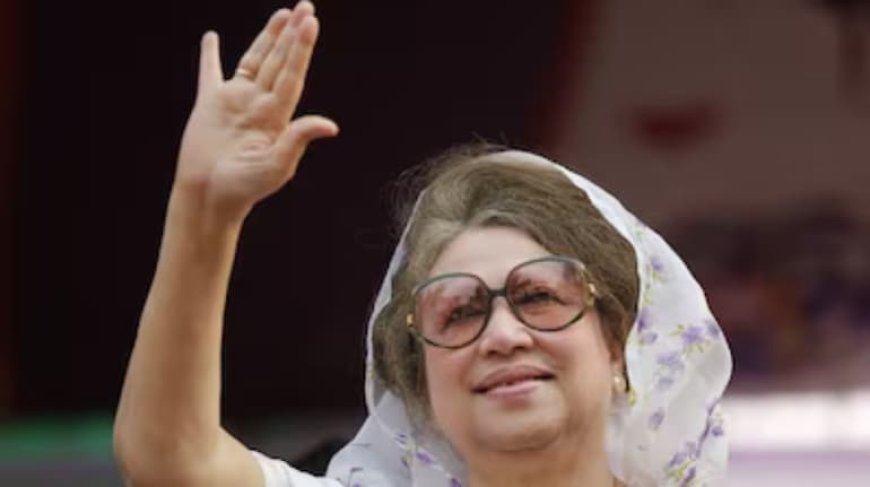
KHALEDA Zia, Bangladesh’s first female prime minister and a towering figure in the country’s turbulent politics, has died at the age of 80 after a prolonged illness, according to her party.
In a statement on Tuesday, the Bangladesh Nationalist Party (BNP) said Khaleda died at 6 am local time (00:00 GMT), reports Al Jazeera.
“Our beloved national leader is no longer with us,” the BNP said.
“We pray for the forgiveness of her soul and request everyone to offer prayers for her departed soul,” it said.
Khaleda died at the Evercare Hospital in Dhaka, where she was admitted on November 23 with symptoms of a lung infection, according to The Daily Star, a Bangladesh news website.
Her doctors said she had advanced cirrhosis of the liver, arthritis, diabetes and chest and heart problems.
Khaleda’s death closes a chapter spanning more than three decades during which she and her rival Sheikh Hasina — who were known as the “battling begums” — dominated Bangladeshi politics. Hasina, who was forced from power last year and sentenced to death in absentia for her crackdown on student protesters, is now in exile in India.
Bangladesh’s interim leader, Muhammad Yunus, expressed his “profound sorrow” at Khaleda’s death in a statement on X.
He called the three-time prime minister a “symbol of the democratic movement” in Bangladesh and said the “nation has lost a great guardian”.
“I am deeply saddened and grief-stricken by her death,” he added.
Indian Prime Minister Narendra Modi and Pakistan’s leader Shehbaz Sharif also offered their condolences.
Modi expressed deep sadness in a post on X and said Khaleda’s “important contributions towards the development of Bangladesh, as well as India-Bangladesh relations, will always be remembered.”
Sharif described Khaleda as a “committed friend of Pakistan” and said his government and the people of Pakistan stand with Bangladesh “in this moment of sorrow”.
“Her lifelong service to Bangladesh and its growth and development leaves a lasting legacy,” he added.
First female prime minister
Khaleda’s legacy, like Hasina’s, remains deeply contested.
Both women fought for democracy, against authoritarianism. But while Khaleda – unlike Hasina – was never accused of carrying out mass atrocities against critics, she too was a polarising figure.
Her uncompromising style while in opposition – leading election boycotts and prolonged street movements – combined with recurring allegations of corruption when she was in power, made her a figure who inspired intense loyalty among supporters and equal distrust among her critics.
Khaleda was born on August 15, 1946, in Dinajpur, then part of India’s East Bengal, now northern Bangladesh. She married army officer Ziaur Rahman in 1960 when she was about 15. Rahman gained prominence after Bangladesh’s 1971 war of independence, later assuming the presidency in 1977 and founding the BNP in 1978.
Khaleda’s political career began not through ambition, but tragedy.
Her husband was assassinated in an abortive military coup in 1981, plunging Bangladesh into turmoil. Rahman – who had stabilised the country after years of coups and counter-coups – left behind a fragile political order.
Khaleda, who was 35 years old and a mother of two, inherited the BNP leadership.
Will Sheikh Hasina’s death sentence deepen Bangladesh's political divide?
Initially dismissed as a political novice, she proved a formidable opponent, rallying against military dictator Hussain Muhammad Ershad, and later joining forces with Hasina – the daughter of assassinated independence leader Sheikh Mujibur Rahman – to remove him in 1990.
The following year, Bangladesh held what was hailed as its first free election and Khaleda secured a surprise victory over Hasina with support from the country’s largest Islamic party, Jamaat-e-Islami.
She became only the second woman to lead a democratic government in a predominantly Muslim nation, after Pakistan’s Benazir Bhutto three years earlier.
Rivalry with Hasina
Khaleda replaced the presidential system with a parliamentary one so that power rested with the prime minister. She also lifted restrictions on foreign investment and made primary education compulsory and free.
She lost to Hasina in the 1996 general election but returned five years later with a surprise landslide win.
But their intractable rivalry fuelled crises, including a standoff in January 2007 that brought military-backed emergency rule. Both women were detained for more than a year.
Hasina later dominated, ruling from 2008 until her violent overthrow in 2024.
In 2018, Khaleda, her son Tarique Rahman and aides were convicted of stealing some $250,000 in foreign donations received by an orphanage trust set up when she was the last prime minister – charges she denounced as part of a plot to keep her and her family out of politics.
She was jailed but moved to house arrest in March 2020 on humanitarian grounds as her health deteriorated. Hasina’s government also blocked her from travelling abroad for medical treatment.
Khaleda was released shortly after Hasina was forced from power.
Earlier this year, Bangladesh’s Supreme Court acquitted Khaleda and her son in the corruption case. Rahman, who had also been acquitted of charges related to a 2004 grenade attack on Hasina, returned to Bangladesh after 17 years in self-imposed exile on Thursday.
Rahman will lead the BNP in the February 12 general election and is expected to be put forward as prime minister if his party wins a majority.
The BNP said it will observe seven days of mourning over Khaleda’s death and that the date of her funeral will be announced later.