



















Popular Front sought to create divisions within Syro-Malabar Church, alleges Archbishop
Follow TNM’s WhatsApp channel for news updates and story links.The Popular Front had plans to create divisions within the Syro-Malabar Church by exploiting internal differences, Catholic Bishops’ Conference of India (CBCI) president Archbishop Mar Andrews Thazhath has claimed.“According to an official who conducted a raid on the Popular Front, some of their plans involved creating divisions within the Syro-Malabar Church,” the Archbishop said in an interview to Deepika newspaper. He alleged that the organisation’s intention was to weaken “the most well-organised Church faction by dividing it and provoking internal conflicts”.Speaking about what he described as rising extremism across religious communities, Archbishop Thazhath grouped multiple organisations while outlining his concerns, and argued that communal polarisation was being encouraged by political interests. “With every passing year, organised extremist groups are becoming more active in Kerala as well. Jamaat-e-Islami on one side, RSS on the other. There are also extremist groups among Christians, and some others encourage them. Certain politicians too have a role in nurturing communalism,” he said.The remarks come amid a prolonged internal dispute within the Syro-Malabar Church over the mode of celebrating Holy Mass. The conflict centres on two practices — ad orientem, in which the priest faces the altar, and versus populum, in which the priest faces the congregation. In August 2021, the Syro-Malabar Synod of Bishops decreed that the ad orientem tradition be followed uniformly across all dioceses.However, the decision met with strong opposition, particularly from a majority of priests in the Ernakulam–Angamaly archdiocese, who argued for continuing the versus populum practice. Churches in Ernakulam, Changanassery and nearby areas have since witnessed sustained protests following the Synod’s decision to implement the uniform format from November 2021.Under the Synod’s directive, priests face the congregation during the introductory rites, the Liturgy of the Word and the concluding blessing, while facing the altar during most parts of the Liturgy of the Eucharist. Several churches opposed the move, maintaining that their longstanding liturgical practice involved priests facing the faithful throughout the Mass.Church observers have pointed out that the liturgical dispute is part of a wider pattern of internal factionalism within the Syro-Malabar Church. Tensions intensified in recent years after Cardinal George Alencherry, who was also the head of the Ernakulam–Angamaly archdiocese at the time, was accused of mismanaging land deals that allegedly caused losses of several crores of rupees to the Church.The conflict has at times escalated into physical confrontations, prompting repeated interventions by the Vatican.In the interview, Archbishop Thazhath also spoke about demographic changes among Christians in Kerala, linking them to migration and employment patterns. “It is not just that the numbers are declining; Christians are the community most affected by migration abroad,” he said. Referring to political representation, he added, “According to data from a recent survey, the average share of Christians in government jobs is only about 1.5 per cent.”
Follow TNM’s WhatsApp channel for news updates and story links.
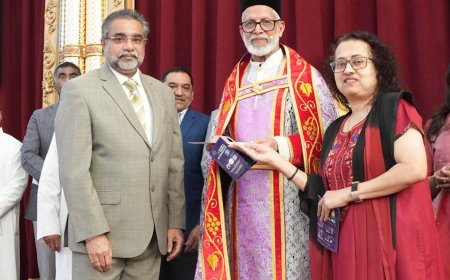
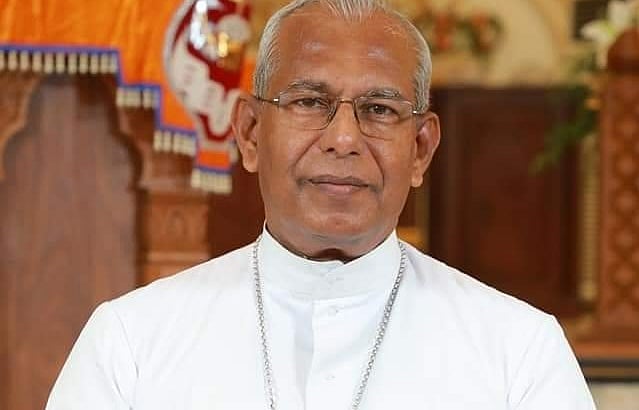
THE Popular Front had plans to create divisions within the Syro-Malabar Church by exploiting internal differences, Catholic Bishops’ Conference of India (CBCI) president Archbishop Mar Andrews Thazhath has claimed.
“According to an official who conducted a raid on the Popular Front, some of their plans involved creating divisions within the Syro-Malabar Church,” the archbishop said in an interview with Deepika newspaper. He alleged that the organisation intended to weaken “the most well-organised Church faction by dividing it and provoking internal conflicts.”
Speaking about what he described as rising extremism across religious communities, Archbishop Thazhath grouped multiple organisations while outlining his concerns, and argued that communal polarisation was being encouraged by political interests.
“With every passing year, organised extremist groups are becoming more active in Kerala as well. Jamaat-e-Islami on one side, RSS on the other. There are also extremist groups among Christians, and some others encourage them. Certain politicians, too, have a role in nurturing communalism,” he said.
The remarks come amid a prolonged internal dispute within the Syro-Malabar Church over the mode of celebrating Holy Mass. The conflict centres on two practices — ad orientem, in which the priest faces the altar, and versus populum, in which the priest faces the congregation. In August 2021, the Syro-Malabar Synod of Bishops decreed that the ad orientem tradition be followed uniformly across all dioceses.
However, the decision met with strong opposition, particularly from a majority of priests in the Ernakulam–Angamaly archdiocese, who argued for continuing the versus populum practice.
Churches in Ernakulam, Changanassery and nearby areas have since witnessed sustained protests following the Synod’s decision to implement the uniform format from November 2021.
Under the Synod’s directive, priests face the congregation during the introductory rites, the Liturgy of the Word and the concluding blessing, while facing the altar during most parts of the Liturgy of the Eucharist. Several churches opposed the move, maintaining that their longstanding liturgical practice involved priests facing the faithful throughout the Mass.
Church observers have pointed out that the liturgical dispute is part of a wider pattern of internal factionalism within the Syro-Malabar Church. Tensions intensified in recent years after Cardinal George Alencherry, who was also the head of the Ernakulam–Angamaly archdiocese at the time, was accused of mismanaging land deals that allegedly caused losses of several crores of rupees to the Church.
The conflict has at times escalated into physical confrontations, prompting repeated interventions by the Vatican.
In the interview, Archbishop Thazhath also spoke about demographic changes among Christians in Kerala, linking them to migration and employment patterns.
“It is not just that the numbers are declining; Christians are the community most affected by migration abroad,” he said. Referring to political representation, he added, “According to data from a recent survey, the average share of Christians in government jobs is only about 1.5 per cent.”