











































Kerala Story 2: Why propaganda needs to be opposed with more than just humour
Offense, packaged as jokes, memes and serious discourse, was loudly and clearly expressed within minutes of the release of the trailer for The Kerala Story 2. Almost three years ago, its prequel had demonised the southern state and gone on to win the National Award for 2023. If part one had painted Kerala as a land full of Islamic terrorists and vulnerable Hindu women, part two appears to rejoice in creating fairytale monsters out of its Muslims —devilish incarnations minus the horns. The teaser for Kerala Story 2 begins with a voiceover predicting a future when India would be an Islamic State. It goes on to show glimpses of inter-religious relationships of Hindu women and Muslim men across a few states, and of promises made during happy courtships. The women vouch for their men when the families oppose the unions, but go on to be abused, forced to convert, assaulted by their husbands and, in a scene that has created the most furore, forced to eat beef. It is not clear how much of this is set in Kerala – there are no more quips in accented Malayalam or ‘naive’ Malayali girls in kathakali costumes and Rapunzel hairdos laden with jasmine. Part one was critiqued enough for the stereotyping, with its protagonist Shalini Unnikrishnan, dressed in Kerala dance costumes even as she spoke a broken Malayalam. Perhaps the filmmaker behind the sequel–Kamakhya Narayan Singh–wanted all the attention to fall on the evil intentions of Kerala Muslims, no distractions whatsoever. One might assume the exaggerated caricatures would make it obvious to anyone who has the mildest touch with reality that this was too pathetic to warrant a reaction, much less an explanation. But critics are issuing warnings: do not treat this lightly, for this is no joke, it is a dangerous game, portraying a whole people as barbaric, loathsome, hateful. Those who do not know Kerala and only form impressions from what is presented before them can buy all or some of it, and think there will not be smoke without fire. The beef scene – where a woman is restrained by multiple people while another woman is force feeding her beef – appears to have caused the most offence. Jokes on the internet whirled around the Malayali’s refusal to share their beef, much less force it on another, and questioning the lack of porotta (bun) in the scene, porotta and beef being the celebrated combination that many Malayalis love. Kerala leaders oppose ‘The Kerala Story 2,’ call it attempt to tarnish state’s image A touchy topic, beef, can be the easiest tool to draw the ire of the Hindutva majority on a small state that lives on its own terms. But discourse around the teaser should not be limited to the beef scene. In their portrayal of interfaith relationships, the writers have taken care to make them seem relatable. The conversations before marriage, the understandings that couples reach, can all sound familiar to many. One Muslim man says he is not a believer, another is full of warmth. This is careful writing, for relationships are based on mutual trust formed around these conversations. But the deviousness of the script lies in eventually showing them all as fake—none of the men seem to stick to their promises and turn absurdly abusive after marriage. Funnily enough, the very idea of such an understanding before marriage is intolerable to the right wing. A Malayalam film called Haal was initially denied censorship last year even though the interfaith couple in the film - a Muslim man and a Christian woman- decides to follow their respective beliefs post marriage. The Central Board of Film Certification wanted several cuts including a scene showing beef biriyani and the salutation Dhwaja Pranam, used by RSS workers. Three years ago, Kerala Story - the first part - was forced to edit its false claim in the teaser that 32000 women from the state were forcibly converted to Islam and taken to join the terrorist organisation Islamic State or IS. After severe criticism, the number was changed to ‘three’. Why Kerala Story makers are quietly backtracking from the controversial 32,000 figure However, lack of further action against the film’s hateful content and further endorsement by the Union government (offering no less than a National Award), allowed distorted history and humiliation of a state to exist in record. Similar and perhaps heightened dangers lurk around the release of The Kerala Story 2, which, by cutting down on the ridiculous stereotyping, can look even more threatening, especially helped by doses of prejudice, from years of propaganda. Historically, tools of culture have always been used to convey, influence and impose ideas on people. Cinema, literature or theatre would become media to pass off propaganda as art. In Hitler's Nazi Germany, every manuscript had to have the approval of the propaganda ministry before it could be shown to the public. However, poorly made films and radio programs had the opposite effect on the public who took to hissing th
OFFENCE, packaged as jokes, memes and serious discourse, was loudly and clearly expressed within minutes of the release of the trailer for The Kerala Story 2.
Almost three years ago, its prequel had demonised the southern state and gone on to win the National Award for 2023.
If part one had painted Kerala as a land full of Islamic terrorists and vulnerable Hindu women, part two appears to rejoice in creating fairytale monsters out of its Muslims —devilish incarnations minus the horns.
The teaser for Kerala Story 2 begins with a voiceover predicting a future when India would be an Islamic State.
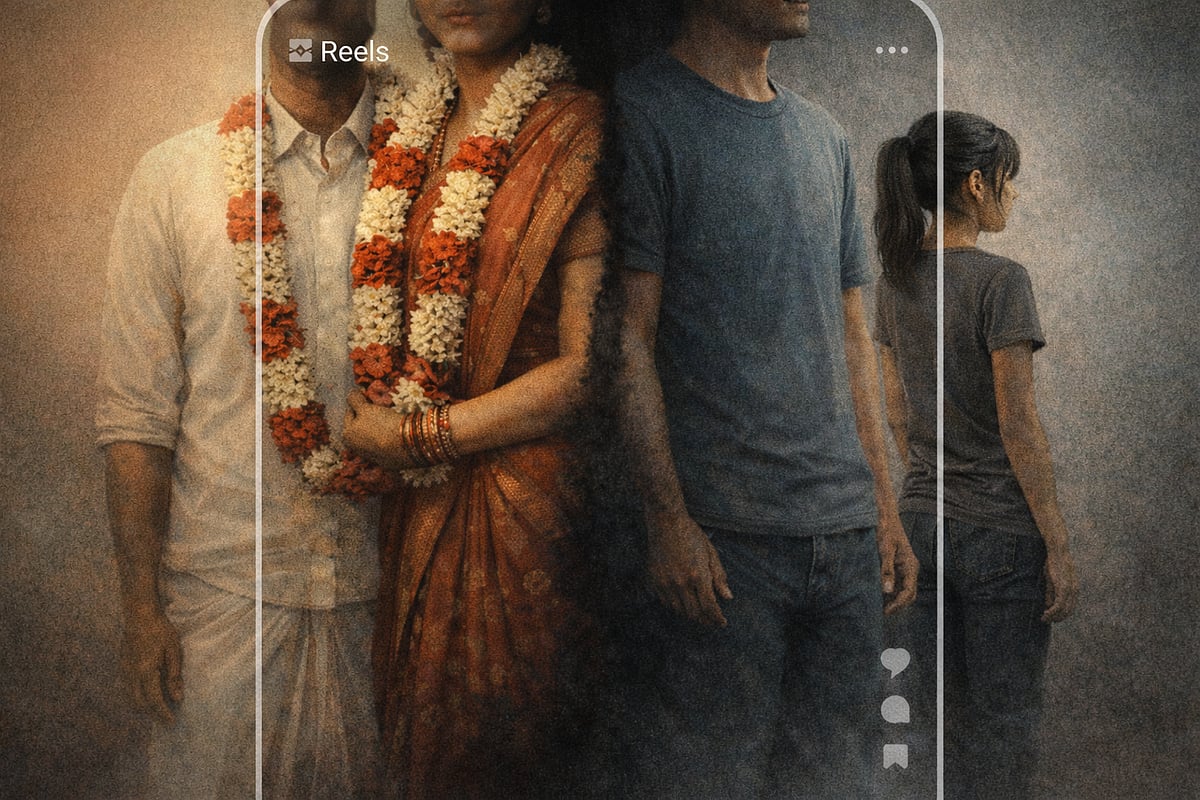
It goes on to show glimpses of inter-religious relationships of Hindu women and Muslim men across a few states, and of promises made during happy courtships.
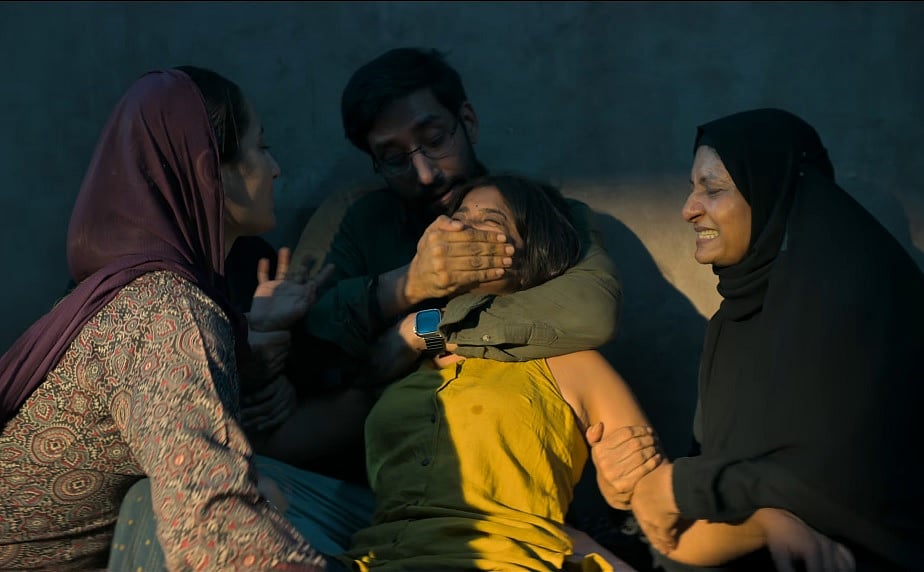
The women vouch for their men when the families oppose the unions, but go on to be abused, forced to convert, assaulted by their husbands and, in a scene that has created the most furore, forced to eat beef.
It is not clear how much of this is set in Kerala – there are no more quips in accented Malayalam or ‘naive’ Malayali girls in kathakali costumes and Rapunzel hairdos laden with jasmine.
Part one was critiqued enough for the stereotyping, with its protagonist Shalini Unnikrishnan, dressed in Kerala dance costumes even as she spoke a broken Malayalam.
Perhaps the filmmaker behind the sequel–Kamakhya Narayan Singh–wanted all the attention to fall on the evil intentions of Kerala Muslims, no distractions whatsoever.
One might assume the exaggerated caricatures would make it obvious to anyone who has the mildest touch with reality that this was too pathetic to warrant a reaction, much less an explanation.
But critics are issuing warnings: do not treat this lightly, for this is no joke, it is a dangerous game, portraying a whole people as barbaric, loathsome, hateful.
Those who do not know Kerala and only form impressions from what is presented before them can buy all or some of it, and think there will not be smoke without fire.
The beef scene – where a woman is restrained by multiple people while another woman is force feeding her beef – appears to have caused the most offence.
Jokes on the internet whirled around the Malayali’s refusal to share their beef, much less force it on another, and questioning the lack of porotta (bun) in the scene, porotta and beef being the celebrated combination that many Malayalis love.
A touchy topic, beef, can be the easiest tool to draw the ire of the Hindutva majority on a small state that lives on its own terms.
But discourse around the teaser should not be limited to the beef scene. In their portrayal of interfaith relationships, the writers have taken care to make them seem relatable.
The conversations before marriage, the understandings that couples reach, can all sound familiar to many. One Muslim man says he is not a believer, another is full of warmth.
This is careful writing, for relationships are based on mutual trust formed around these conversations. But the deviousness of the script lies in eventually showing them all as fake—none of the men seem to stick to their promises and turn absurdly abusive after marriage.
Funnily enough, the very idea of such an understanding before marriage is intolerable to the right wing.
A Malayalam film called Haal was initially denied censorship last year even though the interfaith couple in the film - a Muslim man and a Christian woman- decides to follow their respective beliefs post marriage.
The Central Board of Film Certification wanted several cuts including a scene showing beef biriyani and the salutation Dhwaja Pranam, used by RSS workers.
Three years ago, Kerala Story - the first part - was forced to edit its false claim in the teaser that 32000 women from the state were forcibly converted to Islam and taken to join the terrorist organisation Islamic State or IS. After severe criticism, the number was changed to ‘three’.
However, lack of further action against the film’s hateful content and further endorsement by the Union government (offering no less than a National Award), allowed distorted history and humiliation of a state to exist in record.
Similar and perhaps heightened dangers lurk around the release of The Kerala Story 2, which, by cutting down on the ridiculous stereotyping, can look even more threatening, especially helped by doses of prejudice, from years of propaganda.
Historically, tools of culture have always been used to convey, influence and impose ideas on people. Cinema, literature or theatre would become media to pass off propaganda as art.
In Hitler's Nazi Germany, every manuscript had to have the approval of the propaganda ministry before it could be shown to the public. However, poorly made films and radio programs had the opposite effect on the public who took to hissing the propaganda films and preferred the foreign pictures that were still allowed to be screened.
"At one period in the mid-Thirties the hissing of German films became so common that Wilhelm Frick, the Minister of the Interior, issued a stern warning against "treasonable behavior on the part of cinema audiences," writes journalist William L Shirer in his book, The Rise and Fall of the Third Reich: A History of Nazi Germany. The radio, he writes, still succeeded in becoming “the regime’s most effective means of propaganda.”
However, realising the impact of films - a medium that could faster sway a people than any other -- India's right wing machinery are not making the same mistake.
They seem to have capped on talented writers and makers to create art that was as well-made as it was influential. A number of propaganda films, including the likes of Uri: The Surgical Strike, Article 370, and Dhurandhar, made by Aditya Dhar, were appreciated for its making, even as the agenda was obvious.
Unlike The Kashmir Files or The Kerala Story, which would also still be passable, the well-made films posed the threat of influencing a larger mainstream audience. Kerala Story 2, if it is written well, carries the same risk.
In an interview with NDTV, director Kamakhya Singh claimed that while the first part was basically about Kerala, the sequel is about how it [forced conversions] was spreading all over the country.
He claimed that all that was shown in the film was true and based on police cases and judgments.
Despite the calling out of mislaid facts and fake claims in part 1, Kamakhya stresses on the 'truth' of the films that so clearly, unabashedly paint an entire community as ruthless extremists.
You have to wonder, with so much effort to paint a part of the country and Muslims so horribly, what happens to the endless lectures of ‘anti-nationalism’ we are subjected to every time a voice of dissent is heard aloud. If ridiculing a state that has historically achieved much for India is not against the nation’s interests, what is?