














































































Meghalaya’s double decker living root bridge named among world’s most beautiful bridges — here’s why
FROM sleek Scandinavian engineering feats to ancient rope bridges in the Peruvian highlands, bridges have always showcased human creativity and vision.
They link communities, transform landscapes, and often become defining landmarks of the regions they inhabit. Today, one of India’s most remarkable natural creations has captured the world’s attention.
British magazine Time Out has released its list of the 19 most beautiful bridges in the world — and India’s Double Decker Living Root Bridge in Meghalaya has secured the second spot.
And honestly, it’s not hard to see why.
A global honour rooted in nature
The ranking, compiled by tourism experts, evaluated bridges on three core parameters: distinctive architectural design, seamless integration with the surrounding landscape, and prominence in international media coverage. The periodic list celebrates structures that combine construction brilliance with aesthetic value, transforming them into tourism icons for their respective countries.
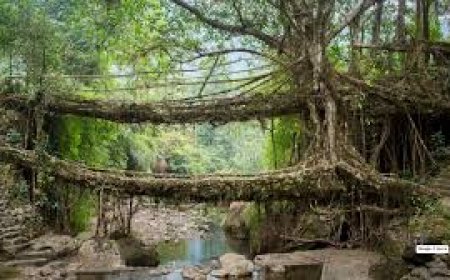
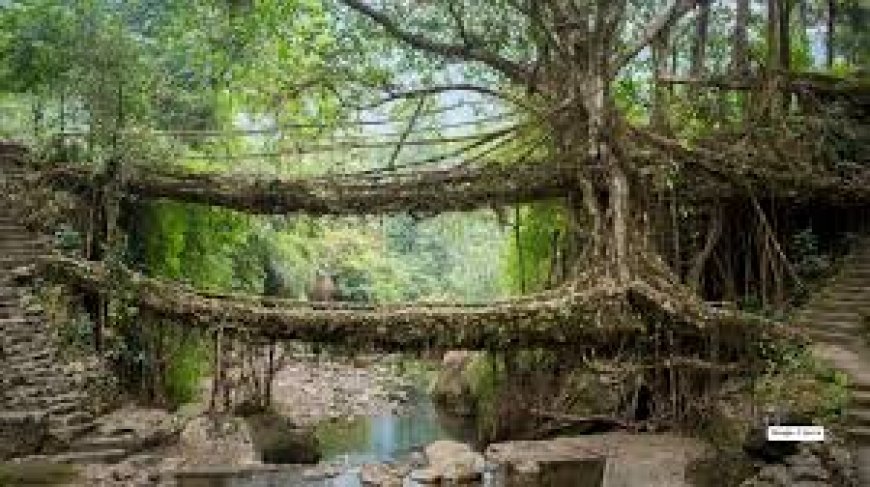
Deep in the East Khasi Hills district, in the village of Nongriat near Cherrapunji (locally known as Sohra), stands the Double Decker Living Root Bridge — a bioengineered marvel crafted entirely from the living roots of rubber fig trees.
Not built — but grown
The Double Decker Living Root Bridge is a prime example of indigenous engineering. Created from the aerial roots of the Ficus elastica (rubber fig) tree, these bridges are guided, not constructed. The indigenous Khasi tribe developed this technique out of necessity, as conventional wooden bridges repeatedly collapsed during Meghalaya’s intense monsoon seasons.
Over 180 years ago, Khasi elders began placing young rubber tree roots through hollowed areca nut palm trunks or bamboo scaffolding, carefully directing them across streams. Over decades — sometimes 15 to 25 years — the roots thickened, intertwined and fused naturally, forming sturdy pedestrian crossings.
These bridges are called “living” because they remain connected to their parent trees. They continue to grow, strengthen and adapt. Some are believed to last up to 500 years and can support the weight of around 50 people at a time.
Why two levels?
The answer lies in Meghalaya’s dramatic weather. During one particularly heavy monsoon season, rising river levels submerged the original bridge. Instead of abandoning it, the community responded ingeniously — by growing a second tier above the first.
The result is a two-storeyed, interlaced root structure that looks straight out of a fantasy novel yet stands firm against powerful currents. It is both functional and breathtaking — a rare blend of sustainability and resilience.
A trek worth every step
Reaching the bridge is not effortless. Visitors must descend approximately 3,500 steps from Tyrna village to reach Nongriat. The trek, surrounded by lush rainforest, hanging bridges and flowing streams, can take a full day round trip. Many travellers choose to stay overnight in Nongriat to experience the bridge at a slower pace.
The setting amplifies the magic. Dense greenery envelops the bridge, leaves whisper overhead and water flows gently beneath. Here, modern noise fades into the background.
For those willing to push further, a short but intense trek leads to Rainbow Falls — a turquoise pool framed by giant boulders where, on sunny days, a natural rainbow often forms in the mist. En route, trekkers can pause at the Blue Lagoon, a serene natural pool offering respite amid the climb.
Where nature and community create architecture
In Meghalaya, creating living root bridges is more than construction — it is community craft passed down through generations. These structures evolve slowly, shaped by human guidance and natural growth.
Unlike modern bridges built from concrete and steel, the Double Decker Living Root Bridge represents a partnership between humans and nature. It grows stronger over time rather than deteriorating. It adapts rather than resists.
This harmony is perhaps what makes it so globally compelling.
Meghalaya’s living tourism icon
Located in Nongriat village in the rain-drenched valleys of the East Khasi Hills, the bridge has become a signature attraction of Meghalaya. The Sohra region, known for receiving some of the highest annual rainfall on Earth, provides the perfect ecosystem for these natural wonders to thrive.
Time Out’s recognition places India’s living root bridge alongside some of the world’s most iconic architectural landmarks. But unlike many entries on the list, this one was not designed by a famous architect or engineered by a multinational firm.
It was grown — patiently, collectively and sustainably.
And in an era where sustainability is often reduced to a buzzword, Meghalaya’s Double Decker Living Root Bridge stands as a centuries-old reminder that innovation does not always require steel or glass. Sometimes, it simply requires listening to nature.
No wonder it ranks among the world’s most beautiful bridges.