

































































Cambodia shuts border crossings with Thailand as fighting continues
CAMBODIA has shut its border crossings with Thailand, as fighting continues between the two forces on Saturday, despite US President Donald Trump earlier saying they had agreed to a ceasefire, reports the BBC.
The crossings will be closed until further notice, according to Cambodia's interior ministry.
Earlier, Thai Prime Minister Anutin Charnvirakul said he told Trump a ceasefire would only be possible after Cambodia had withdrawn all its forces and removed landmines.
Thai officials said four soldiers were killed on Saturday, as both sides reported continued bombing and artillery exchanges. Cambodia has not been updating its military casualty figure.
Cambodia's defence ministry said that Thai fighter jets bombed hotel buildings and a bridge, while Thailand reported several civilians were injured in a Cambodian rocket attack.
The four deaths on Saturday bring Thailand's total military death toll since Monday to 15, with 270 others injured. It added that six civilians had also been injured.
On Friday, Cambodia said at least 11 civilians had been killed and 59 others injured.
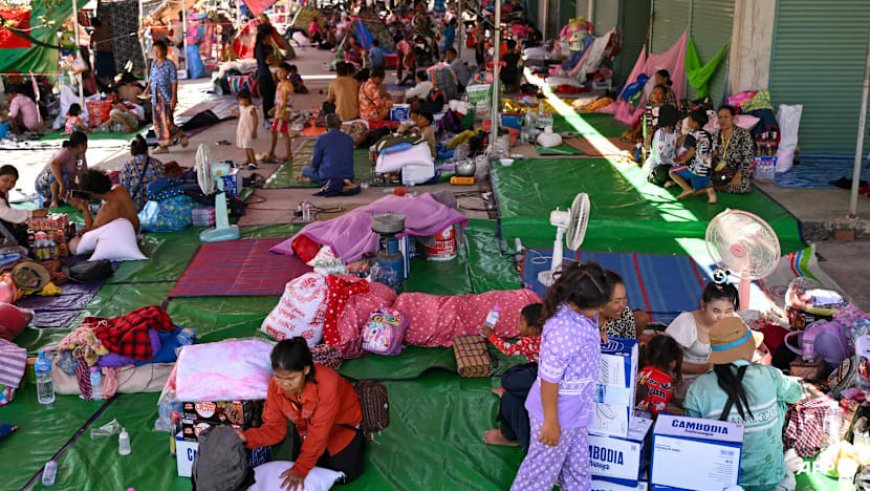
At least 700,000 people have been evacuated on both sides of the border.
Trump had claimed earlier in the week that he could stop the fighting between Thai and Cambodian forces that broke out on Monday just by picking up the phone.
After speaking to both prime ministers on Friday night he wrote on social media that the two countries had agreed to "cease shooting effective this evening" and go back to the agreement they signed in front of the US president in October.
"Both countries are ready for peace," he wrote.
But in their comments after speaking to the US president, neither side mentioned an imminent ceasefire.
Anutin said he told Trump that Thailand was not the aggressor, and that Cambodia must show that it had withdrawn its forces and removed landmines from the border before a ceasefire was possible. "They must show us first," he said.
The Cambodian leadership said they must fight on to protect their country's sovereignty.
There was no mention of the use of tariffs as leverage to force the two sides to disengage, as happened in July.
Thailand has warned the US not to link the conflict to trade.
On Saturday, Cambodia reported that it had been struck by more Thai air strikes.
"On December 13, 2025, the Thai military used two F-16 fighter jets to drop seven bombs" on a number of targets, the Cambodian defence ministry said in an X post.
"Thai military aircraft have not stopped bombing yet," it said.
The Thai military also confirmed that fighting continued.
The long-standing border dispute escalated on 24 July, as Cambodia launched a barrage of rockets into Thailand, which responded with air strikes.
Both countries have accused each other of initiating the attacks.
After days of intense fighting, which left dozens dead, the neighbouring South East Asian countries agreed to an "immediate and unconditional ceasefire" brokered by Trump and Malaysian Prime Minister Anwar Ibrahim. This was formalised at a ceremony in Malaysia in October, presided over by the US president.
However, both sides continued to trade accusations of ceasefire violations, with Thailand publishing evidence of Cambodian troops laying landmines, which have caused seven Thai soldiers to lose limbs. Cambodia says the mines are left over from the civil war in the 1980s.
Since then, tensions continued to build.
This week, Thailand launched air strikes inside Cambodia after two of its soldiers were injured in a skirmish last Sunday. Cambodia has responded with rocket barrages. The fighting affected six provinces in north-eastern Thailand and six provinces in Cambodia's north and north-west.
The two countries have been contesting their 800km land border for more than a century. The border was drawn by French cartographers in 1907, when France was the colonial ruler in Cambodia.