
































































US to ease some Venezuela sanctions soon, says Bessent days after Maduro's capture: Report
The US may lift further sanctions on Venezuela next week to facilitate oil sales, according to Treasury Secretary Scott Bessent. The Trump administration seeks to control Venezuela's oil sector following President Maduro's detention.

US could ease further sanctions on Venezuela as soon as next week to help enable oil sales, Treasury Secretary Scott Bessent told Reuters, days after Nicolas Maduro's capture.
“We’re de-sanctioning the oil that’s going to be sold,” Bessent said. The report noted that he did not specify which restrictions might be lifted.
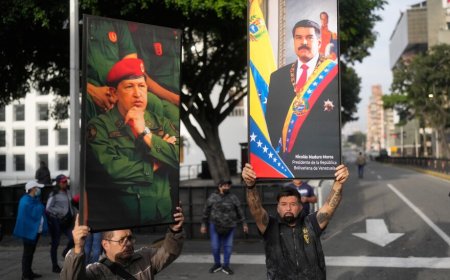
The Trump administration aims to take control of Venezuela’s oil sector after detaining President Nicolás Maduro and bringing him to the US to face criminal charges. Since then, Trump has encouraged companies such as Chevron, Exxon Mobil, and ConocoPhillips to invest a total of $100 billion to restore the country’s oil infrastructure.
US sanctions prohibit international banks and other creditors from dealing with the Venezuelan government without a licence, a restriction that institutions say has complicated a $150 billion debt restructuring widely seen as critical to attracting private investment back into the country.
Trump on Friday signed an executive order preventing courts or creditors from seizing Venezuelan oil revenues held in US Treasury accounts, stating that the funds should be protected to help Venezuela achieve “peace, prosperity and stability".
Bessent also informed Reuters that approximately $5 billion of Venezuela’s assets at the International Monetary Fund (IMF), in the form of special drawing rights, could be used to support the country’s economic recovery. He reportedly stated he plans to meet with the IMF and World Bank heads next week to discuss renewed engagement with Venezuela.
Venezuela holds about 3.59 billion special drawing rights (SDRs), valued at roughly $4.9 billion at Friday’s exchange rate, though it is unable to access them at present. SDRs are composed of a basket of major currencies, including the US dollar, euro, yen, pound sterling and Chinese yuan.
Last year, the US Treasury agreed to support a $20 billion swap line for Argentina, partly backed by that country’s SDRs, in a move aimed at stabilising the peso and helping President Javier Milei’s party secure a win in parliamentary elections.
An IMF spokesperson said the Fund was closely watching developments in Venezuela but declined to comment on Bessent’s reference to a possible meeting next week.
The IMF has not engaged with Venezuela for over 20 years, with its last formal economic assessment of the country completed in 2004. Venezuela cleared its final World Bank loan in 2007, when then-president Hugo Chávez said the country “will no longer have to go to Washington” for funding.
A Reuter's source familiar with internal World Bank discussions mentioned the institution is in the early stages of examining how it could assist Venezuela, noting that it moved swiftly to provide support to Afghanistan and Syria following regime changes, and offered early assistance to Gaza and Ukraine.
Bessent said he felt the US Export-Import Bank could play a part in providing guarantees for financing Venezuela’s oil industry.