






































































Terror activity could trigger India-Pak ‘armed conflict’ in 2026, warns US think tank: What other risks it flags?
A latest report from the Council on Foreign Relations warns of a heightened risk of armed conflict between India and Pakistan by 2026, driven by increased terrorist activity. This alarming prediction reflects broader concerns regarding US national security and international stability.

A US think tank has flagged a possibility of an ‘armed conflict’ between India and Pakistan in 2026 due to ‘heightened terrorist activity’, in its latest year-end survey report.
The Council on Foreign Relations (CFR) report surveyed American foreign policy experts and said that the second Donald Trump administration in the United States had ‘sought to end’ the conflict between New Delhi and Islamabad.
CFR is an American think tank focused on US foreign policy and international relations. According to CFR’s annual conflict risk assessment, American foreign policy experts are acutely concerned about conflict-related threats to US national security and international stability that are likely to emerge or intensify in 2026.
‘Heightened terrorist activity’
In the ‘Conflicts to Watch in 2026’ report, surveyed experts rate global conflicts by their likelihood and potential harm to the US interests and, for the first time, identify opportunities for preventive action.
The survey results have been categorised according to their ranking, and the contingencies were subsequently sorted into one of three preventive priority tiers (I, II, and III) according to their placement on the accompanying risk assessment matrix.
The India-Pakistan conflict has been accordingly categorised as Tier II with ‘moderate likelihood, moderate impact’. “The renewed armed conflict between India and Pakistan due to heightened terrorist activity,” it reads.
The second Trump administration, the report claims, has sought to end many ongoing conflicts, such as those in the Democratic Republic of Congo, the Gaza Strip, and Ukraine, as well as between India and Pakistan and Cambodia and Thailand.
India and Pakistan were involved in a four-day military conflict in May this year. India launched precision strikes on terror camps in Pakistan and Pakistan-occupied Kashmir, calling it ‘Operation Sindoor’ in the aftermath of a terror attack in Pahalgam that killed 26 civilians.
Donald Trump's ceasefire claims
President Trump has repeatedly claimed that he intervened and stopped the conflict between India and Pakistan in May, a claim that India has outrightly rejected.
India maintains that on 10 May, the Director General of Military Operations of the Indian Army was approached by his Pakistani counterpart, leading to an understanding to cease firing and military action along the LoC after the four-day military conflict between the two South Asian neighbours.
Last week, President Trump made a statement and said, “We stopped a potential nuclear war between Pakistan and India.”
The renewed armed conflict between India and Pakistan due to heightened terrorist activity.
In the ‘Tier I High Likelihood; High Impact’ category, the survey has anticipated an increased conflict between Israeli security forces and Palestinians in the West Bank over Israeli settlement construction, Palestinian political rights, and the war in Gaza in 2026.
The CFR report also predicts that there is a ‘moderate likelihood’ of an armed conflict between Afghanistan and Pakistan in 2026, triggered by "resurgent cross-border militant attacks" in the Tier III category.
10 Other Conflicts Flagged
Increased conflict between Israeli security forces and Palestinians in the West Bank over Israeli settlement construction, Palestinian political rights, and the war in Gaza.
An intensification of the Russia-Ukraine war, caused by expanding attacks on each side’s critical infrastructure and population centres.
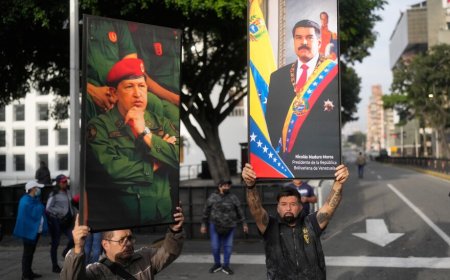
U.S. military operations targeting transnational criminal groups escalate to direct strikes in Venezuela, destabilising the Maduro government.
Renewed armed conflict between Iran and Israel, caused by Iranian efforts to reconstitute its nuclear program and rebuild its regional network of anti-Israel proxy groups.
A state or nonstate entity undertakes a highly disruptive, artificial intelligence–enabled cyberattack on U.S. critical infrastructure.
An escalation of the civil war in Sudan leads to further mass atrocities, civilian displacement, and spillover violence in neighbouring countries.
Violent clashes between armed groups and security forces escalate in Haiti, aggravated by political dysfunction and the failure of international stabilisation efforts.
Renewed armed conflict between Afghanistan and Pakistan, triggered by resurgent cross-border militant attacks.
Increased Chinese and Russian military activities in the Arctic trigger an armed confrontation involving the United States or other NATO allies.
Renewed hostilities over unresolved territorial claims between Armenia and Azerbaijan draw in Turkey and other regional powers.