






































































Level up: The slow rise of storytelling in Indian gaming
Pick up a controller. Make a choice. Watch the story change. No film can do that, no novel either. Yet when legendary critic Roger Ebert declared "Video games can never be art," he spoke for a generation that saw games as little more than glorified entertainment, juvenile and emotionally hollow. The dismissal missed one thing that makes games unlike any other medium: interactivity. Unlike a passive audience, a player doesn't just witness a story—they live inside it. “The first time I played the Assassin's Creed Trilogy, I felt really connected to the character of Ezio. As the character went through his ups and downs, it felt as though I was also experiencing it. It is a fond memory to look back on,” says Sreelekshman S, a data science postgraduate from Sacred Heart College, and a gaming enthusiast.It is this space that games create for the players inside the narrative that hooks them on. “Games combine multiple art forms into one, visual art, music, writing, performance and also interaction. And unlike movies, they let the player participate in the art,” says Athul George, game director of Thekku Island, Kerala’s first 3D horror game, created by Ales Devs Games and RedWills Interactive.The sense of control over the narrative experience sets gaming apart and challenges the puritan notion of what can be considered art and cannot be. Whenever the debate about video games being art reopens, there always seems to be a question on whether all games can be art. Now, it is easy to categorise a game like The Last of Us as art , with its engaging narrative, complex characters, stunning visuals and soundtrack. Competitive multiplayer games like BGMI (Battlegrounds Mobile India) and Free Fire, formerly known as Garena Free Fire, which are popular in India are a bit harder to define. Though these games contain art in the sense there exists maps, animations and character designs and such, much of these games are rooted in their use of gameplay mechanics as a form of competition. Though these games provide enjoyment, it is mostly curated by the interactions between the players rather than the artistic merit of the game itself. This sort of approach could be considered more sport than art.Although, globally the idea of video games as interactive storytelling is increasingly growing relevant, it is not quite mainstream in India yet. Many reasons can be attributed to this, according to Athul George.“Most players prefer mobile and fast games. Developers focus on safe ideas and quick money. Story games need time, money, risk and a long development time, so many people won’t risk it,” says Athul.When even the traditional forms of art are devalued, video games which are usually seen as juvenile and as a source distraction, are rarely if ever considered art by the mainstream Indian society.There is another reason why story-based games are not mainstream in India, where competitive multiplayer games like BGMI and Free Fire dominate. Narrative-driven games are often unable to compete in terms of popularity due to the sheer size of the playerbase of these multiplayer games. According to commentators in the subreddit r/Indiangamers, accessibility is a major reason. “Playing a free mobile game on a mid range phone is much more accessible than paying Rs 200 to Rs 3000 for a game on a computer or laptop that will cost you at least 70k.” wrote a reddit user on r/Indiangamers. Often time spending money on these things are viewed as wasteful or a source of distraction in the highly competitive Indian society. However, a steady growth can be seen in the niche community which appreciates games for their artistic relevance. Story-driven games like Red Dead Redemption 2, The Last of Us, and God of War, which were global hits have gained a huge level of popularity in India. In addition to this, the country has seen in recent years an influx of Indian games with focus on local narrative, mythology and folklore. Thekku Island, is a game set on a mysterious island in Kerala in the 1980s and can be seen as an attempt to place games as a medium of storytelling in a regional context. “The focus on a growing demographic of Indian gamers and players, among other things, has given rise to an Indian independent games industry, which can be seen both as a driver and reflective of contemporary culture. Currently in India, we see that especially indie game developers increasingly use aspects of cultural traditions, practices, and heritage from regional Indian contexts to shape the form and content of some of their games,” notes Xenia Zeiler, an Associate Professor of South Asian Studies at the University of Helsinki, Finland and Souvik Mukherjee, an Assistant Professor of English Literature at Presidency University, Kolkata, in their paper Video Game Development in India: A Cultural and Creative Industry Embracing Rich Regional Cultural Heritage(s). Perception regarding gaming is changing, but slowly. Audiences are widening their preferences and dev
PICK up a controller. Make a choice. Watch the story change. No film can do that, no novel either. Yet when legendary critic Roger Ebert declared "Video games can never be art," he spoke for a generation that saw games as little more than glorified entertainment, juvenile and emotionally hollow.
The dismissal missed one thing that makes games unlike any other medium: interactivity. Unlike a passive audience, a player doesn't just witness a story—they live inside it.
“The first time I played the Assassin's Creed Trilogy, I felt really connected to the character of Ezio. As the character went through his ups and downs, it felt as though I was also experiencing it. It is a fond memory to look back on,” says Sreelekshman S, a data science postgraduate from Sacred Heart College, and a gaming enthusiast.
It is this space that games create for the players inside the narrative that hooks them on.
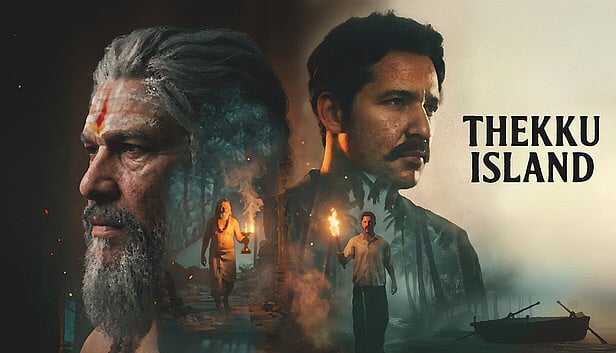
“Games combine multiple art forms into one, visual art, music, writing, performance and also interaction. And unlike movies, they let the player participate in the art,” says Athul George, game director of Thekku Island, Kerala’s first 3D horror game, created by Ales Devs Games and RedWills Interactive.
The sense of control over the narrative experience sets gaming apart and challenges the puritan notion of what can be considered art and cannot be.
Whenever the debate about video games being art reopens, there always seems to be a question on whether all games can be art. Now, it is easy to categorise a game like The Last of Us as art , with its engaging narrative, complex characters, stunning visuals and soundtrack.
Competitive multiplayer games like BGMI (Battlegrounds Mobile India) and Free Fire, formerly known as Garena Free Fire, which are popular in India are a bit harder to define. Though these games contain art in the sense there exists maps, animations and character designs and such, much of these games are rooted in their use of gameplay mechanics as a form of competition.
Though these games provide enjoyment, it is mostly curated by the interactions between the players rather than the artistic merit of the game itself. This sort of approach could be considered more sport than art.
Although, globally the idea of video games as interactive storytelling is increasingly growing relevant, it is not quite mainstream in India yet. Many reasons can be attributed to this, according to Athul George.
“Most players prefer mobile and fast games. Developers focus on safe ideas and quick money. Story games need time, money, risk and a long development time, so many people won’t risk it,” says Athul.
When even the traditional forms of art are devalued, video games which are usually seen as juvenile and as a source distraction, are rarely if ever considered art by the mainstream Indian society.
There is another reason why story-based games are not mainstream in India, where competitive multiplayer games like BGMI and Free Fire dominate. Narrative-driven games are often unable to compete in terms of popularity due to the sheer size of the playerbase of these multiplayer games.
According to commentators in the subreddit r/Indiangamers, accessibility is a major reason. “Playing a free mobile game on a mid range phone is much more accessible than paying Rs 200 to Rs 3000 for a game on a computer or laptop that will cost you at least 70k.” wrote a reddit user on r/Indiangamers. Often time spending money on these things are viewed as wasteful or a source of distraction in the highly competitive Indian society.
However, a steady growth can be seen in the niche community which appreciates games for their artistic relevance. Story-driven games like Red Dead Redemption 2, The Last of Us, and God of War, which were global hits have gained a huge level of popularity in India. In addition to this, the country has seen in recent years an influx of Indian games with focus on local narrative, mythology and folklore.
Thekku Island, is a game set on a mysterious island in Kerala in the 1980s and can be seen as an attempt to place games as a medium of storytelling in a regional context.
“The focus on a growing demographic of Indian gamers and players, among other things, has given rise to an Indian independent games industry, which can be seen both as a driver and reflective of contemporary culture. Currently in India, we see that especially indie game developers increasingly use aspects of cultural traditions, practices, and heritage from regional Indian contexts to shape the form and content of some of their games,” notes Xenia Zeiler, an Associate Professor of South Asian Studies at the University of Helsinki, Finland and Souvik Mukherjee, an Assistant Professor of English Literature at Presidency University, Kolkata, in their paper Video Game Development in India: A Cultural and Creative Industry Embracing Rich Regional Cultural Heritage(s).
Perception regarding gaming is changing, but slowly. Audiences are widening their preferences and developers are taking the risk of creating story-driven games. Games like Asura (2017), Missing (2016), or Raji (2020) are examples of this phenomenon.
In an interview published in Unreal Engine, a platform that helps create games, Shruti Ghosh, one of the developers of Raji: An Ancient Epic, says it was the realisation that the market lacked games that represented Indian culture, which they had all grown up with, that led to Raji. “There was nothing that showcased our architecture or told the stories that we’ve heard from our parents and grandparents—it was something that we thought we could bring to the world and that we could do to a really good quality, so that it could compete with games that are made in the West,” she says,
This article was written by a student interning with TNM.