









































































Canada's visa crackdown forces closure of its first public college
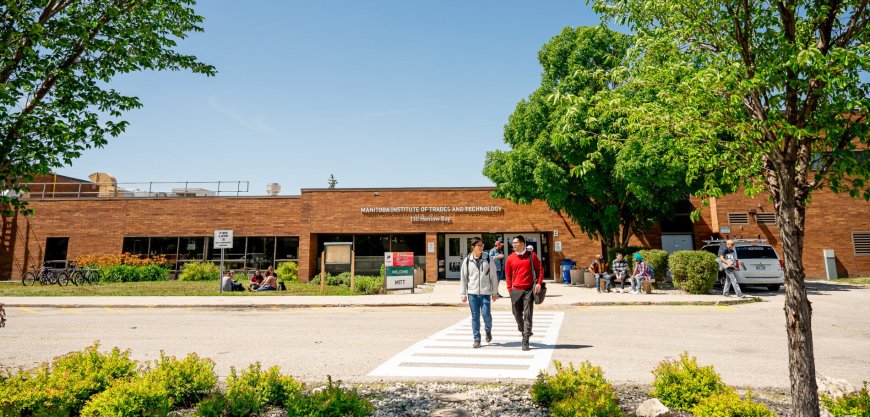
THE Manitoba Institute of Trades and Technology (MITT) has become the first public college in Canada to close due to the federal government's crackdown on international student visas.
Trixie Ho, a Vietnamese graduate who studied hairstyling at MITT, said friends back home who had hoped to attend now "have no chance." She went to campus to pick up her diploma the day of the announcement and found the school closed.
"There are some students who really want to go to MITT," Ho told CBC News.
MITT has become the first public college in Canada to be completely shut down in the wake of the federal government's aggressive crackdown on international student visas, a policy shift that has slashed the number of foreign students in the country by more than 270,000 in just two years.
The closure was announced on Jan. 28 by Neil Cooke, MITT's President and CEO, who said international student enrollment had plummeted by more than 55%, making the school's financial model "unsustainable."
Provincial figures tell the story starkly: MITT's revenue from international students crashed from CA$23.2 million (US$16.9 million) in 2024-25 to just CA$9.5 million this year, a drop of nearly 60%, according to CBC News.
"These changes have created uncertainty for students and post-secondary institutions across Canada and sent a message abroad that international students aren't valued here," read the school's statement.
The school will wind down operations over the next year. Current students will be able to complete their programs, with some courses transferring to Red River College Polytechnic (RRC Polytech). But the details remain unclear, leaving thousands of students in limbo.
In its most recent year, MITT had 4,663 students. More than four in ten, 1,988, were international. The school offered programs in early childhood education, welding, carpentry, cybersecurity and English language training, as well as courses for high school students in grades 11 and 12, according to MITT’s 2024-25 annual report.
Higher education consultant Ken Steele, president of Eduvation Inc. and one of Canada's leading trackers of the crisis, was not surprised.
"MITT is the first time we've seen a public college in Canada completely closed down by its provincial government, but I suspect it won't be the last," he told The PIE News.
Steele's data paints a devastating picture across the sector: Canadian colleges and universities have collectively lost approximately CA$5.7 billion in revenue since the policy changes began, and more than 17,000 jobs have been cut.
The damage is not limited to small colleges. Memorial University of Newfoundland, the province's only university, has voted to sell its campus in Harlow, England, along with several other properties, as it struggles with a deficit of around CA$25 million, according to University Affairs. The university saw international enrollment fall 23.5% year-over-year in fall 2025, compounding pressures from declining domestic enrollment, rising costs, and aging infrastructure.
In Ontario, the country's most populous province, more than 8,000 post-secondary jobs have already been lost, over 600 programs suspended, and at least two campuses closed. Conestoga College in Kitchener alone has slashed more than 2,500 positions, according to The Globe and Mail.
Steele argues that merging smaller institutions is a logical path forward. "Merging smaller institutions makes a lot of sense, as has been suggested by numerous government reviews over the last decade or two," he said.
The crisis traces back to January 2024, when the federal government, then under Prime Minister Justin Trudeau, imposed a hard cap on international student study permits for the first time. The stated goals: curb fraud by private colleges exploiting foreign students as cash cows, and relieve pressure on housing and public services strained by a rapid post-pandemic immigration boom.
But the measures went far beyond what many institutions expected. In rapid succession, Ottawa doubled financial requirements for student applicants, tightened eligibility for post-graduation work permits, and sharply increased visa rejection rates, particularly for applicants from India, Canada's largest source country.
The result was a freefall. The number of international students in Canada dropped from over one million at the start of 2024 to roughly 700,000 by November 2025, according to Immigration Minister Lena Metlege Diab, a decline of about 273,000 students, or 27%, ICEF Monitor reported.
Under Prime Minister Mark Carney's government, the squeeze has only tightened. The 2025 federal budget cut the cap for new student permits nearly in half, to 155,000 for 2026, down from a target of about 306,000.
Canada, once ranked the world's number-one destination for international students, has fallen to number four in recent surveys, according to Canada.ca.
Speaking at a Halifax Chamber of Commerce luncheon on Jan. 30, Minister Diab acknowledged the financial toll on institutions but offered little relief, directing struggling colleges and universities to seek help from their provincial governments instead.
She defended the crackdown, saying some international students had not been attending classes at all and were merely using study permits as an immigration pathway.
"There was quite a bit of fraud happening from international recruiters and bringing too many people here," Diab said, The Canadian Press reported.