
































































Why Emirates ID is required for expats flying back to UAE
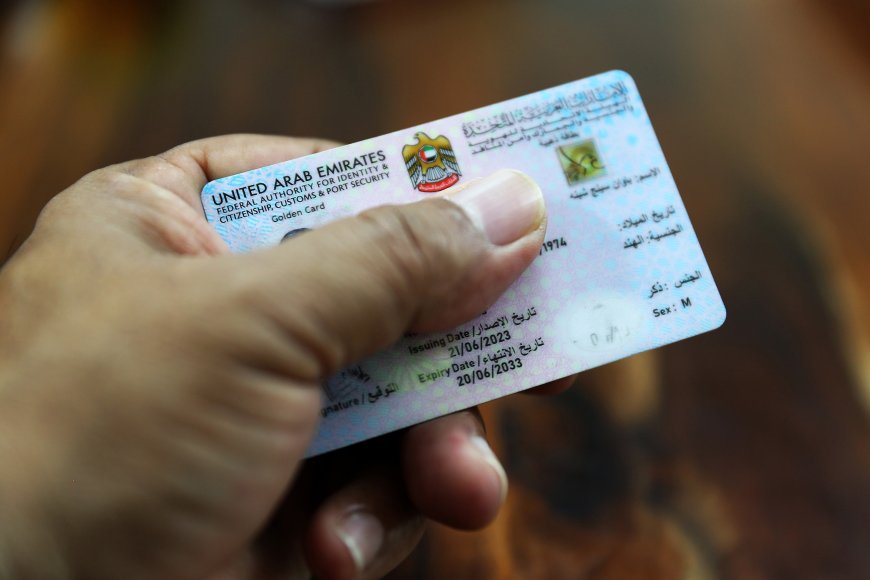
SUMMER is here, and many UAE-based expats are packing their bags for a trip home to see family. But before you go, there's one essential item you can't afford to leave behind: your Emirates ID.
Whether you're returning to the UAE from India, Canada, or anywhere else, your airline may ask you to produce your Emirates ID as proof of residency before letting you board. Most residents carry theirs at all times, but it's easy to forget when travelling abroad and a digital version doesn't always work as a substitute.
An Indian expat from Sharjah flew to Mangalore but forgot his Emirates ID. When he arrived at the airport to board his return flight to the UAE, he was denied boarding. He had to cancel his trip, wait five days for his ID to be couriered, missed work, and even faced a salary deduction.
This incident was shared by Sapna Aidasani, marketing director at Pluto Travels in Dubai.
“Even if no one checks it when you’re leaving the UAE, Indian immigration and airline staff, especially in cities like Mumbai or Delhi, often ask for your Emirates ID before letting you board a flight to the UAE. Why? Because your residence visa is now linked to your Emirates ID, and it is the only way to prove you are a UAE resident,” Aidasani explained.
To avoid this, it's worth checking with your airline before you travel to confirm whether a physical or digital copy will be accepted.
How to check your Emirates ID application status online
Another Sharjah-based expat travelling from Kerala faced the same issue. Even after presenting his UAE residence visa and digital Emirates ID through the UAE Pass app - the official government platform for verified digital documents, the airline rejected it and insisted on seeing the original physical card.
"A lot of people don’t know this, but if you’re travelling from India to Dubai, you must carry your physical Emirates ID, not just a photo or digital version,” Aidasani added. “Do not rely on photocopies or screenshots. Always carry your original Emirates ID with you. It can save you a lot of stress and money.”
Indian immigration and airline staff, especially in cities like Mumbai or Delhi, often ask for your Emirates ID before letting you board a flight to the UAE. Why? Because your residence visa is now linked to your Emirates ID, and it is the only way to prove you are a UAE resident.
Do all expats need their Emirates ID to travel back to the UAE?
Rikin Sheth, vice president of musafir.com (B2C), echoed the same advice, stressing that the Emirates ID is the primary proof of UAE residency.
“An original Emirates ID is required to travel back to the UAE for expats from anywhere in the world, not just India. It is a residence proof and it is mandatory by most international airports to accept passengers travelling to the UAE on a residence visa,” Sheth said.
This rule is not limited to Indian expats or airports in India. Sheth shared his own experience travelling from Toronto, Canada, to the UAE, where he was required to present his physical Emirates ID at both check-in and immigration.
“This applies to expats of all nationalities in the UAE when travelling abroad,” he added, highlighting that carrying the original Emirates ID is essential for every international journey.
An original Emirates ID is required to travel back to the UAE for expats from anywhere in the world, not just India. It is a residence proof and it is mandatory by most international airports to accept passengers travelling to the UAE on a residence visa.
Emirates ID as proof of residency
This is not a new rule. According to travel agents, the requirement has been in place since 2022. That year, the UAE’s Federal Authority for Identity, Citizenship, Customs, and Port Security (ICP) announced that the Emirates ID card would officially replace the visa stamp in passports as proof of residency.
The Emirates ID is an official identity card issued by the UAE government to all citizens and residents. It is a mandatory document, required for both Emiratis and expatriates.
Since residence visa stickers are no longer included in passports, immigration and airline staff at international airports now rely on the Emirates ID to verify an expat’s UAE residency.