






































































Operation Toofan: Kerala police struggle to deal with addicts
Kerala’s anti-narcotics campaign ‘Operation Toofan’, completed 100 days on September 9. The numbers are staggering: After the start of the campaign, till September 17, police have arrested 11,776 people in 10,918 cases. They also seized 23925.120 grams of MDMA and nearly 1457 kg of cannabis. But inside Kerala’s prisons and police stations, officers are confronting a different side of the drug problem: people exhibiting severe withdrawal symptoms, becoming violent in police stations and prisons, sometimes injuring themselves or others, and returning to drug use soon after they are released.One reason for this, according to investigators and mental health professionals, is the absence of protocols to identify what they have consumed or address their addiction when people are arrested with small quantities.Is Kerala’s war on drugs holistic?Aalam* was shaking and struggling to control himself while in police custody after being picked up during an Operation Toofan search. The 28-year-old migrant worker from Jharkhand said he was beaten both at the police station and inside prison, where fellow inmates accused him of being violent.“I get shivering and I might lose control. I had been using it for a while. I was beaten both in the police station and inside jail. Inside jail, I was beaten by other inmates. They said I was violent, but I don’t think I was,” Aalam, who was arrested twice under Operation Thoofan, told TNM.Aalam*, who lives in Perumbavoor in Ernakulam district, came to Kerala from Jharkhand six years ago and has worked in various odd jobs. He has wounds and bruises across his body.The MDMA recovered from him when he was first picked up was around 1 gram. The second time it was 0.5 grams.Aalam was bailed out by people known to him both the times with no help coming forth to address the addiction.Data from the first three months of Operation Toofan shows cases involving small quantities were 27 times more than those when commercial quantities were seized. Till September 1, police have registered 116 cases involving commercial quantities, compared to 3,127 cases involving small quantities. On September 10 alone, there was one commercial-quantity case and 24 small-quantity cases. Officials told TNM that those caught with small quantities are, in many cases, regular users or people carrying drugs to share within a small circle of friends. This is an indication that Kerala has now a large segment of people struggling with substance abuse. Yet, despite the scale of arrests, there is no dedicated system to assess their treatment needs and ensure rehabilitation. Prison and police officials say this leads to a revolving door scenario in which people experiencing withdrawal symptoms are managed as law-and-order problems, remanded in judicial custody, released on bail and often return to drug use.Under the Narcotic Drugs and Psychotropic Substances (NDPS) Act, the classification of an offence is linked to the quantity of drug involved. For commonly seized substances, the small and commercial quantity thresholds are 5 grams and 250 grams for heroin, 1 kg and 20 kg for ganja, 100 grams and 1 kg for charas/hashish, 2 grams and 100 grams for cocaine, and 0.5 gram and 10 grams for MDMA, respectively.Operation ToofanOperation Toofan is built around three components: Toofan Strike, which focuses on enforcement, raids and seizures; Toofan Warriors, the awareness initiative; and Toofan Care, which is meant to support rehabilitation. The Home Department says the care component has brought 35 hospitals across Kerala into the programme to help people affected by drug use recover and return to their families and society. In a statement, Kerala Home Minister Ramesh Chennithala said, “The fight against drugs cannot end with arrests and seizures.Through Operation Toofan Care, 35 hospitals across Kerala have joined us to help people affected by drug use recover, rebuild their health and return to their families and society. Enforcement can break a drug network. Care can help rebuild a life.” He inaugurated this coordination with hospitals on September 10. Under the programme, people can approach the Toofan Care helpline for help, following which the police coordinate with hospitals to facilitate treatment, including for withdrawal symptoms. A senior Excise officer said their department and the police follow the same procedure. “If a person is arrested for possession of any psychotropic substance, a case will be registered. If we receive information that a person is addicted but do not find any substance in their possession, we help shift them to the concerned rehabilitation centres,” the officer said.But this support mechanism does not appear to extend in the same way to people who are arrested for possessing small quantities and are in need of rehabilitation.Severe withdrawal symptomsInside prisons, the consequences for addicts are particularly stark. A district jail superintendent told TNM that several arrested people show se
KERALAM’S anti-narcotics campaign ‘Operation Toofan’, completed 100 days on September 9.
The numbers are staggering: After the start of the campaign, till September 17, police have arrested 11,776 people in 10,918 cases. They also seized 23925.120 grams of MDMA and nearly 1457 kg of cannabis.
But inside Kerala’s prisons and police stations, officers are confronting a different side of the drug problem: people exhibiting severe withdrawal symptoms, becoming violent in police stations and prisons, sometimes injuring themselves or others, and returning to drug use soon after they are released.
One reason for this, according to investigators and mental health professionals, is the absence of protocols to identify what they have consumed or address their addiction when people are arrested with small quantities.
Is Kerala’s war on drugs holistic?
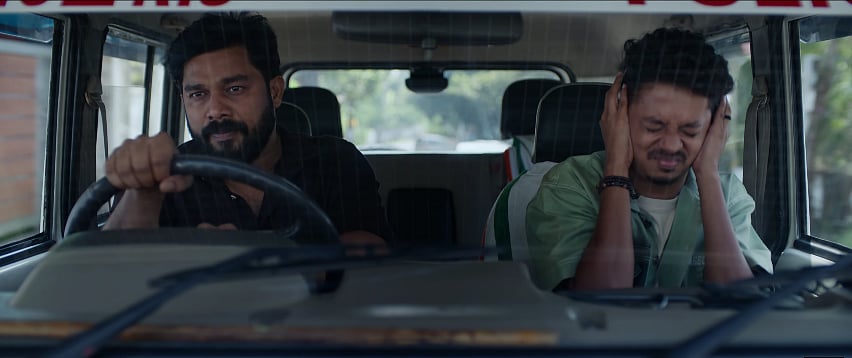
Aalam* was shaking and struggling to control himself while in police custody after being picked up during an Operation Toofan search. The 28-year-old migrant worker from Jharkhand said he was beaten both at the police station and inside prison, where fellow inmates accused him of being violent.
“I get shivering and I might lose control. I had been using it for a while. I was beaten both in the police station and inside jail. Inside jail, I was beaten by other inmates. They said I was violent, but I don’t think I was,” Aalam, who was arrested twice under Operation Thoofan, told TNM.
Aalam*, who lives in Perumbavoor in Ernakulam district, came to Kerala from Jharkhand six years ago and has worked in various odd jobs. He has wounds and bruises across his body.
The MDMA recovered from him when he was first picked up was around 1 gram. The second time it was 0.5 grams.
Aalam was bailed out by people known to him both the times with no help coming forth to address the addiction.
Data from the first three months of Operation Toofan shows cases involving small quantities were 27 times more than those when commercial quantities were seized.
Till September 1, police have registered 116 cases involving commercial quantities, compared to 3,127 cases involving small quantities. On September 10 alone, there was one commercial-quantity case and 24 small-quantity cases.
Officials told TNM that those caught with small quantities are, in many cases, regular users or people carrying drugs to share within a small circle of friends.
This is an indication that Kerala has now a large segment of people struggling with substance abuse. Yet, despite the scale of arrests, there is no dedicated system to assess their treatment needs and ensure rehabilitation.
Prison and police officials say this leads to a revolving door scenario in which people experiencing withdrawal symptoms are managed as law-and-order problems, remanded in judicial custody, released on bail and often return to drug use.
Under the Narcotic Drugs and Psychotropic Substances (NDPS) Act, the classification of an offence is linked to the quantity of drug involved.
For commonly seized substances, the small and commercial quantity thresholds are 5 grams and 250 grams for heroin, 1 kg and 20 kg for ganja, 100 grams and 1 kg for charas/hashish, 2 grams and 100 grams for cocaine, and 0.5 gram and 10 grams for MDMA, respectively.
Operation Toofan
Operation Toofan is built around three components: Toofan Strike, which focuses on enforcement, raids and seizures; Toofan Warriors, the awareness initiative; and Toofan Care, which is meant to support rehabilitation.
The Home Department says the care component has brought 35 hospitals across Kerala into the programme to help people affected by drug use recover and return to their families and society.
In a statement, Kerala Home Minister Ramesh Chennithala said, “The fight against drugs cannot end with arrests and seizures.
Through Operation Toofan Care, 35 hospitals across Kerala have joined us to help people affected by drug use recover, rebuild their health and return to their families and society.
Enforcement can break a drug network. Care can help rebuild a life.” He inaugurated this coordination with hospitals on September 10.
Under the programme, people can approach the Toofan Care helpline for help, following which the police coordinate with hospitals to facilitate treatment, including for withdrawal symptoms.
A senior Excise officer said their department and the police follow the same procedure. “If a person is arrested for possession of any psychotropic substance, a case will be registered. If we receive information that a person is addicted but do not find any substance in their possession, we help shift them to the concerned rehabilitation centres,” the officer said.
But this support mechanism does not appear to extend in the same way to people who are arrested for possessing small quantities and are in need of rehabilitation.
Severe withdrawal symptoms
Inside prisons, the consequences for addicts are particularly stark. A district jail superintendent told TNM that several arrested people show severe withdrawal symptoms after being brought to prison, sometimes becoming violent or attempting to hurt themselves.
“They would turn violent due to withdrawal symptoms. They would throw away food and try to hurt themselves. There are many such cases.
After Toofan, it has increased. So, we would isolate them and then take them to the hospital. In many cases, they would be kept under sedation for days. It is a huge problem for us. After a few days, they would become normal, and then someone would bail them out,” the officer said.
The officer said the cycle often repeats after release. “In many cases, they are bailed out by people who are part of their networks. It is obvious that they will go back and use drugs again,” the officer added.
Another jail superintendent said drug-dependent inmates have also been involved in violent clashes inside prisons.
“There are many instances where they attack other inmates, which results in violent clashes. Staff also get hurt. There should be some facility to keep people with addictions, whether it is drugs or alcohol,” he said.
Kerala’s prisons are operating well beyond capacity. As per NCRB's Prison Statistics Report 2024, 10,307 inmates are held in facilities meant for 7,823. The Prisons Department also faces a severe staff shortage, with only 1,731 guards against the sanctioned requirement of 3,574.
As per the report, Kerala stands in 5th position in the country (131.8%) after Meghalaya, Madhya Pradesh, Maharashtra and Uttarakhand.
A jail superintendent TNM spoke to said space is a huge issue when it comes to the Toofan strike. “But it's a relief that most of them get bail within a month," he said.
The problem, according to a senior police officer in the Home Department, begins even before an accused reaches prison. Police stations are increasingly dealing with people experiencing substance-related problems, without a mechanism to determine what they have consumed or what kind of care they need.
“There are many instances where substance users become extremely violent inside the police station. Officers get hurt and they destroy things. Unfortunately, we do not have a system to screen or assess substance abusers,” the officer said.
On September 12, an incident involving an accused, Renjith, at the Maradu police station in Ernakulam made headlines after he allegedly turned violent inside the station.
“We got a call saying this person was trying to trespass into a woman’s apartment. We took him into custody and brought him to the station. We also recovered a small quantity of MDMA from him. Initially, he started talking randomly. Then he began hitting his head against the wall. When the police officers there tried to help him, he attacked a Sub Inspector and twisted the hands of other police personnel. We then shifted him to the hospital. He was there for a day and has now been remanded,” an officer from the Maradu police station told TNM.
Advocate J Sandhya, Human rights activist and lawyer, said the absence of such a system reflects a larger failure to recognise addiction as an issue requiring specific intervention within the criminal justice system.
“There is no system to deal with these cases. This issue has not even been recognised. They are treated just like any other accused. The issue of addiction is not addressed at all. Even in cases of crimes committed by addicts, the addiction may not even be mentioned in the chargesheet. They can be extremely violent inside police stations. It is a huge responsibility for the state, but it has been considered a burden,” she said.
For some people, the consequences are not limited to withdrawal symptoms but also violence and repeated arrests.
George Mathew, chairperson of migrant welfare organisation Progressive Workers Organisation, said Aalam's experience was not an isolated one among migrant workers.
“When it is a migrant worker, the chances of assault are high. They can become violent due to withdrawal symptoms. There are also many cases where these people get arrested repeatedly because they are bailed out by someone from their network, who then provides them with drugs,” he alleged.
In Aalam’s case, that network was within his own family. He told TNM that his cousin, who also uses drugs, had arranged his bail.
For George, this is precisely where the limits of an enforcement-led approach become visible.
“What is the point of arresting people repeatedly, when they have an addiction? There are no measures in the whole operation for rehabilitation or treatment for them. There should be prevention, for which they have Toofan Care, awareness classes, Toofan Warriors etc… But what happens after the enforcement, what is the point in projecting the high number of arrests, if users are not being treated,” he said.
Interventions required
Addiction psychiatrist Dr Mohan Roy said the first missing step is often the most basic one: finding out what substance a person has actually consumed. Proper drug screening is not routinely carried out after such arrests, he said.
“It is not always clear what substance the particular arrested user has consumed. They may not give an accurate account of their drug use. So, to treat them properly, there should be drug screening to determine what substance they have used,” he said.
This matters because both the drug itself and the process of withdrawal can create medical complications, he explained.
“An addicted person can have two issues. Most of the substances they obtain are adulterated, which can lead to health problems. The second issue is withdrawal symptoms. That is why screening is necessary,” Dr Mohan Roy said.
For Dr Mohan Roy, the answer is not simply to take people out of prison and send them elsewhere for treatment. “Such patients should be treated within the jail premises. All jails should have facilities to provide them with treatment,” he said.
He also questioned the practice described by jail officials of keeping people experiencing withdrawal under sedation for several days.
“That shows the lack of awareness among those dealing with them. Addicted persons who are brought to hospitals with withdrawal symptoms are treated with proper medication. It is not that they are sedated for so long. We need a proper holistic approach within the jails,” he said.
"Honestly, training, evaluation, and the overall system need to change. At the very least, the police, the excise, and prison personnel in the state should be trained. That is a practical minimum step that can be taken," said Mohan Roy.