




























































Israel sets October 27 election date as Benjamin Netanyahu's coalition completes full term
Netanyahu's far-right coalition will become the first to serve a full term in four decades. The Knesset is expected to dissolve on Friday, and the coalition is seeking to secure as many political achievements as possible

ISRAEL'S governing coalition on Sunday announced that the country's next general election will be held on October 27, 2026, the latest date permitted under law, allowing Prime Minister Benjamin Netanyahu's government to complete a full four-year term, according to a report by Haaretz.
According to a report by Haaretz, the election will take place on the latest date permitted under Israeli law, making it the first Israeli general election since 1988 to be held on its originally scheduled date. The announcement marks a rare moment of political continuity following years of unstable coalition governments and repeated snap elections.
Israel's Knesset prepares for election recess
The announcement comes as the 25th Knesset approaches the end of its current parliamentary session, with lawmakers scheduled to adjourn on July 17 before the election campaign formally gathers pace.
Ahead of the recess, the coalition is expected to accelerate work on several priority bills, including legislation linked to the government's judicial overhaul programme and proposals affecting Israel's ultra-Orthodox community.
Knesset Legal Adviser Adv. Sagit Afik said there was no legal requirement to dissolve Parliament because the election date had already been established under existing law and the legislature was completing its full term.
Afik also recommended that July 17 be formally designated as the beginning of the election recess.
Benjamin Netanyahu confirms he will contest the election
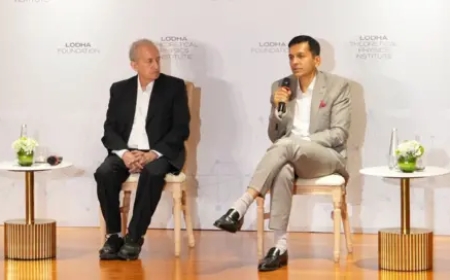
Netanyahu has already confirmed his intention to seek another term, signalling that he wants to build a coalition extending beyond Israel's traditional political blocs.
"I intend to establish a broad national government, not a right-wing government, not a left-wing government that depends on Arab parties, but a broad national government," he said last month.
The October vote will determine the composition of the next Knesset and whether Netanyahu, Israel's longest-serving prime minister, can extend his political career after nearly four decades at the centre of Israeli public life.
Security, judicial reforms and economy likely to dominate campaign
The Israeli election campaign is expected to revolve around domestic governance, judicial reforms, economic issues and national security.
Regional tensions remain high following Israel's military confrontation with Iran earlier this year. According to the report, Netanyahu persuaded US President Donald Trump to support military action against Iran on February 28, prompting Tehran to launch retaliatory strikes targeting Israel, Gulf states and commercial shipping in the Strait of Hormuz.
At home, Netanyahu continues to face criticism over his government's handling of the Hamas-led attacks on southern Israel on October 7, 2023. Families of hostages, opposition leaders and sections of the public have repeatedly called for an independent inquiry into the events leading up to and following the attacks.
Israel's military campaign in Gaza has also intensified international scrutiny of the country's conduct during the conflict, with several governments and international organisations calling for greater accountability and humanitarian protections.
Corruption trial on Netanyahu continues to cast shadow
Alongside political and security challenges, Netanyahu remains on trial over corruption charges first filed in 2019. He has consistently denied wrongdoing.
The legal proceedings are expected to remain a significant backdrop to the election campaign, even as Netanyahu seeks to persuade voters that his leadership is essential during a period of regional instability.
Who could challenge Netanyahu?
While Netanyahu remains one of Israel's most experienced political leaders, the election is expected to be closely watched for signs of a changing political landscape.
National Security Minister Itamar Ben Gvir criticised Netanyahu's recent call for a broad governing coalition.
"The government that Prime Minister Netanyahu must form should be a fully right-wing government," Ben Gvir said, describing Netanyahu's remarks as "very disturbing".
Among the names attracting increasing attention is former Israel Defense Forces chief Gadi Eisenkot, who has gained support in recent opinion polls. Eisenkot lost a son during the Gaza war and is widely associated with the military's "Dahiyeh doctrine" of overwhelming force.
The 66-year-old former military commander has cultivated an image as a pragmatic security leader and political outsider, presenting himself as an alternative to Netanyahu's lengthy tenure in office.