





















































































From chokepoint to crisis: The Strait of Hormuz and global oil markets
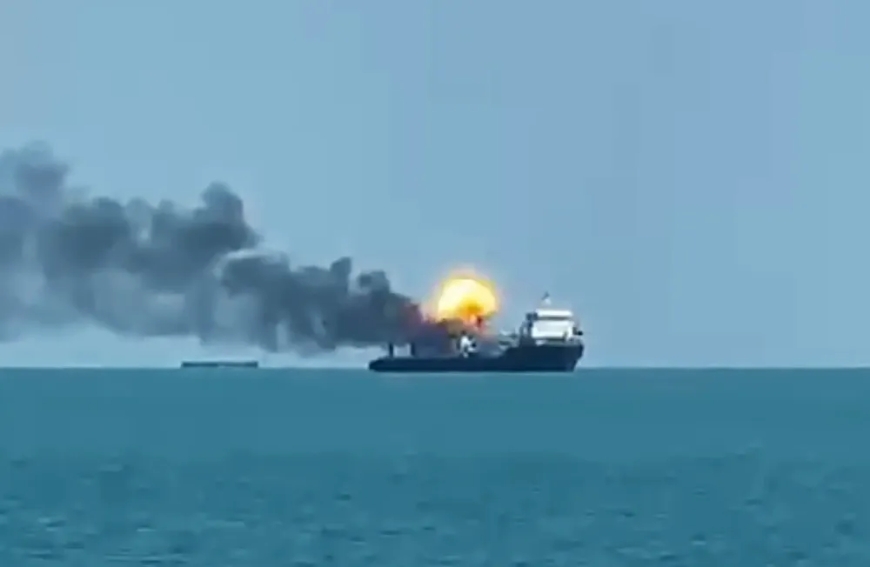
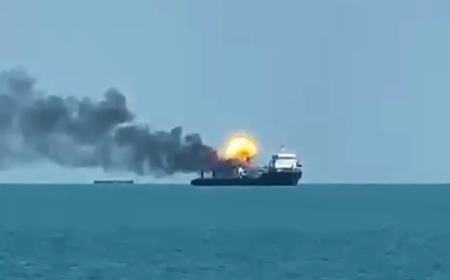
THE Strait of Hormuz, the only entrance to the Persian Gulf, has long been understood as the world’s most important energy shipping chokepoint. After the United States and Israel began attacking Iran on February 28, 2026, Iran retaliated by using drones, ballistic missiles, and small attack boats to threaten and attack vessels attempting to transit the strait.
As a result, insurance is unavailable or prohibitively expensive for vessels transiting the strait, and seafarers are unwilling to make the journey, meaning that the strait is effectively closed. Iran continued its own crude oil exports of about 2 million barrels per day (mbd) until the United States began a blockade on April 13, 2026.
Today, ship traffic through the strait is at a near-standstill, except for a small number of vessels that have paid a “toll” to the Islamic Revolutionary Guard Corps (IRGC) in exchange for safe passage. Oil prices are likely to rise further as the strait remains closed, and once it opens, the market will take months to normalise.
Background
Prior to the war, roughly 20% of global oil supply flowed through the strait, consisting of approximately 15 mbd of crude oil and 5 mbd of refined products. Owing to their proximity to the Persian Gulf and reliance on Gulf suppliers, Asian markets were hit early and hard by the disruption.
Pipeline routes are allowing Saudi Arabia and the United Arab Emirates (UAE) to export crude oil outside the strait, and their utilisation has increased since the conflict began.
Saudi Arabia’s East-West pipeline is now running at full capacity, bringing 7 mbd to the port of Yanbu in the Red Sea. The UAE is also fully utilizing its Habshan-Fujairah pipeline, delivering 1.8 mbd to the port of Fujairah in the Gulf of Oman.
Even with shipments through these routes, the International Energy Agency (IEA) estimates that oil outputs from countries affected by the closure are down more than 14 mbd, describing this shock as the “largest supply disruption in the history of the global oil market.”
Blockage of the strait has long been understood as a risk, but this blockage is proceeding differently than the Trump administration appears to have planned for. Iran has demonstrated that threats and a few attacks can effectively block traffic through the strait, while it allowed its own shipments through prior to the U.S. blockade.
Reestablishing freedom of navigation through the strait militarily is not just a naval issue but would require control of Iranian territory from which missiles and drones could be launched.
Vessel traffic typically passes through two lanes in the middle of the strait, but Iran says that it has mined these shipping lanes and is encouraging ships to follow a route in Iranian territorial waters instead. Iran is now attempting to implement a tiered system of charges to pass the strait, with preference given to ships from states friendly with Tehran.
Analysis
Reserves are cushioning the supply shock for now. In response to the crisis, the IEA coordinated the largest release of oil reserves in history, a coordinated sale of 400 million barrels. IEA Executive Director Fatih Birol stated that the release is adding roughly 2.5 mbd to 3 mbd to the market, but this could be spent by July or August.
Commercial inventories of crude oil and fuels were high before the conflict, owing to the glut in supply. However, these are also declining rapidly. Finally, China has the world’s largest strategic oil stocks, at nearly 1.4 billion barrels. China has reduced seaborne imports of oil, likely drawing from commercial stocks rather than its reserves thus far.
The United States is the world’s largest oil producer and a net oil exporter, if one includes refined products like gasoline, diesel, and jet fuel. Nonetheless, the United States is exposed to the same price shock as the rest of the world.
Oil and refined products are globally traded commodities and are largely fungible, meaning that a supply disruption increases prices everywhere. In the United States, the average price for regular gasoline was $4.31 per gallon, and diesel was $5.35 per gallon as of June 1. Prices are down slightly from mid-May highs, when gasoline was about $1.50 and diesel about $2.00 greater than their prewar prices.
Prices for crude oil and refined products will almost certainly rise further as time passes. Even if the strait is reopened soon, the oil market will take months to normalize as damaged infrastructure is repaired, stopped production is restarted, vessels travel to the areas where they are needed, and commercial inventories are replenished.
Oil companies in the United States and abroad are profiting from higher prices for crude oil and fuels today, but they face a far more uncertain future market environment. Prior to the conflict, the oil market was in a glut, with supply exceeding demand and low prices. That situation has been turned on its head. However, several large international oil companies have announced that they are not changing their investment plans in response to the crisis.
New oil production in the United States can be brought online faster than in other places, but it has been slow to respond to the price signal. The U.S. rig count, a good measure of new oil and gas wells being drilled, has been steady through April 2026 (most recent data).
However, the utilization of equipment needed to fracture a new shale well to prepare it for production is at its highest level since May 2025, increasing 20% over the past few weeks in the Permian basin, meaning that already-drilled wells are coming into production in greater numbers. Nonetheless, current activity is still below its pre-COVID level.
The risk profile of the Persian Gulf oil producers will be different in the future, understanding that Iran has the will and the means to block the Strait of Hormuz. Oil production in OPEC countries has fallen more than 30% since the beginning of the war.
OPEC has for decades set production quotas in an attempt to manage global oil prices. With the uncertain security situation even after the war and with the UAE’s departure from OPEC on May 1, OPEC is likely to have a less prominent position in oil markets and oil prices in the future.
Allowing Iran to charge a toll in the Strait of Hormuz is deeply problematic. The toll could become a key source of revenue for the IRGC. Details have been opaque thus far, but some reports say that the IRGC is charging $1 per barrel of oil; for a very large crude carrier, this would mean $2 million per transit. Additionally, other countries could emulate the Iranians in charging tolls for other important maritime chokepoints, including the Strait of Malacca, the Strait of Gibraltar, and the Danish Straits. This would undermine freedom of navigation, the principle that the U.S. Navy has secured and protected for decades.
Policy recommendations
In the short term, there is little U.S. policy can do to alleviate the crisis for consumers apart from an agreement to open the strait. Some policy ideas under discussion, such as a gas tax holiday or suspending crude oil or refined product exports, could do more harm than good.
Forgoing the federal gas tax (18.3 cents per gallon for gasoline and 24.3 cents per gallon for diesel) would only marginally reduce prices, while hollowing out funding for the Highway Trust Fund, which maintains and builds U.S. transport and road infrastructure.
Suspending crude oil exports would be counterproductive because U.S. refineries are configured to run heavier crude than the light shale oil that makes up the majority of U.S. production. Thus, the United States imports heavy crude and exports light crude. U.S. refineries would produce less gasoline, diesel, and jet fuel if they processed domestic crudes ill-suited to their designs. Banning exports of refined products would set a de facto cap on U.S. refinery production, as well as harming other countries that are reliant on fuel exports.
Continuing releases from the U.S. Strategic Petroleum Reserve (SPR) could be a good idea but are approaching operational limits. At the end of the current IEA-coordinated release, the SPR will contain approximately 300 million barrels. However, the SPR must maintain a minimum amount of oil to prevent structural damage to the system. The SPR does not publicize this limit, but it’s estimated to be about 150 million barrels.
Since oil is overwhelmingly used in the United States for transportation, continuing electrification of the vehicle fleet and increasing vehicle fuel efficiency could cushion the next supply shock. However, these actions are much too slow to alleviate rising fuel prices for consumers and the inflationary effect as high fuel prices flow through the economy.