




































































El Niño play starts. What a tardy monsoon means for India
After a delayed arrival in Kerala on 4 June, the monsoon progress is only getting only slower, as per the India Meteorological Department.

IT'S an unusually tardy start for India's much-awaited south-west monsoon. The rain-laden current kicked off its India journey three days behind schedule in Keralam, and the delay has only worsened.
Over 450 districts have got deficient rains so far, raising concern over farming, water supplies and the broader economy in an El Niño year. What is causing the delay, how unusual is it, and what could it mean if the shortfall persists? Mint explains.
How has the monsoon progressed?
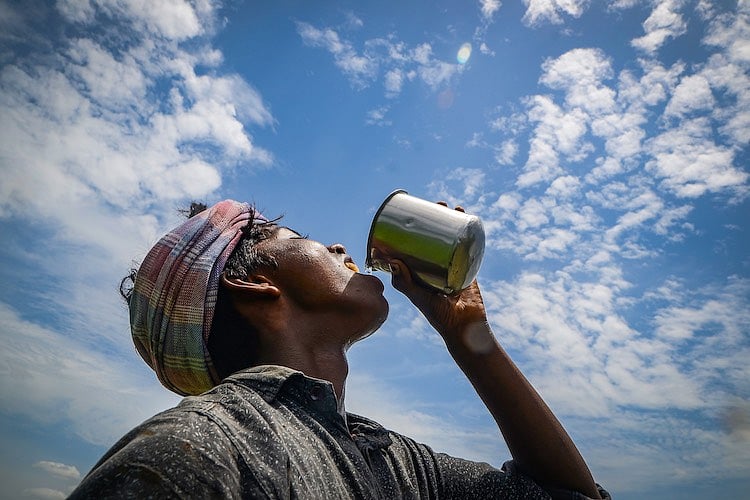
An El Niño year typically brings weak rainfall activity in the tropical regions. After a delayed arrival in Kerala on 4 June, the progress is only getting slower, as per the India Meteorological Department (IMD). In India's commercial capital Mumbai, which is dependent on seven rain-fed lakes for its drinking water, the monsoon is nearly two weeks delayed from the onset date of 10 June. It will now reach in a couple of days, says IMD. Mumbai has enforced water supply cuts amid a looming shortage.
By 20 June, the monsoon typically covers parts of Gujarat, Madhya Pradesh, north Chhattisgarh, and parts of Jharkhand, but it had only reached south Maharashtra, south Telangana, east Odisha, and parts of east Jharkhand by 20 June, the data showed.
Is India facing a rainfall deficit this year?
Likely, yes. The IMD has predicted the season's rains at around 90% of the long period average. In its latest weekly update, the IMD said the country received 46.2 mm rain during 1-17 June, 38% lower than normal, with central India getting 62% below normal rainfall. Daily data shows nearly 450 districts of the total 741 got ‘deficient’, ‘large deficient’, or no rainfall.
States with the most low-rain districts this year are Uttar Pradesh, Bihar, Telangana and Madhya Pradesh, where rice and soybean crops largely depend on monsoon rains.
Why is the south-west monsoon crucial for India?
India receives nearly 70% of its total rainfall through the south-west monsoon, making it critical for kharif crop sowing. With only about 55% of India’s net sown area irrigated, most of the country still relies on seasonal rain for farming. A good monsoon is thus crucial for rural incomes, spurs consumption and aids overall economic growth.
Rural India's share in the country's private consumption is around half. It contributes at least a third to overall fast moving consumer goods (FMCG) sales, and nearly half of two-wheeler volumes. Ratings agency Icra, in a 19 June note, estimated a modest 3-5% volume growth in two-wheelers in FY27 from 9% in FY26 due to potentially weaker monsoon, among other factors.
How do India’s reservoir levels look so far?
The water mark in India's reservoirs is below the year-ago level, but still higher than the long-term average. The level is 86.62% of the year-ago storage and 113.02% of the 10-year average for the period, as per the farm ministry's Unified Portal for Agricultural Statistics (UPAg) as on 18 June, the latest report available.
Reservoir levels are closely tracked during the monsoon season, when they get replenished, for policy preparedness.
How will low rainfall affect power generation?
Hydropower, largely generated from reservoirs, accounts for 10-11% of India’s installed electricity generation capacity. Experts see hydropower generation about 10% lower this year due to weak rainfall, Mint reported on 12 June.
While hydropower accounts for a relatively small share of India’s power generation, it is crucial to keep the power grid stable. Experts see hydropower particularly hit at key reservoirs in central India, such as NHPC’s Omkareshwar and Indira Sagar projects.