
































































Indian citizenship: Why a passport isn't the final proof
The government has not identified passport or any other specific document that can serve as proof of citizenship in India.

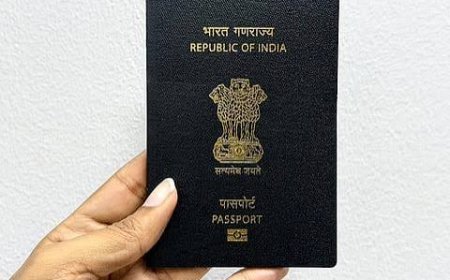
THE Ministry of External Affairs (MEA) has reiterated that an Indian passport is merely a travel document and should not be regarded as conclusive proof of citizenship.
The clarification came on 24 June during a briefing on India's expanding passport and mobility ecosystem as India marked the 14th Passport Seva Divas.
The ministry highlighted measures incorporated into new chip-based e-passports, such as biometric data, to boost global acceptance and reduce the risk of fraud.
At the briefing, officials reportedly stressed that while passports are issued to Indian citizens, the document's primary purpose is to enable international travel and establish identity abroad and not to be treated as proof of citizenship. The clarification comes when questions have already been raised about other documents, such as Aadhaar and voter ID cards, as proof of citizenship.
It also comes amid recent controversies over electoral roll revisions and citizenship verification exercises. Under these circumstances, the question arises: if even a passport does not conclusively prove citizenship, what document does for Indians?
The Passports Act, 1967, the law governing passports, basically says that passports are issued to Indian citizens.
Under Section 5 of the Act, a passport authority may issue a passport only after considering the application and making such inquiry as it deems necessary. Section 6(2)(a) requires the authority to refuse a passport if the applicant is not a citizen of India. So as per the Passports Act, a passport is issued by the authority to an applicant who is an Indian citizen.
Can a passport be given to non-Indians?
The Passport Act 1967 also says that passports can be given to non-citizens.
“Notwithstanding anything contained in the foregoing provisions relating to issue of a passport or travel document, the Central Government may issue, or cause to be issued, a passport or travel document to a person who is not a citizen of India if that Government thinks that it is necessary so to do in the public interest,” reads one of the provisions of the law.
Yet, the government has not identified a passport or any other specific document that can serve as proof of citizenship.
What about Aadhaar, PAN and Voter ID cards?
Regarding Aadhaar cards, the Unique Identification Authority of India clarifies that Aadhaar is strictly a proof of identity and residence, not citizenship.
The Election Commission’s Voter ID card carries proof of citizenship because the Representation of the People Act that governs it requires only citizens to be registered as voters. In fact, the recent Special Intensive Revision (SIR) exercise by the Election Commission suggested that the voter ID is proof of citizenship. But since the Supreme Court clarified that exclusion from voter lists doesn’t mean the end of citizenship, a voter ID card is certainly not proof of citizenship.
PAN card, land and bank documents do not prove one's Indian citizenship, the Gauhati High Court said in 2020 while dismissing a woman's plea against a tribunal order that rejected her citizenship claim.
However, during legal disputes or proceedings before citizenship tribunals, the judiciary refers to ancestral land deeds and certified entries in local government registers dating back several years to establish citizenship by descent.
Which document defines citizenship then?
Unlike many countries, Indian citizens are not issued a universally recognised citizenship certificate.
In fact, Indian citizenship operates on the premise that you are a citizen until there is a dispute. There is no single document to prove it. Instead, your citizenship is established through various records.
As things stand, the most definitive document to prove citizenship is a Certificate of Naturalisation or a Certificate of Registration, issued by the Ministry of Home Affairs under Sections 5 and 6 of the Citizenship Act, 1955. These certificates are granted to foreign nationals or individuals of Indian origin who have successfully completed the statutory process to legally acquire citizenship.
Is a birth certificate a proof of citizenship?
A certified birth certificate functions as the foundational proof, but not for everyone. Because India’s citizenship laws changed over time, the validity of a birth certificate as proof depends on the year of birth:
For people born in India between 26 January 1950 and 1 July 1987, a birth certificate alone is absolute proof, as citizenship was then granted solely by birth on Indian soil, regardless of parental nationality.
However, for individuals born between 1 July 1987 and 3 December 2004, the birth certificate has to be accompanied by proof that at least one parent was a certified Indian citizen at the time of birth.
For anyone born after 3 December 2004, the birth certificate must be corroborated by evidence that both parents are Indian citizens or that one parent is a citizen and the other is not an illegal migrant.
Has government made similar clarifications before?
The government has maintained earlier that a passport is not a valid proof of citizenship.
In 2020, the Union Home Ministry did not identify Aadhaar, passport, voter ID, PAN card or birth certificate as valid documents to prove citizenship.
Congress leader Syed Nasir Hussain had asked the Home Ministry about 'valid Documents to prove citizenship '. Hussain, a Rajya Sabha member, had particularly asked whether the Aadhaar number, Passport, Voter ID, PAN card, and birth certificate would be valid documents to prove citizenship; and also which would be required as proof.
In 2020. Union Home Ministry did not identify Aadhaar, passport, voter ID, PAN card or birth certificate as valid documents to prove citizenship.
‘Acquisition of Indian Citizenship is governed by The Citizenship Act, 1955 and rules made thereunder.’
In response, Minister of State, Home Ministry, Nityanand Rai replied saying, ‘acquisition of Indian Citizenship is governed by The Citizenship Act, 1955 and rules made thereunder.”
Citizenship of India can be acquired by birth or descent or registration or naturalisation or incorporation of territory. The eligibility criteria for acquisition and determination of citizenship is as per the provisions of the Citizenship Act, 1955, the ministry said.
Opposition reacts
The MEA clarification has sparked a political row. , Rajya Sabha MP Kapil Sibal asked which document would prove citizenship. “MEA June 24, 2026 : “A passport is a travel document, and not a document of citizenship.” Which document, then, is proof of citizenship?” Sibal asked in a post on X.
Trinamool Congress MP Mahua Moitra quipped that it “seem(s) that the only proof of Indian citizenship today is to be both Hindu and a BJP voter”. “Nothing else will do,” Moitra wrote on X.