





































































What is GLOF? Understanding the glacier disaster behind Nepal’s devastating floods
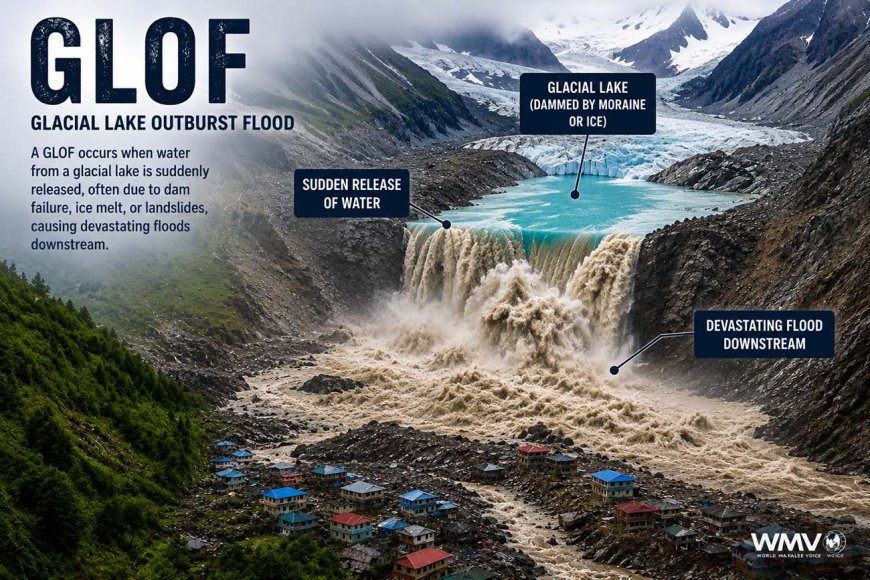
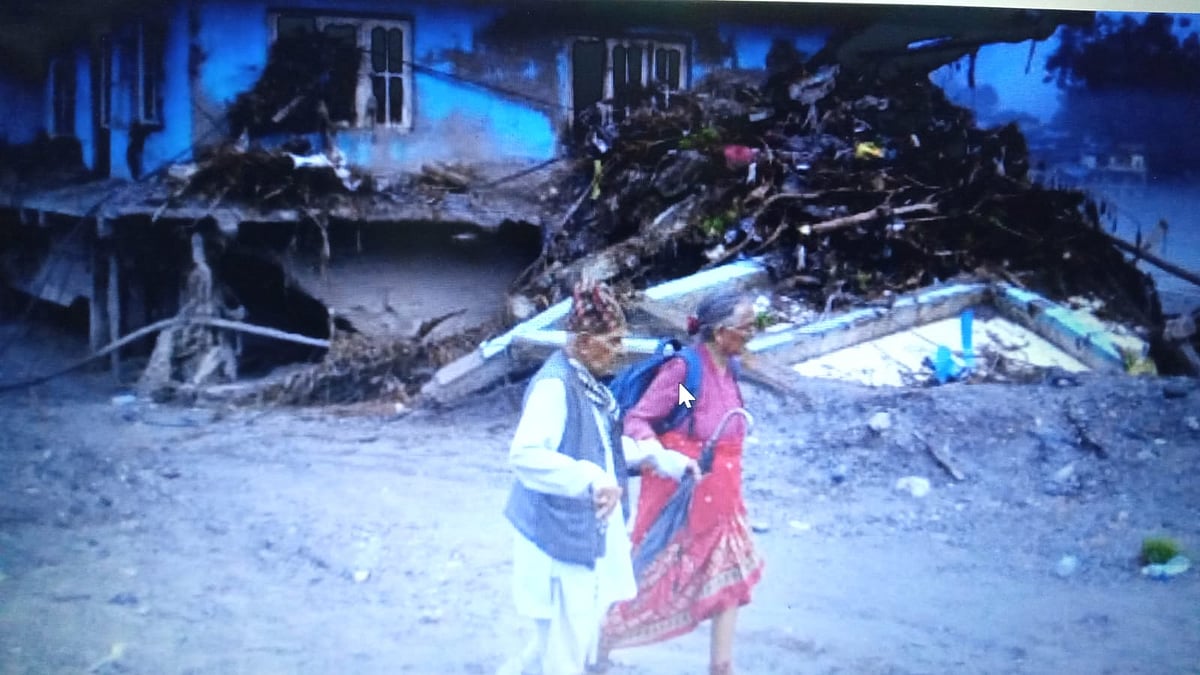
THE catastrophic flash floods that struck Nepal’s Himalayan region on August 26 have brought renewed attention to a dangerous phenomenon known as GLOF — Glacial Lake Outburst Flood.
But what exactly is a GLOF, and was the latest Nepal disaster actually a GLOF?
What is GLOF?
GLOF stands for Glacial Lake Outburst Flood. It occurs when a lake formed by melting glacier water suddenly releases a massive volume of water.
Glacial lakes are often held back by natural barriers made of ice, rocks and loose glacial debris. If such a barrier collapses or is breached, the stored water can escape suddenly, producing a powerful flood that can travel many kilometres downstream.
Because Himalayan valleys are narrow and steep, a GLOF can gain enormous destructive force. It can carry boulders, mud, trees and other debris, destroying bridges, roads, homes, power projects and entire settlements.
What happened in Nepal?
The August 26 disaster appears to have followed a somewhat different chain of events.
Satellite imagery and geological analysis indicate that a huge section of a glacier in the Himalayan region collapsed. A mass of ice and rock plunged roughly 1.2 kilometres down the mountain slope, gathering enormous quantities of rock and sediment as it descended.
The resulting ice-rock avalanche struck the Lhende Khola river system. The debris temporarily blocked the river, creating a natural dam. Water accumulated behind the blockage and then broke through, sending a devastating surge of water, mud, ice and rocks downstream.
The torrent entered the Bhote Koshi and Trishuli river systems and swept through parts of Nepal and neighbouring Tibet. Experts reported that the Trishuli's water level rose by as much as nine metres in just 30 minutes.
Was it a GLOF?
This is an important distinction.
A GLOF specifically means the sudden release of water from a glacial lake.
In the Nepal disaster, early reports suggested that a glacial lake might have burst. However, subsequent satellite and seismic analysis indicates that the initial trigger was a massive glacier collapse and ice-rock avalanche, which blocked the river and subsequently produced a catastrophic flood.
The United States Geological Survey and Italy's National Institute of Geophysics and Volcanology have also concluded that the seismic signal initially mistaken for an earthquake was actually generated by the glacier collapse and resulting landslide.
Therefore, describing the Nepal disaster simply as a “GLOF” is potentially misleading. A glacier-collapse-triggered flash flood or ice-rock avalanche followed by a debris flood is more technically accurate based on the evidence available so far.
Why was the flood so destructive?
The enormous mass of ice, rock and sediment falling into the river created a chain reaction.
Glacier collapse → ice-rock avalanche → river blockage → sudden release of water → massive debris flow → flash flood downstream
The flood carried not just water but huge quantities of mud, boulders and debris. This explains why the destruction was so extensive even though there was no major rainstorm at the time of the disaster.
Are such disasters becoming more dangerous?
Scientists are increasingly concerned about the stability of glaciers and mountain slopes across the Himalayas.
Rising temperatures are causing glaciers to retreat and are contributing to changes in frozen ground and mountain slopes. These changes can increase the risk of ice avalanches, landslides, glacial lake outbursts and other cascading disasters.
Scientists caution that climate change cannot yet be identified as the sole cause of the Nepal event. However, warming conditions are widely regarded as an important factor increasing instability in high mountain regions.
A warning for the Himalayan region
The Nepal tragedy demonstrates how quickly a high-altitude event can become a catastrophe hundreds of kilometres downstream.
For Himalayan communities, tourists, pilgrims and infrastructure projects, monitoring glaciers, unstable slopes and glacial lakes is becoming increasingly important. Early-warning systems, satellite surveillance and rapid communication with downstream communities can save lives.
The disaster also offers a broader lesson: in a warming Himalaya, floods need not begin with rain. A collapse of ice and rock high in the mountains can unleash a deadly wall of water and debris within minutes.
Understanding GLOFs and other glacier-related hazards is therefore no longer just a scientific concern. It is an essential part of disaster preparedness in the Himalayan region.