













































































Why Kerala is facing power cuts, and why the crisis has become a political fight
Follow TNM’s WhatsApp channel for news updates and story links.Kerala's power crisis has now moved beyond an inconvenience for households and businesses to a political fight over a more fundamental question: why does the state repeatedly find itself short of electricity when demand rises or hydel generation falls?Partial power cuts have continued for nearly two weeks, with outages being imposed during evening peak hours and reports from several parts of the state of multiple cuts extending into the night. The disruption has hit students, families with young children, and people working from home, while the lack of advance information about some outages has added to public anger. The government has now said it will put in place a system to alert consumers about planned restrictions at the feeder level. The crisis has also exposed Kerala’s dependence on electricity purchased from outside the state. Electricity Minister Sunny Joseph has said Kerala can generate only around 25% of the electricity it consumes, with the rest coming from the central grid and power purchase agreements with generators outside the state. Its dependence becomes particularly acute when domestic hydel generation falls and electricity is not readily available through the power markets.The Congress-led United Democratic Front (UDF) government has blamed a combination of sharply increased demand, unusually high temperatures, inadequate rainfall, reduced inflows into reservoirs, and a shortage of power available nationally. Sunny Joseph has said peak demand, which was around 4,000 MW during the same period last year, has risen to about 5,200 MW. The peak period has also stretched beyond the traditional 7 pm to 10 pm window, with demand remaining high beyond 11 pm.Chief Minister V D Satheesan has also pointed to reduced inflow into reservoirs and the rise in peak-hour consumption, and said on September 9 that the government was working to bring in additional power and resolve the immediate shortage by around September 15. But that target has since been thrown into question, after KSEB chairman MG Rajamanickam indicated that restrictions could continue until the end of September, with sufficient additional power expected to become available from October 1 through short-term arrangements.At the same time, the government’s explanation has triggered a political counterattack from the Opposition, with former Chief Minister and Communist Party of India (Marxist) [CPI(M)] leader Pinarayi Vijayan arguing that the present shortage is as much a failure of planning and power procurement as it is a supply problem.Pinarayi challenges UDF’s 465 MW argumentThe most contentious issue in the political battle is a set of long-term power purchase agreements under which Kerala was to procure 465 MW of electricity at around Rs 4.29 per unit.The UDF government has alleged that the previous CPI(M)-led Left Democratic Front (LDF) government had cancelled the said agreement, leaving Kerala without a relatively cheaper long-term source of electricity. Satheesan said that if the 25-year agreement had continued, Kerala would have had access to 465 MW at a much lower rate than the prices it is currently having to consider in the market.Pinarayi has rejected that explanation and questioned whether the cancellation can be blamed on the LDF government at all. He argued that the government cannot present the issue as a straightforward decision by his administration to cancel a valid 25-year contract.He said the agreement signed in 2015 during the UDF government's tenure did not have prior approval from the Union government, state government, or the Kerala State Electricity Regulatory Commission. The commission refused to approve the power purchase agreements in 2023, finding that the tariff determination had not followed a transparent process and that there had been deviations from standard bidding guidelines.“The legal problems in the agreement unilaterally entered into by KSEB led the regulatory commission to cancel it,” Pinarayi said. He also argued that the regulatory commission itself had been appointed during the UDF government’s tenure, and that the LDF government had instead tried to retain the power available under the agreement.Pinarayi said the LDF government even approached the Supreme Court seeking restoration of the agreement after it was struck down following the Appellate Tribunal’s verdict.His argument is that the present government cannot portray the agreement as a power source simply lost because of an LDF policy decision.“If the UDF government had entered into the long-term agreement while properly following the required norms, this crisis would not even have arisen,” he said.The dispute over the agreement is still before the Supreme Court, according to Pinarayi.Why is Kerala short of power?The immediate crisis is being driven by several factors.Kerala's peak demand has risen sharply, with higher temperatures increasing the use of fans, air conditioners,
Follow TNM’s WhatsApp channel for news updates and story links.
KERALAM'S power crisis has now moved beyond an inconvenience for households and businesses to a political fight over a more fundamental question: why does the state repeatedly find itself short of electricity when demand rises or hydel generation falls?
Partial power cuts have continued for nearly two weeks, with outages being imposed during evening peak hours and reports from several parts of the state of multiple cuts extending into the night.
The disruption has hit students, families with young children, and people working from home, while the lack of advance information about some outages has added to public anger. The government has now said it will put in place a system to alert consumers about planned restrictions at the feeder level.
The crisis has also exposed Kerala’s dependence on electricity purchased from outside the state.
Electricity Minister Sunny Joseph has said Kerala can generate only around 25% of the electricity it consumes, with the rest coming from the central grid and power purchase agreements with generators outside the state.
Its dependence becomes particularly acute when domestic hydel generation falls and electricity is not readily available through the power markets.
The Congress-led United Democratic Front (UDF) government has blamed a combination of sharply increased demand, unusually high temperatures, inadequate rainfall, reduced inflows into reservoirs, and a shortage of power available nationally.
Sunny Joseph has said peak demand, which was around 4,000 MW during the same period last year, has risen to about 5,200 MW. The peak period has also stretched beyond the traditional 7 pm to 10 pm window, with demand remaining high beyond 11 pm.
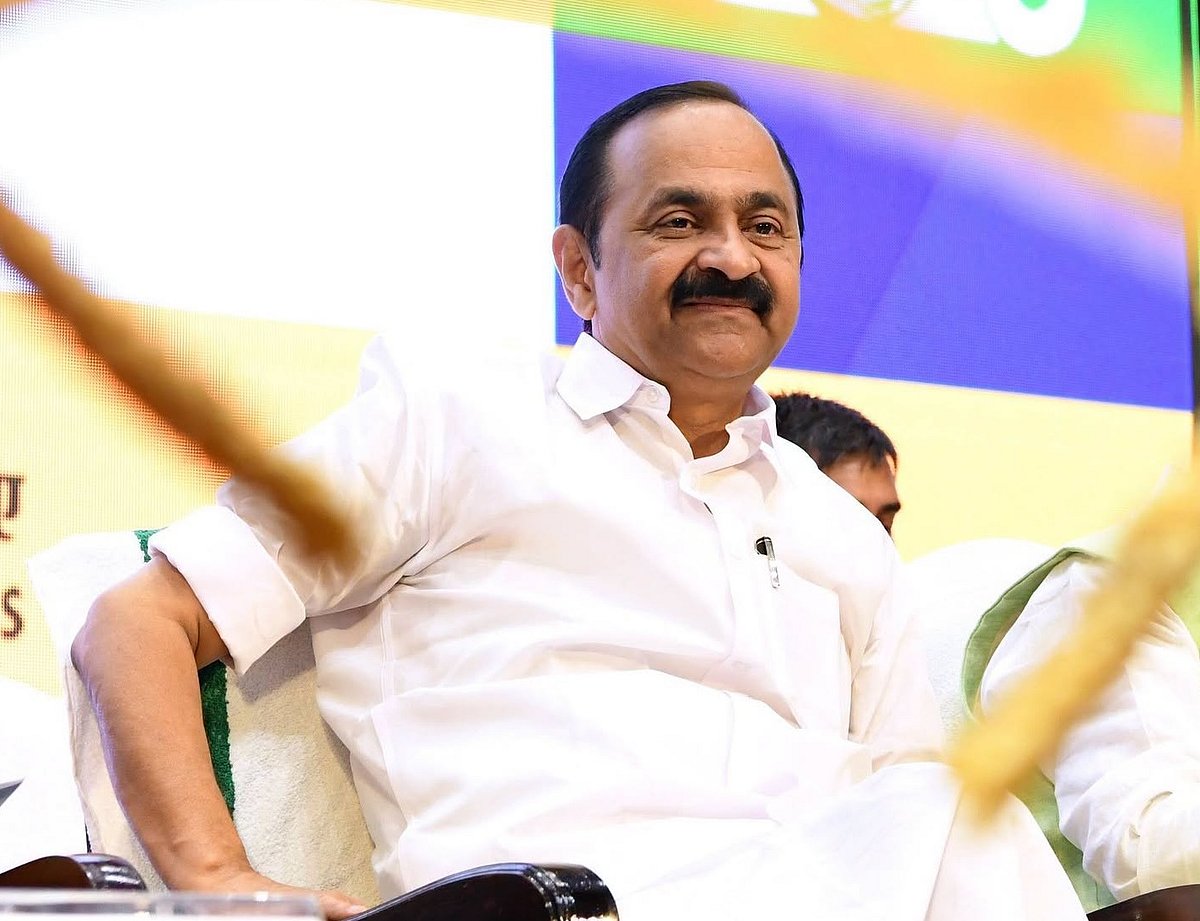
Chief Minister V D Satheesan has also pointed to reduced inflow into reservoirs and the rise in peak-hour consumption, and said on September 9 that the government was working to bring in additional power and resolve the immediate shortage by around September 15.
But that target has since been thrown into question, after KSEB chairman MG Rajamanickam indicated that restrictions could continue until the end of September, with sufficient additional power expected to become available from October 1 through short-term arrangements.
At the same time, the government’s explanation has triggered a political counterattack from the Opposition, with former Chief Minister and Communist Party of India (Marxist) [CPI(M)] leader Pinarayi Vijayan arguing that the present shortage is as much a failure of planning and power procurement as it is a supply problem.
Pinarayi challenges UDF’s 465 MW argument
The most contentious issue in the political battle is a set of long-term power purchase agreements under which Kerala was to procure 465 MW of electricity at around Rs 4.29 per unit.
The UDF government has alleged that the previous CPI(M)-led Left Democratic Front (LDF) government had cancelled the said agreement, leaving Kerala without a relatively cheaper long-term source of electricity. Satheesan said that if the 25-year agreement had continued, Kerala would have had access to 465 MW at a much lower rate than the prices it is currently having to consider in the market.
Pinarayi has rejected that explanation and questioned whether the cancellation can be blamed on the LDF government at all. He argued that the government cannot present the issue as a straightforward decision by his administration to cancel a valid 25-year contract.
He said the agreement signed in 2015 during the UDF government's tenure did not have prior approval from the Union government, state government, or the Kerala State Electricity Regulatory Commission. The commission refused to approve the power purchase agreements in 2023, finding that the tariff determination had not followed a transparent process and that there had been deviations from standard bidding guidelines.
“The legal problems in the agreement unilaterally entered into by KSEB led the regulatory commission to cancel it,” Pinarayi said. He also argued that the regulatory commission itself had been appointed during the UDF government’s tenure, and that the LDF government had instead tried to retain the power available under the agreement.
Pinarayi said the LDF government even approached the Supreme Court seeking restoration of the agreement after it was struck down following the Appellate Tribunal’s verdict.
His argument is that the present government cannot portray the agreement as a power source simply lost because of an LDF policy decision.
“If the UDF government had entered into the long-term agreement while properly following the required norms, this crisis would not even have arisen,” he said.
The dispute over the agreement is still before the Supreme Court, according to Pinarayi.
Why is Kerala short of power?
The immediate crisis is being driven by several factors.
Kerala's peak demand has risen sharply, with higher temperatures increasing the use of fans, air conditioners, and other cooling appliances. Electric vehicle charging and other consumption have also contributed to the changing demand pattern. At the same time, inadequate rainfall has reduced inflows into reservoirs, affecting the state’s hydel generation.
The state can generate around 1,750 MW through its hydel stations at maximum capacity, but peak demand is now above 5,000 MW. Kerala therefore relies heavily on power from the central grid and contracted purchases from generators elsewhere. “The state gets around 1,500 MW from the central grid, according to figures cited in the ongoing debate, while another 650 MW comes through long-term power purchase arrangements and around 300 MW through short-term agreements,” a KSEB official said.
The problem becomes more acute when electricity is not readily available for purchase during peak demand.
Usually, Kerala receives around 65 million units a day from its assured sources, which includes central generating stations, long-term agreements, and medium-term open-access contracts. That supply fell to around 50 million units from the middle of August, according to an analysis of the crisis.
A nationwide shortage has compounded the problem. On September 2, the Grid Controller of India had reported a power shortage of around 12,000 MW, with coal shortages and maintenance of generating units affecting availability. The national supply situation remains under pressure, with nearly a third of India's coal-fired power plants reported to have critically low coal stocks as of September 9.
This leaves Kerala particularly exposed because its own generation capacity cannot bridge a large gap when electricity from outside is scarce or expensive.
Opposition asks why crisis was not anticipated
Pinarayi's strongest argument is based on Kerala's past experience.
He pointed out that the state had gone through periods of severe heat and rainfall deficiency under the previous LDF government without resorting to power cuts. “Last April, when daily consumption reached 115–116 MU and peak demand reached 6,100 MW, there were no power cuts under the LDF government,” he said.
He contrasted those figures with the current situation, arguing that present demand is only around 4,800–4,900 MW, or 85–86 million units a day.
“Demand has declined, but the crisis has increased. That is nothing but the government's incompetence,” Pinarayi said.
He alleged that warning signs had appeared as early as mid-May and the first week of June, but that the government failed to respond adequately.
The LDF’s response during earlier shortages, Pinarayi said, included purchasing electricity at higher rates, negotiating with states with surplus power and entering into power-swapping arrangements.
He also challenged the government's explanation that power cannot be procured despite Kerala being willing to pay higher prices.
Karnataka sold electricity outside the state at Rs 9.08 per unit in July, he said, questioning why Kerala had not been able to secure power through a bilateral arrangement with its neighbouring state. “Kerala is willing to pay more than Rs 10 but is still unable to obtain electricity,” he said, referring to the explanation being given by UDF ministers.
The question Kerala has struggled to answer
The present crisis also revives an older debate over why Kerala has not added enough large-scale generation capacity to keep pace with demand.
Several major projects proposed over the decades were abandoned after environmental concerns and protests.
The proposed Silent Valley hydel project was shelved after years of opposition. A 1,000 MW proposal at Pooyamkutty was later scaled down to 210 MW before being abandoned. The 163 MW Athirappilly project, proposed in the 1990s and receiving environmental clearance in 2012, also faced sustained opposition from tribal communities and environmental groups.
A proposed 2,400 MW coal-based thermal project at Cheemeni in Kasaragod also failed to materialise.
These projects underline the difficult choice Kerala has faced: increasing generation capacity while dealing with environmental concerns, local opposition, and the ecological costs of large power projects.
At the same time, the state’s dependence on outside power has continued to grow.
That makes today’s crisis more than a question of whether the government should have bought another few hundred megawatts. It raises questions about the balance Kerala has struck between hydel generation, environmental protection, long-term contracts, power markets, and new generation capacity.
Power cuts become political weapon
For the UDF government, the immediate explanation is that demand has surged at precisely the time when domestic generation and power availability from outside have become constrained.
For the LDF, the crisis is evidence of poor planning by a government that should have anticipated the shortage and secured additional power earlier.
The political messaging has already reached the streets. CPI(M) workers have distributed candles while mocking the government’s handling of the crisis, with references to the first power cut as the “Indira cut” and subsequent outages as the “Satheesan cut”.
The issue has also spread rapidly across social media, where residents have complained about outages without advance notice and shared memes and videos about the disruption. Traders have now announced a torchlight protest for September 14, adding pressure on the government from businesses affected by the outages.
Pinarayi has widened the political attack further by alleging that the crisis could be linked to a push towards privatisation of the electricity sector.
He alleged that around 60% of India's electricity generation capacity is in the hands of private conglomerates including Adani, Ambani, and Tata, and claimed that power shortages can create conditions for private companies to make large profits.
“Such electricity crises are also something that must be seen as being created to enable them to make excessive profits,” Pinarayi alleged.
He further alleged that the UDF government's objective in Kerala is to privatise the electricity sector and claimed that the direction was visible in the government's white paper.
The more serious allegation — that the government could be allowing KSEB to be weakened by an artificial shortage before presenting private players as the solution — remains an allegation by Pinarayi and has not been established as a cause of the current shortage.