
































































.jpg?#)


U.S./Israel–Iran war on course for cataclysmic civilian harm, displacement, and humanitarian need
Statement from Refugees International President Jeremy Konyndyk:
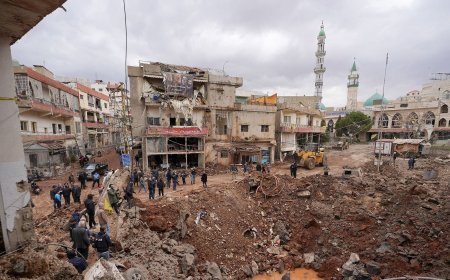
“THE war launched by the United States and Israel against Iran has been characterized by multiple strikes on civilian sites and infrastructure by all sides, often with flagrant disregard for civilian safety.
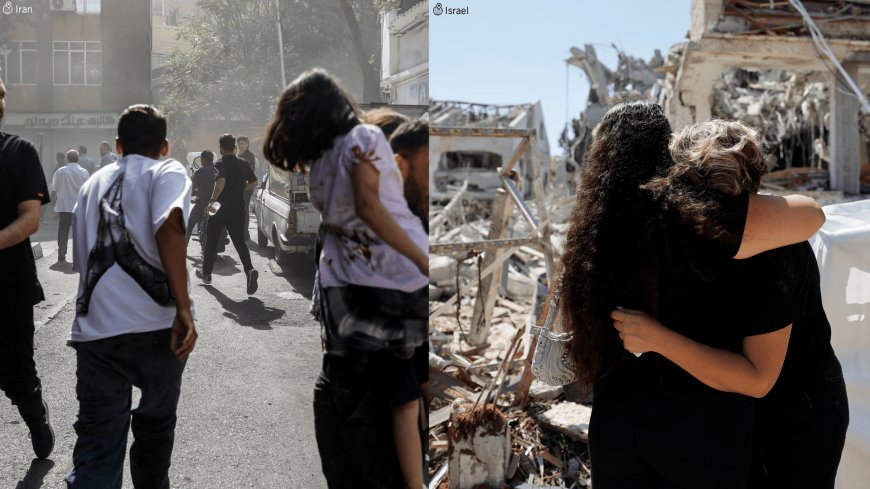
"The United States/Israeli coalition has struck numerous civilian sites in Iran, and the Iranian military has struck multiple civilian sites in Israel and in multiple Gulf countries.
"These attacks on civilians have already caused hundreds of needless deaths and displaced hundreds of thousands of people. The humanitarian impact could expand exponentially if this develops into a prolonged war.
"The apparent U.S. strike on a school in Minab, Iran, was particularly egregious, killing an estimated 175 people. Most of the dead were children, likely the largest number of child casualties in a single U.S. military attack since the My Lai massacre in Vietnam in 1968. This should shock the conscience of our nation as much as if the same happened to children at an American school.
"This incident demands an immediate, independent, credible investigation into how the U.S. government killed scores of schoolchildren, and there must be accountability.
"The U.S. Congress should conduct rapid hearings on the school strike and targeting of other civilian infrastructure, and launch its own independent investigation of how such a catastrophe could have happened. The United Nations should also independently investigate all sides’ violations of international humanitarian law.
"But the Minab strike is far from the only strike on civilian sites. U.S. and Israeli attacks have struck other schools, multiple medical facilities, numerous residential areas, and a water desalination plant. Iranian attacks have also struck civilian targets and infrastructure, including a desalination plant and urban residential areas.
"All such sites are protected under international humanitarian law (IHL), raising the serious prospect that these strikes could constitute war crimes.
"It is difficult to regard the pattern of U.S. strikes on civilian sites as mere tragic accidents when the United States has systematically removed many of the safeguards that once helped prevent harm to civilians.
"Since taking office, Secretary Pete Hegseth has closed the Pentagon office tasked with avoiding civilian harm and fired the leadership of the JAG corps and tilted the corps toward a more lenient posture toward targeting and oversight. Since the war began, Secretary Hegseth has repeatedly boasted about applying more lax rules of engagement.
"There have also been credible media reports that the Pentagon’s targeting practices have relied heavily on Anthropic’s AI model, even as Anthropic is fighting with Hegseth to ensure human oversight on AI decision-making. This backdrop raises unavoidable questions about whether the Pentagon is abiding by IHL in its conduct of the war.
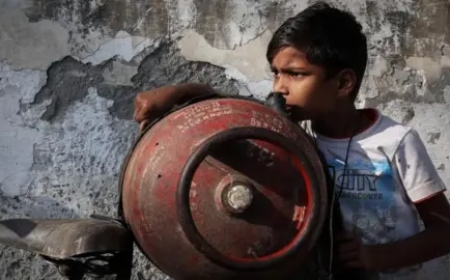
"Meanwhile, the widening conflict has already seen severe displacement and humanitarian risks. According to the UN Refugee Agency, more than 884,000 people were forced to flee their homes in just over a week since the attacks began.
"The fighting heightens risk for some 1.65 million refugees in Iran – 750,000 of whom are from Afghanistan – who have limited access to their rights or safe passage and already face rights violations and scapegoating by the Iranian state.
"An additional 3.65 million Afghan migrants living in Iran are at risk of displacement again as violence continues.
"If this evolves into a long-term war, and particularly if internal conflict emerges in Iran, the humanitarian consequences could worsen dramatically.
"A prolonged conflict risks creating displacement and humanitarian crises on a massive scale, even as U.S. cuts have kneecapped the global humanitarian system built to respond to such crises. The United States must support UN agencies and NGOs preparing to address the humanitarian fallout of this war.
The most fundamental purpose of IHL is to protect civilians in war – in other words, to prevent exactly the kind of military outcomes that might kill a disproportionately large number of civilians, destroy life-sustaining civilian infrastructure, or forcibly displace people.
"A war in which all sides ignore their obligations under IHL will primarily harm civilians. We call for a rapid halt to this senseless conflict, and call on all sides to adhere to their obligations to actively protect civilians from harm for as long as the fighting continues.”