




























































Bharat Bandh disrupts daily life, livelihoods across Kerala
Follow TNM's WhatsApp channel for news updates and story links. Kerala on Thursday came to a near-total halt as the 24-hour nationwide Bharat Bandh against the Centre’s four new labour codes and related legislations shut down shops, markets, offices and educational institutions across the state, severely disrupting daily life and livelihoods. From early morning, the impact was visible. State-run and private buses stayed off the roads, auto-rickshaws and taxis remained parked, and commercial establishments downed their shutters. With public transport paralysed, hundreds of passengers arriving by long-distance trains and inter-state buses were left stranded at railway stations and terminals, scrambling for private vehicles to reach their destinations. The shutdown dealt a direct blow to daily wage earners, small traders and street vendors, many of whom lost an entire day’s income. Though organisers largely avoided coercive enforcement, with elections around the corner, they instead persuaded roadside vendors to close voluntarily, and economic activity remained minimal. Private vehicles plied in some areas, but traffic was thin. Police provided protection to staff buses ferrying employees to ISRO units and ensured limited access to certain IT campuses. The Kerala High Court functioned as usual. Exemptions were granted for Sabarimala pilgrims and the ongoing Maramon Convention near Thiruvalla. The bandh, called by joint trade unions, seeks withdrawal of the four labour codes, the Draft Seed Bill, the Electricity Amendment Bill and the proposed SHANTI Act. The unions are also demanding restoration of MGNREGA and scrapping of the Viksit Bharat-Guarantee for Rozgar and Ajeevika Mission Act, 2025, alleging that the measures dilute worker protections and job security. Interestingly, neighbouring Tamil Nadu reported normal activity, underscoring Kerala’s distinctive shutdown culture. Political pre-election yatras by both the ruling Left and the opposition continued uninterrupted. State Education Minister V. Sivankutty was seen walking from his residence to join protesters. For ordinary Keralites, however, the day translated into lost wages, stalled commerce and disrupted routines, the familiar economic cost of a total shutdown.
Follow TNM's WhatsApp channel for news updates and story links.
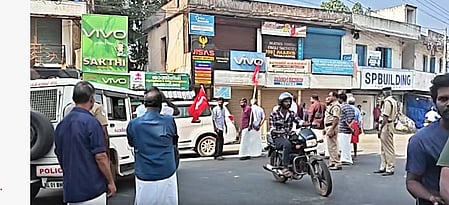
KERALA on Thursday came to a near-total halt as the 24-hour nationwide Bharat Bandh against the Centre’s four new labour codes and related legislations shut down shops, markets, offices and educational institutions across the state, severely disrupting daily life and livelihoods.
From early morning, the impact was visible. State-run and private buses stayed off the roads, auto-rickshaws and taxis remained parked, and commercial establishments closed their shutters.
With public transport paralysed, hundreds of passengers arriving by long-distance trains and inter-state buses were left stranded at railway stations and terminals, scrambling for private vehicles to reach their destinations.
The shutdown dealt a direct blow to daily wage earners, small traders and street vendors, many of whom lost an entire day’s income.
Though organisers largely avoided coercive enforcement, with elections around the corner, they instead persuaded roadside vendors to close voluntarily, and economic activity remained minimal.
Private vehicles plied in some areas, but traffic was thin.
Police provided protection to staff buses ferrying employees to ISRO units and ensured limited access to certain IT campuses.
The Kerala High Court functioned as usual.
Exemptions were granted for Sabarimala pilgrims and the ongoing Maramon Convention near Thiruvalla.
The bandh, called by joint trade unions, seeks withdrawal of the four labour codes, the Draft Seed Bill, the Electricity Amendment Bill and the proposed SHANTI Act.
The unions are also demanding restoration of MGNREGA and scrapping of the Viksit Bharat-Guarantee for Rozgar and Ajeevika Mission Act, 2025, alleging that the measures dilute worker protections and job security.
Interestingly, neighbouring Tamil Nadu reported normal activity, underscoring Kerala’s distinctive shutdown culture.
Political pre-election yatras by both the ruling Left and the opposition continued uninterrupted.
State Education Minister V. Sivankutty was seen walking from his residence to join protesters.
For ordinary Keralites, however, the day translated into lost wages, stalled commerce and disrupted routines, the familiar economic cost of a total shutdown.