












































































.jpg?#)






Xi Jinping warns world is ‘crumbling into disarray’ as 'dangerous' U.S. blockade hits markets. Protect your nest egg now
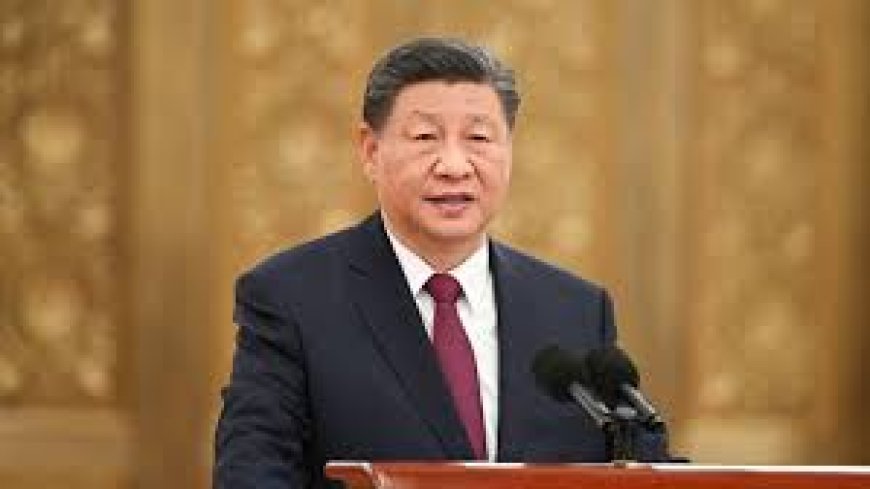
CHINESE President Xi Jinping issued one of his starkest warnings yet about the state of the global economy on Tuesday in Beijing, stating, "The international order is crumbling into disarray (1)."
Xi also criticized the U.S. response to the Iran conflict, calling a naval blockade of the Strait of Hormuz "dangerous and irresponsible" — a move that he argues threatens to further disrupt one of the world's most critical oil shipping routes.
The comments came as the conflict with Iran continues to escalate despite a fragile ceasefire. With oil prices dancing around $100, the economic fallout is already spreading (2). China's export growth settled at 2.5%, a steep decline from expectations, as global demand softens and tensions rise (3).
And for investors, the message here extends beyond geopolitics and into portfolio structure.
When major powers, like China, start questioning the global order itself, it can signal a deeper shift: One where the systems underpinning markets begin to fragment.
What happens when global systems come into question?
Periods of geopolitical instability can fundamentally change how economies interact (4). In the case of China and the U.S., the two countries' "punitive economic and financial measures" significantly damaged one another's economies, according to the Economist Intelligence Unit.
As supply chains shift (and get disrupted or used as leverage against other countries), trade alliances also fluctuate and policy responses diverge (5). Thus, the global economy becomes more fragmented.
That rupture shows up as cracks in the foundation of the economic relationships on which investors rely. For example, stocks and bonds, which historically moved in opposite directions, can fall together during inflationary shocks (6).
And so, the markets become harder to predict.
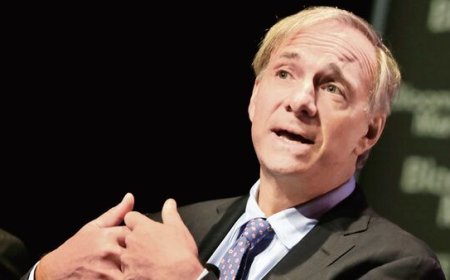
Billionaire investor Ray Dalio has long argued that these kinds of disruptions aren't random, but part of a broader cycle.
"These cycles are continuous and play out in logical ways—and they tend to be self-reinforcing," Ray Dalio wrote in an X post on April 14, 2026 (7). He described how economic systems expand, strain and eventually self-correct.
Dalio added, "If an economy turns bad enough, those responsible for running it will make the political and policy changes that are needed—or they will not survive, making room for their replacements to come along."
The traditional portfolio struggles in this environment
Most investors inadvertently build for a more stable, interconnected world. You may have heard of the 'classic' 60/40 portfolio of stocks and bonds. For decades, investors relied on the easy-to-trust relationship between those assets to self-balance their portfolios.
Recently, the assumptions about the safety of stocks and bonds have been called into question. In 2008 and 2022, both stocks and bonds posted double-digit losses — the first and second since the 70s — two rare breakdowns of a strategy that had long been considered a cornerstone of diversification (8).
But when inflation rises alongside geopolitical risks, both equities and fixed income come under pressure. When markets are driven more by political decisions than by the economic fundamentals long sworn to, diversification within traditional asset classes doesn’t always offer the same protections it once did.
How investors survive
When volatility runs amok and those traditional correlations break down, some investors might consider looking beyond stocks and bonds.
Alternative assets can behave more favorably during uncertain environments such as these, and help hedge against rapid market movements. According to UBS Asset Management, this is because alternative assets are "designed to perform independently of market directions," potentially reducing drawdowns and accelerating recovery from declines (9).
A store of value
When trust in the global market ebbs, gold is often brought up as a way of preserving wealth. Gold has long been viewed as a hedge during periods of geopolitical stress and inflation, as it isn't tied to any single country's monetary policy because of its intrinsic value (10). Unlike fiat currency, like the U.S. dollar, the precious yellow metal can't be printed at will.
One way to invest in gold that can provide significant tax advantages is to open a gold IRA with Priority Gold.
Gold IRAs allow investors to hold physical gold or gold-related assets within a retirement account, combining the tax advantages of an IRA with the protective benefits of gold, making it an attractive option for those looking to hedge their retirement funds against economic uncertainty.
To learn more, you can get a free information guide that includes details on how to get up to $10,000 in free silver on qualifying purchases.
This can be a great way to explore adding physical gold to your portfolio as part of a broader diversification strategy. But a good strategy includes more than just one asset.
Real estate exposure, without the market swings
Financial markets can react instantly to geopolitical shocks, but like gold, real estate has its own timeline — one driven more by demand than headlines.
After all, people will always need a place to live.
Rental housing, in particular, can provide a steady income even during periods of wider market volatility. You can tap into real estate by investing in shares of vacation homes or rental properties through Arrived.
Backed by world-class investors, including Jeff Bezos, Arrived allows you to invest in shares of vacation and rental properties, earning a passive income stream without the extra work that comes with being a landlord of your own rental property. No midnight maintenance calls over burst pipes here.
To get started, simply browse through their selection of vetted properties, each chosen for its potential appreciation and income-generating potential. Once you choose a property, you can start investing with as little as $100 and potentially earn monthly dividends.
Once you're an investor with Arrived, you'll gain access to their newly launched quarterly secondary market, where investors can buy and sell shares of individual rental and vacation rental properties directly on the platform. This allows you to buy into properties you may have missed at the initial offering or sell shares before a property reaches the end of its hold period.
With access to more than 400 properties in 60 cities, this new way to trade real estate offers flexibility and opportunities to gain access to more properties each quarter.
Even better, if you want to kick-start your real estate investment journey, you can get a 1% account match when you contribute $1,000 or more.
For investors with capital on hand, another way to scale even further is to look at multi-family investment opportunities. Like single-family, this vertical can be cumbersome, capital-intensive and full of headaches if you choose to do it all yourself.
But it can also be lucrative. In a report prepared by JPMorgan, Al Brooks — the firm’s vice chair of Commercial Banking — said, "I think multifamily housing is absolutely where you want to be as an investor (11).”
Accredited investors can now tap into this opportunity through platforms such as Lightstone DIRECT, which gives accredited investors access to single-asset multifamily and industrial deals.
Lightstone DIRECT’s direct-to-investor model ensures a high degree of alignment between individual investors and a vertically-integrated, institutional owner-operator — a sophisticated and streamlined option for individual investors looking to diversify into private-market real estate.
With Lightstone DIRECT, accredited individuals can access the same multifamily and industrial assets Lightstone pursues with its own capital, with minimum investments starting at $100,000.
Draw on something different
Or, you can look even further afield.
In 1999, the S&P 500 peaked, and it took 14 long years to recover fully.
Today? Goldman Sachs is forecasting just 3% annual returns from 2024 to 2034. It sounds bleak but not surprising: the S&P is trading at its highest price-to-earnings ratio since the dot-com boom. Vanguard isn't far off, projecting around 5%.
In fact, nearly everything feels priced near all-time highs — equities, gold, crypto, you name it.
That's why billionaires have long carved out a slice of their portfolios in an asset class with low correlation to the market and strong rebound potential: Post-war and contemporary art.
It may sound surprising, but more than 70,000 investors have followed suit since 2019 — through Masterworks. That's because fine art's value is driven up by collector demand and scarcity rather than macroeconomic cycles, which completely separates it from traditional financial markets (12).
Now, you can own fractional shares of works by Banksy, Basquiat, Picasso and more.
Masterworks has sold 27 artworks so far, yielding net annualized returns like 14.6%, 17.6% and 17.8%.
Moneywise readers can get priority access to diversify with art: Skip the waitlist here.
Note that past performance is not indicative of future returns and investing involves risk. See important Regulation A disclosures at Masterworks.com/cd.
The world is changing
If Xi is correct and the world is shifting towards a more fragmented economy, investors may need to rethink their approach to risk — including a 60/40 portfolio devoid of alternative assets.
Periods of instability, despite Dalio's claims of self-correcting, pose more than just challenges for the everyday investor. They also redefine where opportunities lie.
And in a world where the old economic rulebook no longer applies, building a portfolio that can weather impending geopolitical storms matters more than ever.