











.jpg?#)














































Ticket to Kerala book review: A love letter to Malayalam cinema, flaws and all
Follow TNM's WhatsApp channel for news updates and story links.In 2016, shortly after I joined the University of Hyderabad for my Masters in Communication, I found myself fiercely arguing with a Telugu friend over Premam. He was convinced that Alphonse Puthren’s 2015 coming-of-age romance was among the greatest films made in recent times. I disagreed.The funny thing is, I loved Premam. I had watched it with the strange intimacy that comes from seeing your own world reflected back at you.But our argument was also the first time I realised how differently the same film could travel. For my friend, Premam was a doorway into a film industry he was just beginning to discover, its humour and rhythms and storytelling carrying the thrill of something new. For me, the film existed within a lifelong relationship with Malayalam cinema, one shaped by years of memories, passionate arguments, comparisons, and debates about the films we loved.At UoH, I was suddenly meeting people who were discovering Malayalam cinema through films like Premam and Bangalore Days (2014), while they introduced me to the depth and diversity of the cinema they had grown up with. Friends from across the country opened up my still surface-level understanding of Indian and world cinema.For the first time, I began looking beyond these broad impressions and thinking seriously about what shapes a film industry — how geography, politics, social movements, audiences, and histories influence the stories that get told.Interestingly, that is also the question at the heart of SR Praveen’s Ticket to Kerala: The Story of Malayalam Cinema. The book attempts something deceptively difficult: examining a cinema culture that many Malayalis have deeply personal relationships with, while also making it accessible to those discovering it from the outside. For many viewers outside Kerala, Malayalam cinema’s rise may appear recent. At least some may view it as a phenomenon accelerated by streaming platforms, subtitles, and the post-pandemic discovery of films from the state. But Ticket to Kerala repeatedly reminds readers that this is not Malayalam cinema’s first “new wave”.The book itself resists a linear history. Instead of beginning with the birth of Malayalam cinema and moving decade by decade, Praveen opens with the contemporary moment, the industry’s latest wave of reinvention, before travelling back to understand the conditions that made it possible. It is an ambitious structure that mirrors the book’s larger argument, which is that Malayalam cinema’s history is less a straight line than a series of overlapping reinventions.Across the book, Praveen traces how Kerala’s social reform movements, Left politics, theatre traditions, literature, and film societies shaped a distinct cinematic language. But he also pays attention to the contradictions that existed from the very beginning. Even the story of Malayalam cinema’s first film, JC Daniel’s Vigathakumaran, is inseparable from the casteist backlash faced by its lead actor PK Rosy, a Dalit woman who was forced away from public life after ‘upper’ caste outrage over her playing a Nair character.From these beginnings to the radical interventions of Adoor Gopalakrishnan, John Abraham, and G Aravindan, and later the middle cinema movement led by KG George, Padmarajan, and Bharathan, the book shows how every generation inherited, questioned, and built upon the previous one.Ticket to Kerala works best when the author moves away from documentation and slips into passionate reflection. These sections almost read like little love letters to films that altered Malayalam cinema’s trajectory. One of the initial chapters on Rajesh Pillai’s 2011 film Traffic, for instance, carries the infectious excitement of a lifelong cinephile tracing not just why a film mattered, but how and why it affected the people and created a cultural moment in Kerala.Praveen does this across the book, examining how filmmakers responded to the politics and cultural shifts of their times — from the literary and psychological depth brought in by writers like MT Vasudevan Nair and the sharp social observations of filmmakers such as KG George and TV Chandran, to contemporary directors experimenting with newer forms and themes. It is in these sections that the book becomes most rewarding.Which is also why there are moments where one wishes the book lingered a little longer. There are a few points where landmark films are listed in quick succession, with limited exploration of what made them culturally or cinematically significant. But in a project attempting to capture the vastness of Malayalam cinema, perhaps some compromises are inevitable.At the same time, the sheer expanse of films that Ticket to Kerala brings together creates its own joy. The book becomes, almost unintentionally, a Malayalam cinema watchlist spanning generations. For a new viewer, it is a map of films waiting to be discovered. For someone who grew up with Malayalam cinema, there is th
Follow TNM's WhatsApp channel for news updates and story links.
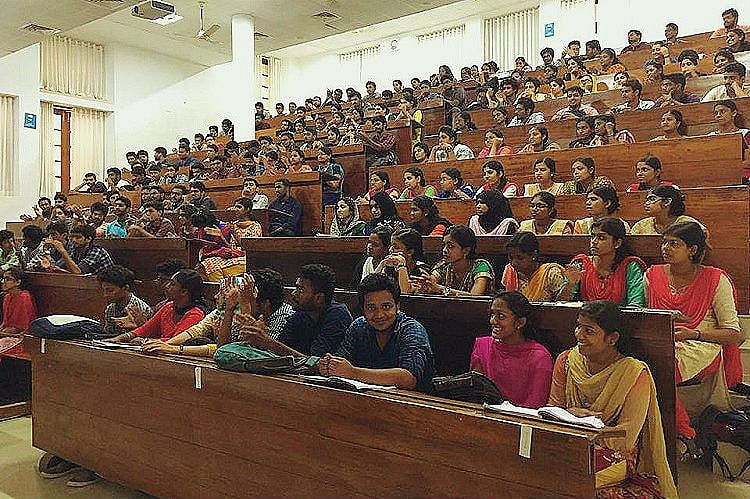
IN 2016, shortly after I joined the University of Hyderabad for my Masters in Communication, I found myself fiercely arguing with a Telugu friend over Premam. He was convinced that Alphonse Puthren’s 2015 coming-of-age romance was among the greatest films made in recent times. I disagreed.
The funny thing is, I loved Premam. I had watched it with the strange intimacy that comes from seeing your own world reflected at you.
But our argument was also the first time I realised how differently the same film could travel. For my friend, Premam was a doorway into a film industry he was just beginning to discover, its humour and rhythms and storytelling carrying the thrill of something new. For me, the film existed within a lifelong relationship with Malayalam cinema, one shaped by years of memories, passionate arguments, comparisons, and debates about the films we loved.
At UoH, I was suddenly meeting people who were discovering Malayalam cinema through films like Premam and Bangalore Days (2014), while they introduced me to the depth and diversity of the cinema they had grown up with. Friends from across the country opened up my still surface-level understanding of Indian and world cinema.
For the first time, I began looking beyond these broad impressions and thinking seriously about what shapes a film industry — how geography, politics, social movements, audiences, and histories influence the stories that get told.
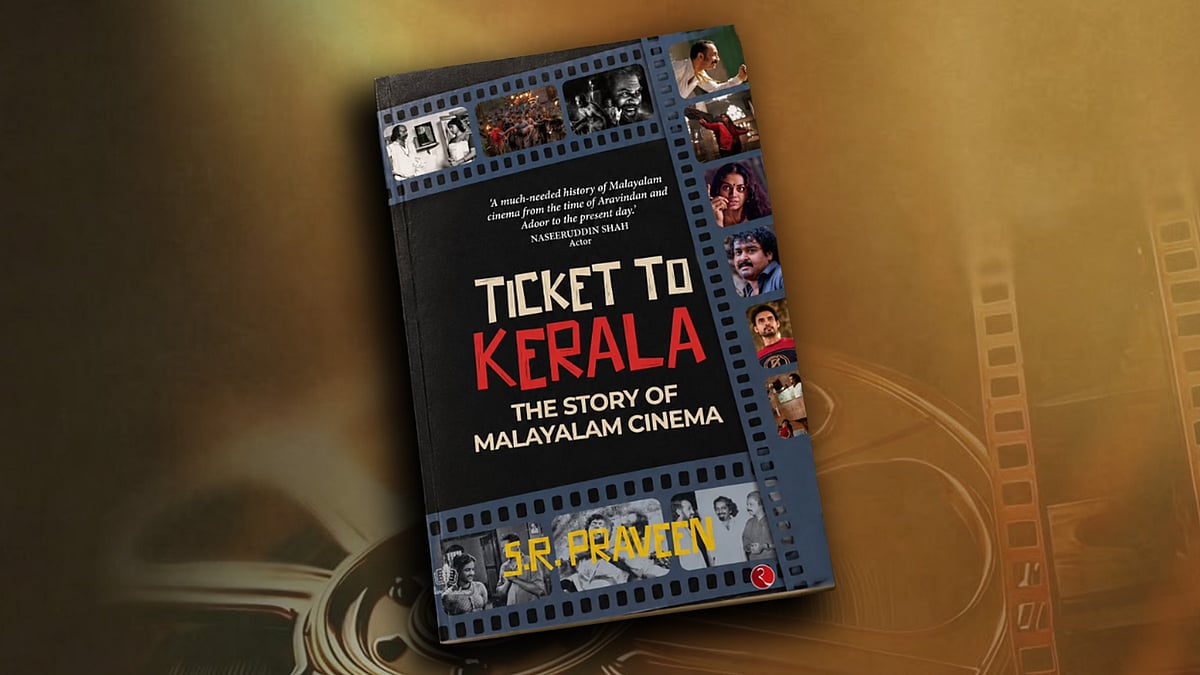
Interestingly, that is also the question at the heart of SR Praveen’s Ticket to Kerala: The Story of Malayalam Cinema. The book attempts something deceptively difficult: examining a cinema culture that many Malayalis have deeply personal relationships with, while also making it accessible to those discovering it from the outside.
For many viewers outside Kerala, Malayalam cinema’s rise may appear recent. At least some may view it as a phenomenon accelerated by streaming platforms, subtitles, and the post-pandemic discovery of films from the state. But Ticket to Kerala repeatedly reminds readers that this is not Malayalam cinema’s first “new wave”.
The book itself resists a linear history. Instead of beginning with the birth of Malayalam cinema and moving decade by decade, Praveen opens with the contemporary moment, the industry’s latest wave of reinvention, before travelling back to understand the conditions that made it possible. It is an ambitious structure that mirrors the book’s larger argument, which is that Malayalam cinema’s history is less a straight line than a series of overlapping reinventions.
Across the book, Praveen traces how Kerala’s social reform movements, Left politics, theatre traditions, literature, and film societies shaped a distinct cinematic language. But he also pays attention to the contradictions that existed from the very beginning. Even the story of Malayalam cinema’s first film, JC Daniel’s Vigathakumaran, is inseparable from the casteist backlash faced by its lead actor PK Rosy, a Dalit woman who was forced away from public life after ‘upper’ caste outrage over her playing a Nair character.
From these beginnings to the radical interventions of Adoor Gopalakrishnan, John Abraham, and G Aravindan, and later the middle cinema movement led by KG George, Padmarajan, and Bharathan, the book shows how every generation inherited, questioned, and built upon the previous one.
Ticket to Kerala works best when the author moves away from documentation and slips into passionate reflection. These sections almost read like little love letters to films that altered Malayalam cinema’s trajectory. One of the initial chapters on Rajesh Pillai’s 2011 film Traffic, for instance, carries the infectious excitement of a lifelong cinephile tracing not just why a film mattered, but how and why it affected the people and created a cultural moment in Kerala.
Praveen does this across the book, examining how filmmakers responded to the politics and cultural shifts of their times — from the literary and psychological depth brought in by writers like MT Vasudevan Nair and the sharp social observations of filmmakers such as KG George and TV Chandran, to contemporary directors experimenting with newer forms and themes. It is in these sections that the book becomes most rewarding.
Which is also why there are moments where one wishes the book lingered a little longer. There are a few points where landmark films are listed in quick succession, with limited exploration of what made them culturally or cinematically significant. But in a project attempting to capture the vastness of Malayalam cinema, perhaps some compromises are inevitable.
At the same time, the sheer expanse of films that Ticket to Kerala brings together creates its own joy. The book becomes, almost unintentionally, a Malayalam cinema watchlist spanning generations. For a new viewer, it is a map of films waiting to be discovered. For someone who grew up with Malayalam cinema, there is the thrill of rediscovering forgotten films, recognising gaps in your understanding of an industry you thought you knew, and adding another film to the never-ending list of things to watch.
The interviews are another major strength. Conversations with filmmakers across generations — from Adoor Gopalakrishnan and TV Chandran to Lijo Jose Pellissery, Rajeev Ravi, Bahul Ramesh, and Basil Joseph — offer fascinating insights into how these artists think, and not just what they create.
In one of the most interesting conversations in the book, Rajeev Ravi speaks about cinema emerging from observation, about spending time in a place, understanding its people, sounds, food, and rhythms before attempting to capture it on screen.
It offers a glimpse into why films like Annayum Rasoolum and Kammatipaadam feel rooted in lived spaces. Bahul Ramesh’s reflections on writing Kishkindha Kaandam and Eko, meanwhile, reveal almost the opposite creative instinct. He says he allows stories to emerge from a single image, character, or idea, without forcing them into a predetermined structure.
One of the book’s most interesting chapters comes towards the end, where Praveen attempts to unpack a phenomenon impossible to separate from Malayalam cinema’s evolution — the era of the ‘Big Ms’, Mammootty and Mohanlal.
For generations of Malayalis, choosing sides in the Mammootty-Mohanlal debate was almost a pop culture ritual. But beyond the rivalry and fandom, the book traces how both actors emerged from a remarkable period where mainstream cinema intersected with the works of writers and filmmakers such as MT Vasudevan Nair, Padmarajan, KG George, Bharathan, and IV Sasi. It examines how they expanded ideas of the Malayalam leading man, while also looking at how the later rise of superstar vehicles and fan culture reshaped the industry around them.
But of course, any examination of power within Malayalam cinema is incomplete without looking at who was excluded from it. Ticket to Kerala is careful not to turn Malayalam cinema’s journey into uncomplicated nostalgia. Some of its most important sections are where Praveen examines the industry’s uncomfortable contradictions, particularly its deeply entrenched misogyny.
The chapter on the Women in Cinema Collective (WCC), the Justice Hema Committee, and the aftermath of the 2017 actor assault case serves as a reminder that an industry celebrated for progressive storytelling was simultaneously failing the women who worked within it.
Praveen captures how the survivor’s decision to file a police complaint triggered a reckoning that extended beyond one crime. It raised larger questions about workplace safety, gender discrimination, power centres within the industry, and the silence that protected influential men.
The formation of the WCC marked an unprecedented intervention, with women from different areas of filmmaking coming together to challenge a system that had normalised their exclusion. The eventual release of the Hema Committee report years later exposed the scale of these structural issues, from harassment and unofficial bans to unsafe working conditions.
The irony, in fact, is difficult to ignore. The same industry that produced some of India’s most nuanced stories about human beings had for years denied many women within it dignity and equality.
The book’s final chapter, which turns its attention to the leading women of Malayalam cinema, feels especially significant in this context. Praveen writes about actors such as Urvashi, Parvathy Thiruvothu, Nimisha Sajayan, Darshana Rajendran, Manju Warrier, and others, tracing not just their performances but also the changing space available to women across different eras of the industry.
It examines how these actors carved out distinctive careers in an industry where women have historically had far fewer opportunities to sustain stardom. His section on Urvashi, for instance, beautifully captures the sheer range of an actor who could command equal screen space alongside superstars and often walk away with the film.
But while the chapter is definitely an important addition, as a conclusion to the book, it feels slightly unresolved. After travelling through nearly a century of cinematic evolution, social movements, political influences, industrial shifts, and uncomfortable reckonings, one wishes the book had stepped back once more to bring these many threads together.
Perhaps that sense of incompleteness is also a reflection of Malayalam cinema itself, as an industry that is still constantly questioning and reinventing itself. Its history is not a straight line of artistic greatness, but of breakthroughs and blind spots, radical ideas and resistance to change, extraordinary storytelling and uncomfortable failures.
Ticket to Kerala is not an exhaustive encyclopaedia of Malayalam cinema, nor does it attempt to be. Instead, it works as an invitation, both for newer audiences to understand where this cinematic moment came from and for Malayalis familiar with these films to step back and examine the ecosystem that shaped them.
Views expressed are the author’s own.