


























































Seven Presidents in 10 years: Why Peru ousted Jose Jeri — and what happens next?
Peru's Congress has removed interim President Jose Jeri, marking the seventh president in ten years to be ousted. Amidst corruption allegations and political instability, the country braces for upcoming elections. What does this mean for Peru's future and the upcoming leadership?

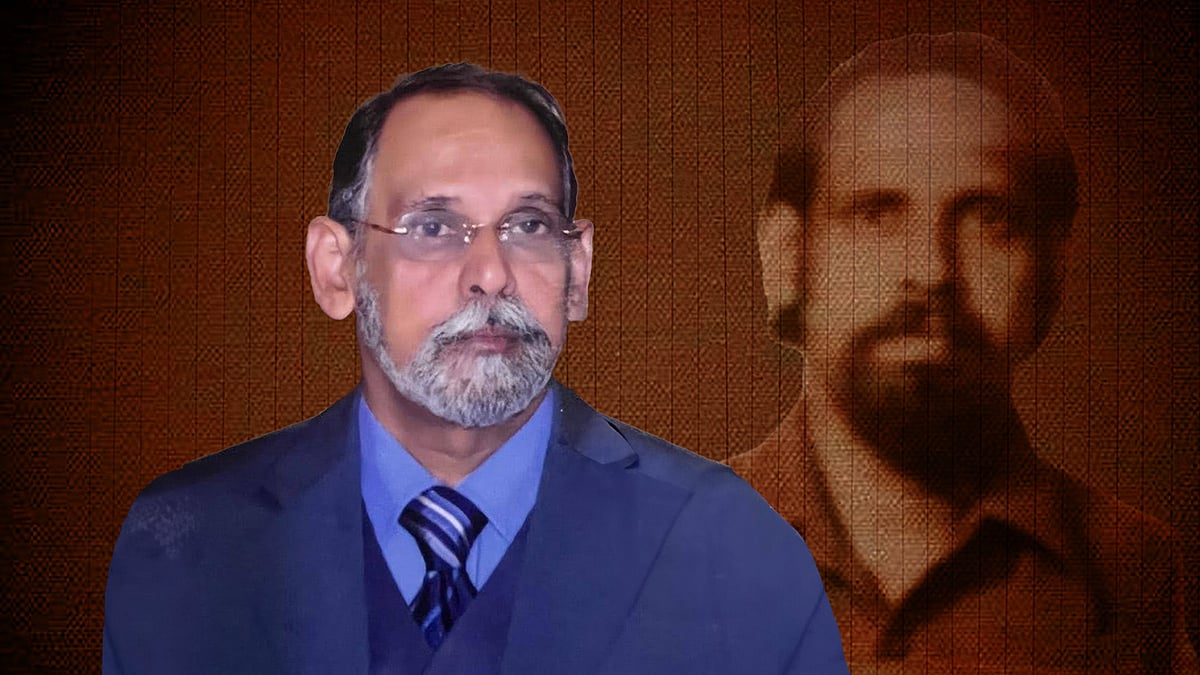
PERU'S Congress on 17 February voted to remove interim President Jose Jeri from office. The move has unleashed fresh political instability in the South American nation, weeks before a presidential election
Jeri was Peru’s seventh president in less than a decade. Only two of those were elected by popular vote. The others have been vice presidents who stepped in for deposed presidents and members of Congress who were selected by their peers to lead the South American nation.
Jeri will now be replaced by a member of Congress expected to lead the country during the 12 April election and until the newly elected president is sworn in on 28 July.
Jeri had joined the office just four months ago. He is the third consecutive leader to be removed from office by Congress in the Andean nation.
Jeri became the president in October 2025, after the sudden impeachment of his predecessor, Dina Boluarte. Jeri was one of the youngest heads of state globally, only to be suddenly removed from power.
What is the Chifagate Controversy?
Jeri’s stint in office was quickly overshadowed by controversies, news agencies reported. Jeri faces a preliminary investigation for corruption and influence peddling launched by Peru’s Attorney General’s office earlier this year.
The charges relate to a series of undisclosed meetings with two Chinese businessmen in December. One of those businessmen holds active government contracts, while the other is under investigation for alleged involvement in an illegal logging operation, international news agencies reported.
The biggest row was over his alleged secret meetings with Chinese businessman Zhihua Yang, who owns stores and an energy concession and was already under state scrutiny.
Jeri was filmed wearing a hoodie while meeting Yang in a Chinese restaurant, in a scandal that became dubbed "Chifagate," after the local name for Chinese restaurants.
Jeri issued an apology after the meeting, while maintaining that he had committed no wrongdoing. But the incident led to growing political pressure on Jerí ahead of the upcoming presidential elections.
"His legitimacy as president was always weak," Martin Cassinelli, assistant director at the Atlantic Council’s Adrienne Arsht Latin America Centre, told news agency Reuters. Martin called the ouster an act of political self-interest by a congressional majority."
In January 2025, Jeri was accused of sexual assault by a woman who attended a party the month before. The attorney general shelved the case in August, citing a lack of evidence. Jeri has denied any wrongdoing.
As president, Jeri also faced controversy for awarding state contracts to women after late-night meetings at the presidential palace.
Who is Jose Jeri?
Born to a middle-class family in the Peruvian capital Lima, Jeri graduated from Federico Villarreal National University in 2014. He also later earned a law degree from a private university in Lima.
Jeri joined the conservative party Somos Peru in 2013 while studying law and twice ran unsuccessfully for municipal office in Lima.
Jeri, a 39-year-old lawyer, was elected to Peru’s Congress in 2021 for Somos Peru, a small conservative party in 2021.
Jeri initially missed out on a congressional seat after his party won three seats in the legislature. But as the candidate from his party with the fourth-largest number of votes, he ended up taking the seat of Martin Vizcarra, who was disqualified from holding public office before being sworn into Congress.
Vizcarra served as Peru's president from 2018 to 2020 and was sentenced to 14 years in prison on graft charges last year.
Jeri was the head of Peru’s Congress in October, when lawmakers voted to remove then-President Dina Boluarte from office as the nation faced increasing rates of violent crime. Jeri was elected as Peru’s interim president, with the expectation that he would stay in office until July, when a new presidential term begins.
But his mandate was cut short as corruption allegations surfaced against him, and Congress grew impatient with his leadership.
Deeper structural problem
Jeri's removal underscores a deeper structural problem: a fragmented political system where presidents struggle to build stable congressional majorities — and lawmakers wield the constitutional power to remove them.
It also highlights Peru's ongoing political volatility ahead of the April presidential race.
"Unfortunately, for Peruvians, the electoral system will likely result in a fragmented election that is unlikely to yield the majorities necessary for the next president to govern without having to worry about a political impeachment," Martin said in the Reuters report.
Peru had presidents with shorter tenures than Jeri. In 2020, Interim President Manuel Merino resigned after less than a week in office following widespread anger and the deaths of two protesters.
What form ofgovernmentt does Peru have?
Peru, a nation of 32 million people, is a unitary presidential constitutional republic. The President of Peru, who is both head of state and head of government, is directly elected by the people for a five-year term.
The country is governed by a written constitution (currently the 1993 Constitution). But unlike federal countries, Peru does not have states with autonomous constitutional powers. Regional and local governments exist, but authority ultimately flows from the central government in Lima.
What's the removal clause?
Jeri hasn’t been found guilty of corruption. But his former colleagues in Congress cited the allegations as one of the reasons for removing him, arguing that he had become unfit to discharge his presidential duties.
A clause in Peru’s constitution enables legislators to remove presidents who are found to be “morally incapable” of conducting their duties.
This clause has given legislators great leverage over Peru’s executive branch, which has also struggled in recent years to build congressional majorities.
What happens next?
Legislators will convene soon to elect a new interim president. Four candidates have been nominated by coalitions within the congress that span the ideological spectrum.
Unfortunately, for Peruvians, the electoral system will likely result in a fragmented election.
Rafael Lopez Aliaga, a conservative businessman and former mayor of Lima, is currently leading a crowded field of candidates that also includes former legislator Keiko Fujimori, a three-time presidential candidate whose father was the nation’s president in the 1990s.
If no candidate gets more than 50% of the votes in the April 12 election, there will be a runoff in June between the top two contenders.