










































































.jpg?#)






Is a blockade an act of war? Here's what we know as Trump moves to block the Strait of Hormuz
During the Cuban Missile Crisis, for example, the Kennedy Administration was careful to label its naval action to stop further deliveries by Soviet ships a ‘quarantine.’ The reason for this was that a ‘blockade’ is an act of war under international law.

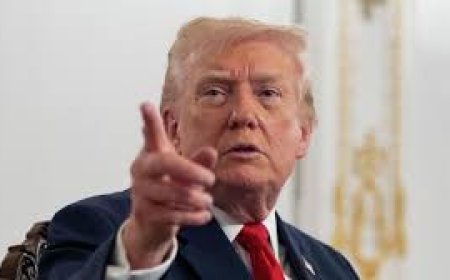
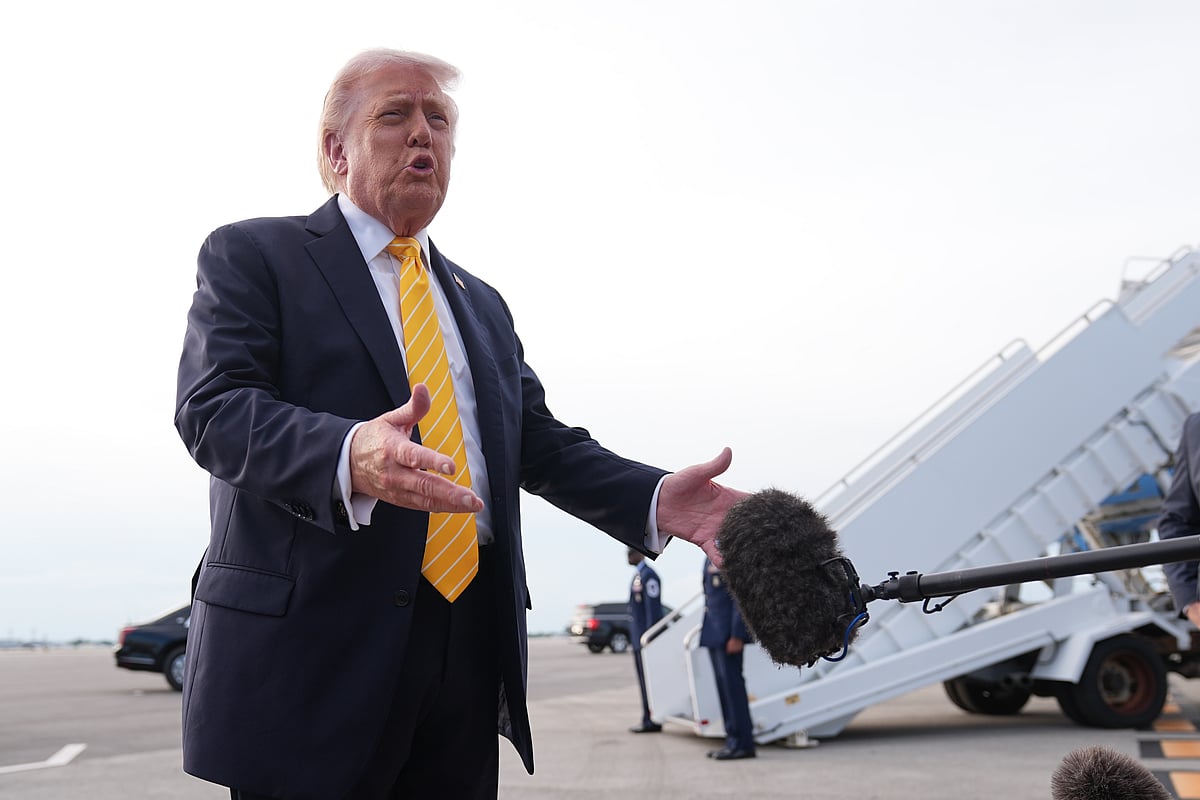
PRESIDENT Donald Trump said the US Navy would begin the process of blockading vessels attempting to enter or leave the Strait of Hormuz. The announcement came in a Truth Social post after Iran-US peace talks held this weekend in Islamabad failed.
The US Central Command said that the US would enforce the blockade of all maritime traffic entering and exiting Iranian ports at 10 AM Eastern Time, which 7.30 PM Indian Standard Time on 13 April, Monday.
A US naval blockade of Iran will be a major, open-ended military endeavour that could trigger fresh retaliation from Tehran and put tremendous strain on an already fragile ceasefire, experts told news agencies.
Intelligence firm Lloyd’s List Intelligence says all vessel traffic through the Strait of Hormuz has stopped following the latest escalation, according to news agency AP.
It reported that movement ceased after US President Donald Trump announced on Truth Social that the US would impose a blockade on the waterway.
Is a blockade an act of war? Mint answers a few pertinent questions.
What would the US blockade mean?
The blockade marks a shift from diplomacy towards a more coercive approach, warning that it could escalate tensions in West Asia.
According to the US Navy Commander's handbook on naval operations, a blockade is a “belligerent operation to prevent vessels and/or aircraft of all states, enemy and neutral, from entering or exiting specified ports, airfields, or coastal areas belonging to, occupied by, or under the control of an enemy State.”
President Trump said in his Truth Social post that the US Navy would begin the process of blockading the strait, "effective immediately". Later, he told Fox News the blockade "will take a little while, but will be effective pretty soon", and described it as an “all or none” policy.
Setting out the time for the act, the US Central Command said that the US would enforce the blockade of all maritime traffic entering and exiting Iranian ports at 10 AM Eastern Time, which 7.30 PM Indian Standard Time (IST) on 13 April, Monday.
What did CENTCOM say?
According to a CENTCOM statement on X, the blockade would be “enforced impartially against vessels of all nations entering or departing Iranian ports and coastal areas, including all Iranian ports on the Arabian Gulf and Gulf of Oman."
CENTCOM forces will not impede freedom of navigation for vessels transiting the Strait of Hormuz to and from non-Iranian ports, it said.
“Additional information will be provided to commercial mariners through a formal notice prior to the start of the blockade. All mariners are advised to monitor Notice to Mariners broadcasts and contact US naval forces on bridge-to-bridge channel 16 when operating in the Gulf of Oman and Strait of Hormuz approaches," CENTCOM said.
Is a blockade an act of war?
Under international law, a blockade is widely regarded as an act of war. When a country-state uses force to prevent ithe ingressor egress of vessels to another state’s ports, it is viewed as engaging in belligerent activity.
During the 1962 Cuban Missile Crisis, for example, the Kennedy Administration was careful to label its naval action to stop further deliveries by Soviet ships a "quarantine." The reason for this was that a "blockade" is an act of war under international law.
But this time, the Trump administration has directly called it a blockade.
A blockade is an act of war as per the Declaration Respecting Maritime Law adopted in Paris on 16 April 1856 and articles 1-21 of the Declaration Concerning the Laws of Naval War adopted on 26 February 1909 in London.
The San Remo Manual on International Law Applicable to Armed Conflicts at Sea (SRM) adopted on 12 June 1994 also provides some legal interpretation in paragraphs 67(a), 93-104, 146(f) and 153(f).
A blockade must comply with international humanitarian law (IHL) applicable in both international and non-international armed conflicts. This means respecting the principles of military necessity, distinction and proportionality, while protecting civilians and civilian objects.
What is a naval quarantine?
A naval quarantine is a targeted maritime strategy in which a nation deploys naval vessels and aircraft off a foreign coast to prevent specific goods—particularly military equipment—from entering or leaving.
Unlike a full blockade, a quarantine is a limited, coercive measure that restricts activity without formally declaring war.
So while a blockade is recognised as an act of war, a ‘quarantine’ was used, as in 1962 by John F Kennedy, to justify a more limited blockade of ‘offensive weapons.’
The “blockade of the ports or coasts of a State by the armed forces of another State” qualifies as an act of aggression and is illegal under international law, according to UN General Assembly Resolution 3314.