
























Dharmendra Pradhan explains resignation, says Gen Z was ‘misled’
Former Union Education Minister and Sambalpur MP Dharmendra Pradhan has broken his silence on his resignation, saying he approached Prime Minister Narendra Modi to address the aspirations of students protesting over the NEET examination controversy and stressing that “nothing is above the nation’s interest.”Speaking at events in Sambalpur and Rairakhol on Saturday, August 8, Pradhan said the younger generation had been subjected to attempts to “mislead” them during the protests, but maintained that he had no personal stake in retaining the Education Minister’s post.He said, “Gen Z is our children. Some people attempted to mislead them. I had no personal issues then.” He said around two crore children are born in India every year, and that the aspirations of the younger generation would be crucial to the country’s ambition of becoming a “Vishwa Guru”.Pradhan said he had personally met Modi and sought his permission to accept the protesters’ demands.“I met the Prime Minister and sought his permission to accept [the protesters’ demands]. The Prime Minister agreed and later interacted with the youth,” he said.Pradhan also emphasised that his decision to step down was not driven by personal prestige. He said, “Holding the responsibility of Education Minister is nothing in comparison” with the values and sacrifices associated with the land from which he came.He said he had asked Modi to allow him to acknowledge the aspirations of Gen Z rather than allow their grievances to be exploited for political purposes. “The Prime Minister accepted this, and later he himself spoke about it in front of the children,” he said.Pradhan resigned as Union Education Minister on July 25 amid weeks of student protests over the NEET paper leak controversy. In his resignation note, he said the decision was intended to prevent “anti-national forces” from exploiting the agitation and to ensure that the future of students did not get “entangled in legal complexities”.He had also maintained that the government acted after irregularities were reported in the May 3 NEET-UG examination. The probe was handed over to the Central Bureau of Investigation, the examination was cancelled, and a re-examination was conducted on June 21, with results declared on July 16.Pradhan also spoke about the significance of India’s young population. He described Gen Z as a force that “can’t be ignored”, and said that if 20 crore youngsters in the 15-25 age group became determined about something, the responsibility of an Education Minister would be insignificant before their resolve.“Historically, it is the youth who have led change and offered sacrifices. They were the Gen Z of their times,” Pradhan said.The former minister also responded to the political backlash he has faced in Odisha following his resignation. The Biju Janata Dal had launched a “Go Back Dharmendra Pradhan” campaign, with protesters raising slogans against him.Pradhan responded to the campaign by saying, “I am a farmer’s son. Even if you tell me to go back, I will come back.”He further added, “I am a halia (farm worker). Even if you ask me to go back, I will come,” while taking a swipe at BJD president and former Odisha chief minister Naveen Patnaik.Pradhan also defended his record in public life and said he would never do anything to tarnish Odisha’s reputation. He asked, “Have I ever done anything that will shame the people of Odisha?” before telling the gathering that he would never undertake any work that would bring disgrace to the state.“As long as I am alive, whether I do good work for Odisha or not, I will never bring disgrace to the state,” he said.Pradhan said he had served as a Union minister for 12 years with the blessings of Lord Jagannath and Maa Samaleswari, and maintained that public welfare remained his priority.Pradhan’s visit to Sambalpur and Rairakhol was his first to the constituency after stepping down as Education Minister. During the visit, he also spoke about education and regional development, saying the National Education Policy was aimed at providing multidisciplinary education and preparing students to become employable and self-reliant.

FORMER Union Education Minister and Sambalpur MP Dharmendra Pradhan has broken his silence on his resignation, saying he approached Prime Minister Narendra Modi to address the aspirations of students protesting over the NEET examination controversy and stressing that “nothing is above the nation’s interest.”
Speaking at events in Sambalpur and Rairakhol on Saturday, August 8, Pradhan said the younger generation had been subjected to attempts to “mislead” them during the protests, but maintained that he had no personal stake in retaining the Education Minister’s post.
He said, “Gen Z is our children. Some people attempted to mislead them. I had no personal issues then.” He said around two crore children are born in India every year, and that the aspirations of the younger generation would be crucial to the country’s ambition of becoming a “Vishwa Guru”.
Pradhan said he had personally met Modi and sought his permission to accept the protesters’ demands.
“I met the Prime Minister and sought his permission to accept [the protesters’ demands]. The Prime Minister agreed and later interacted with the youth,” he said.
Pradhan also emphasised that his decision to step down was not driven by personal prestige. He said, “Holding the responsibility of Education Minister is nothing in comparison” with the values and sacrifices associated with the land from which he came.
He said he had asked Modi to allow him to acknowledge the aspirations of Gen Z rather than allow their grievances to be exploited for political purposes. “The Prime Minister accepted this, and later he himself spoke about it in front of the children,” he said.
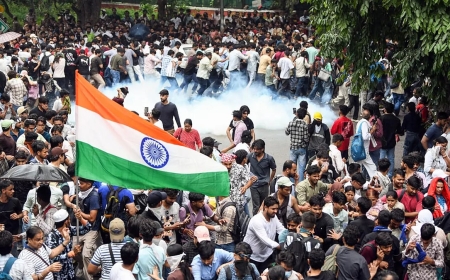
Pradhan resigned as Union Education Minister on July 25 amid weeks of student protests over the NEET paper leak controversy. In his resignation note, he said the decision was intended to prevent “anti-national forces” from exploiting the agitation and to ensure that the future of students did not get “entangled in legal complexities”.
He had also maintained that the government acted after irregularities were reported in the May 3 NEET-UG examination. The probe was handed over to the Central Bureau of Investigation, the examination was cancelled, and a re-examination was conducted on June 21, with results declared on July 16.
Pradhan also spoke about the significance of India’s young population. He described Gen Z as a force that “can’t be ignored”, and said that if 20 crore youngsters in the 15-25 age group became determined about something, the responsibility of an Education Minister would be insignificant before their resolve.
“Historically, it is the youth who have led change and offered sacrifices. They were the Gen Z of their times,” Pradhan said.
The former minister also responded to the political backlash he has faced in Odisha following his resignation. The Biju Janata Dal had launched a “Go Back Dharmendra Pradhan” campaign, with protesters raising slogans against him.
Pradhan responded to the campaign by saying, “I am a farmer’s son. Even if you tell me to go back, I will come back.”
He further added, “I am a halia (farm worker). Even if you ask me to go back, I will come,” while taking a swipe at BJD president and former Odisha chief minister Naveen Patnaik.
Pradhan also defended his record in public life and said he would never do anything to tarnish Odisha’s reputation. He asked, “Have I ever done anything that will shame the people of Odisha?” before telling the gathering that he would never undertake any work that would bring disgrace to the state.
“As long as I am alive, whether I do good work for Odisha or not, I will never bring disgrace to the state,” he said.
Pradhan said he had served as a Union minister for 12 years with the blessings of Lord Jagannath and Maa Samaleswari, and maintained that public welfare remained his priority.
Pradhan’s visit to Sambalpur and Rairakhol was his first to the constituency after stepping down as Education Minister. During the visit, he also spoke about education and regional development, saying the National Education Policy was aimed at providing multidisciplinary education and preparing students to become employable and self-reliant.