





































UN backs new world map that more accurately shows Africa’s true size and scale, 164 countries vote in favour
The UN General Assembly has backed an African Union-led push for more accurate world maps, with 164 countries voting in favour of the ‘Correct the Map’ resolution. The campaign challenges distortions associated with the widely used Mercator projection.
THE United Nations General Assembly has backed an African Union-led effort to change how the world is represented on maps, adopting a resolution calling for more accurate and equitable cartographic depictions of different regions, particularly Africa.
The “Correct the Map” resolution, championed by Togo on behalf of the African Group, was adopted on Friday with overwhelming support. A total of 164 countries voted in favour, while one voted against and six abstained.
The resolution focuses on an issue that has long been debated in geography: the way certain world map projections can make some parts of the world appear much larger or smaller than they actually are.
African Union welcomes UN vote
The Permanent Observer Mission of the African Union to the UN welcomed the decision and congratulated Togo and the African Group.
"Congratulations to the delegation of Togo on the adoption this morning by the #UNGA of resolution A/80/L.104, 'Correct the Map', an @_AfricanUnion initiative promoting more accurate and equitable global cartographic representation, particularly of Africa," the mission said in a post on X.
African Union Commission Chairperson Mahmoud Ali Youssouf also welcomed the resolution, praising Togo's leadership and the unity of African countries behind the initiative.
In a communiqué, Youssouf congratulated the Republic of Togo and President Faure Essozimna Gnassingbé for championing the resolution on behalf of the African Group and helping secure broad international support.
"The adoption of this resolution marks an important step forward," the AU Chairperson said.
Why is Africa challenging the Mercator map?
At the centre of the campaign is the Mercator projection, a map projection developed in the 16th century primarily to help with navigation.
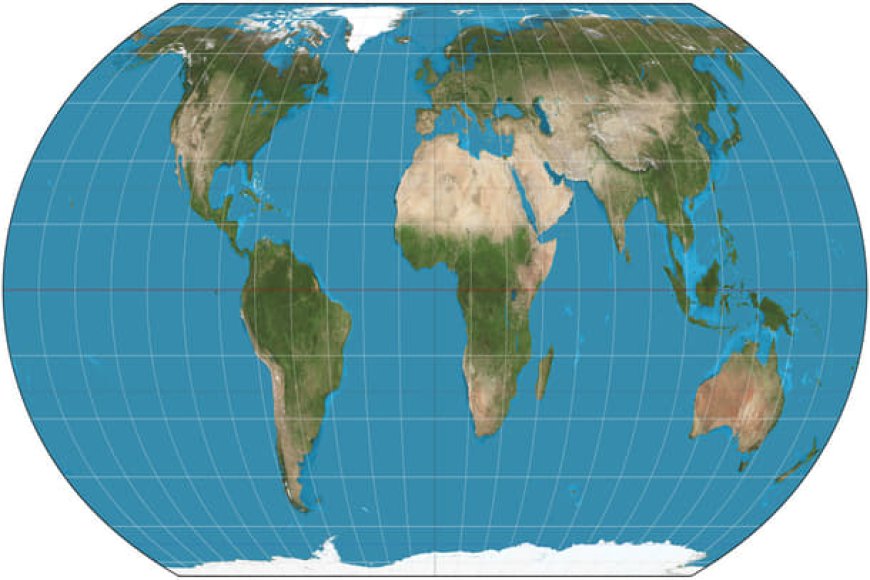
The projection preserves directions well, making it useful for navigation, but it does not accurately preserve the relative surface areas of regions. As a result, countries and continents closer to the poles can appear much larger than they are.
The African Union Commission says this significantly understates Africa's actual size when compared with regions such as Greenland.
The AU described the initiative as extending beyond cartography, saying Africa should be represented according to "objective and scientifically established realities".
In a separate post on X, the African Union Commission called the UN vote a "historic step toward accurate and equitable global cartographic representation".
"For centuries, the Mercator projection distorted global geography, shrinking Africa to the size of Greenland when our continent is actually 14 times larger," the commission said.
AU pushes for equal-area maps
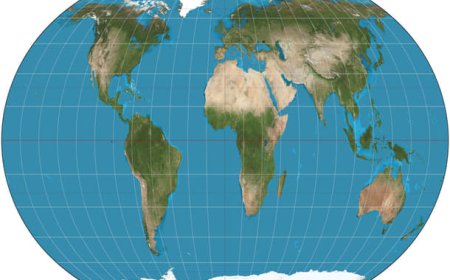
The African Union is calling on international institutions, schools, publishers and digital platforms to gradually adopt maps that provide a more accurate sense of the relative size of land masses.
It has specifically highlighted equal-area projections, including the Equal Earth projection, for use in classrooms, media and international institutions.
The AU Commission said it would continue working with Togo, its member states and other partners to support the initiative's implementation.
For Youssouf, the debate is ultimately about more than the technicalities of mapmaking.
"Africa must be represented as it truly is: in its true dimensions and in its rightful place in the world," the AU Chairperson said.
The UN adoption gives international backing to the campaign, although the Mercator projection remains widely used because of its historical importance and practical value for navigation. The AU's push is instead aimed at encouraging greater use of equal-area maps, particularly in educational and public-facing representations of the world.