













































































History shows Trump's lame duck period could lead to major policy changes, clashes with Congress
SWEEPING Democratic wins in both the House and Senate in the midterm elections have set the stage for what could be a whirlwind final two years of President Trump's time in office
The presidential "lame duck" period refers to a term-limited president's final two years in office.
History has shown that lame duck presidents can still have major policy impacts in their remaining time in office, but also face massive battles.
Before this year, when President Trump's Republican Party lost control of both the House and Senate, only three times since the 22nd Amendment was ratified in 1951 had a term-limited president lost party control of at least one chamber of Congress during his final midterm election: Barack Obama in 2014, George W. Bush in 2006 and Ronald Reagan in 1986. The 22nd Amendment limits presidents to two terms.
Those three previous final two-year periods featured both major policy initiatives and major battles with Congress, and can shed light on what people could expect to see in the next two years.
Obama 2015-17
The 2014 midterms saw the Democrats take major hits in both the House and Senate. In the House, Republicans gained 13 seats, extending their majority to 247 seats, their highest since the 1920s. The GOP took control of the Senate with a nine-seat gain, giving them a 54-46 majority with Mitch McConnell as majority leader. This would greatly shape Obama's last two years in the White House.
Obama and the Republican-controlled Congress butted heads throughout his lame duck period, with Congress refusing to take up a number of his high-priority proposals, and the president turning to his veto pen.
A number of his high-profile priorities that the GOP-led Congress either blocked or did not take up include:
Merrick Garland's Supreme Court nomination (the Senate also slowed confirmations of other judges)
Gun control measures, such as expanded background checks
Free community college
Minimum wage increase
Paid leave
The Trans-Pacific Partnership
Criminal justice reform
Closing the Guantanamo Bay military prison
Republicans said they were acting as a check on Obama's agenda. On the White House side, 10 of Obama's 12 total vetoes came during this period, including bills approving the Keystone XL pipeline and repealing the Affordable Care Act.
Congress did override one: a bill allowing 9/11 families to sue Saudi Arabia. Obama relied heavily on executive actions to advance his agenda, which Republicans criticized as executive overreach, and courts blocked a number of his high-profile actions, including his immigration plan and the Clean Power Plan.
Not everything was stalled, as Obama and Congress did come together to pass a number of bipartisan pieces of legislation, including:
The Every Student Succeeds Act, which replaced No Child Left Behind
The USA Freedom Act, which overhauled government surveillance powers
The PATH Act, which made several tax breaks permanent, including the expanded child tax credit
The Justice for Victims of Trafficking Act
MACRA (Medicare Access and CHIP Reauthorization Act), also known as the "Doc Fix" bill
The FAST Act (Fixing America's Surface Transportation Act)
The Bipartisan Budget Act of 2015
PROMESA (Puerto Rico Oversight, Management, and Economic Stability Act)
CARA (Comprehensive Addiction and Recovery Act)
The 21st Century Cures Act, which funded medical research, including the "Cancer Moonshot" initiative, and sped up drug approvals
Bush 2007-09
In the thick of two wars — Iraq and Afghanistan — President Bush faced a similar midterm fate to Trump's in 2026. The Democrats gained 31 seats in the House, flipping a Republican majority of 232-202 into a Democratic one of 233-202. This led to Nancy Pelosi becoming the first woman to serve as Speaker of the House. Democrats also gained six Senate seats to take a 51-49 majority (this included two independents — Bernie Sanders and Joe Lieberman — caucusing with the Democrats).
The fallout was immediate, with Donald Rumsfeld resigning as Secretary of Defense the day after the election.
During his lame duck period, Bush saw key priorities blocked or stalled, such as making his 2001 and 2003 tax cuts permanent, free trade deals with multiple countries and judicial nominations. His top domestic priority, immigration reform, failed in the Senate largely due to opposition from Republican senators.
Like Obama, Bush also wielded a strong veto pen during this period, with 11 of his 12 vetoes occurring during it:
Embryonic stem cell research funding, the second time he had vetoed this
Multiple bills that would have expanded the Children's Health Insurance Program
The Water Resources Development Act. This was overridden by Congress
The Labor-HHS-Education spending bill
The annual defense authorization bill. A revised version later became law
The intelligence authorization bill banning waterboarding
The farm bill. He vetoed this twice after a clerical error forced Congress to pass it again. Both vetoes were overridden
A Medicare bill blocking cuts to doctors' payments. This was overridden
Iraq War funding with a withdrawal timeline. A version without the timeline later passed
Democrats pushed to set an Iraq withdrawal timeline, which Bush argued would undercut the military. He ordered a surge of more than 20,000 additional troops in 2007.
Bush similarly used executive actions for agenda items like CIA interrogations, offshore drilling and emergency loans to automakers. He also signed major bipartisan legislation, especially related to the financial crisis, including the Economic Stimulus Act, the Housing and Economic Recovery Act and the Emergency Economic Stabilization Act. Other notable bills that passed included:
The first minimum wage increase in a decade, to $7.25
The FISA Amendments Act
The Post-9/11 GI Bill
The ADA Amendments Act
The PEPFAR reauthorization
The Consumer Product Safety Improvement Act
The Energy Independence and Security Act
The Implementing Recommendations of the 9/11 Commission Act
Reagan 1987-89

Like Obama, Ronald Reagan saw his party lose the Senate, with Democrats gaining eight seats to flip a 53-47 Republican majority to a 55-45 Democratic one. Democrats also extended their House majority to 258-177 with five pickups in the midterms. For the first time in his presidency, Reagan faced a Congress fully controlled by the Democrats.
The end of his presidency was plagued by the Iran-Contra scandal, secret arms sales to Iran with profits sent to the anti-communist Contra rebels in Nicaragua despite a congressional ban on that aid.
News of it broke just after the 1986 election and impacted much of the next two years. In response, he appointed the Tower Commission, whose purpose was to conduct a probe into the affair and evaluate the role of the National Security Council.
Included in its findings was criticism of Reagan, his top advisers and the NSC. Following the release of the findings, he gave an address in which he acknowledged the trading of arms for hostages but he said he did not know about the diversion of funds.
Televised congressional hearings followed, after which the majority report found "the ultimate responsibility" rested with Reagan. The Republicans' minority report defended his authority over foreign policy.
Congress blocked or stalled several high-profile Reagan priorities during his final two years in office, including Robert Bork's Supreme Court nomination. His next pick, Douglas Ginsburg, withdrew before Anthony Kennedy was finally confirmed in 1988.
Congress also rejected new military aid to the Nicaraguan Contras, cut funding for his Strategic Defense Initiative, known as "Star Wars," and never passed his proposed balanced budget amendment or line-item veto.
Reagan vetoed 78 bills during his presidency, far more than Bush or Obama. In his final two years he vetoed several high-profile bills:
The Clean Water Act reauthorization. This was overridden
A highway and transit bill. This was overridden
A bill that would have made the Fairness Doctrine law. The veto stood
The Civil Rights Restoration Act. This was overridden
One of Reagan's most famous moments came during his lame duck period, when, speaking at the Berlin Wall in June 1987, he called on Soviet leader Mikhail Gorbachev to "tear down this wall." Also during the period, he signed the INF Treaty with Gorbachev to eliminate an entire class of nuclear missiles, which was ratified by the Senate with bipartisan support.
Reagan also sent U.S. military forces to escort oil tankers in the Persian Gulf and faced Black Monday, the October 1987 stock market crash, after which he negotiated a deficit reduction deal with Congress.
He did have bipartisan successes with Congress during the period, including the passing of:
The Civil Liberties Act of 1988
The Family Support Act of 1988
The Anti-Drug Abuse Act of 1988
The McKinney Homeless Assistance Act
The Fair Housing Amendments Act
The Department of Veterans Affairs Act
The Medicare Catastrophic Coverage Act, which Congress repealed the following year
The Indian Gaming Regulatory Act
The Omnibus Trade and Competitiveness Act
What to expect for Trump
For Trump, the final two years of his first term offer a number of parallels. After Democrats won the House in 2018, the next two years saw the implementation of the First Step Act, a record-long government shutdown, multiple House investigations and his first impeachment.
Immediately following the 2026 midterms, Democrats in both chambers gave previews of what's in store, with the expected incoming House Oversight chair Rep. Robert Garcia making a two-word statement: "Lawyer up," while Sen. Ron Wyden only needed one word: "Subpoenas."
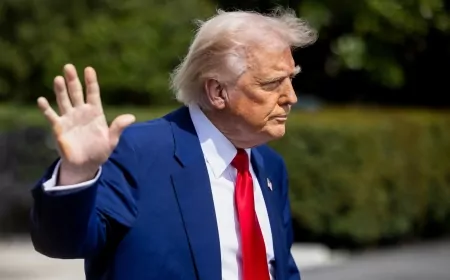
Trump said he is prepared to use his veto powers with Democrats in charge, suggesting it could actually lead to the two working together.
"Historically, you veto for a couple of months, and then they come and say, 'We've got to make a deal,'" he told CBS News.