










































































Eight Black women won statewide races in Georgia. Their victories stand to reshape the state.
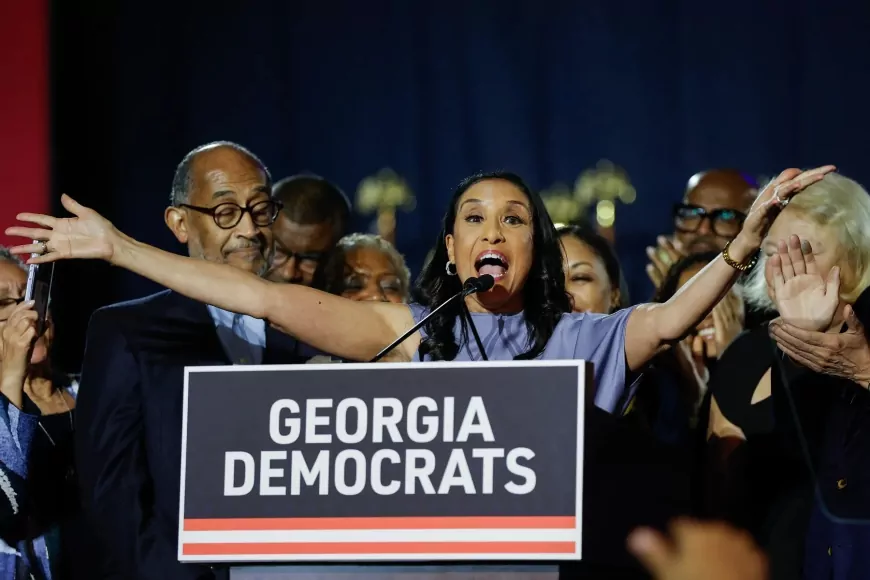
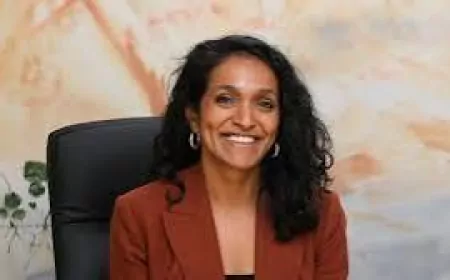
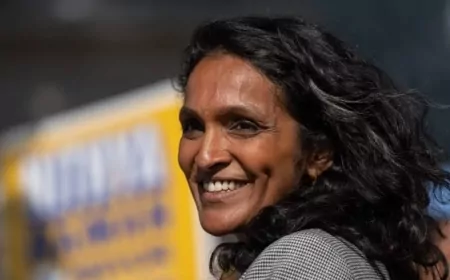
At 7:20 a.m. on Wednesday morning, Judge Penny Brown Reynolds had not yet been to bed. The night before, she was declared the winner of the secretary of state race in Georgia, the first Black person and the first Black woman to be elected to this office in state history.
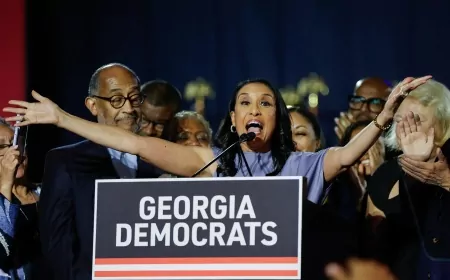
Her win was part of a Democratic sweep of statewide offices on election night, with Democrats taking all 10 statewide races — meaning that all eight Black women running statewide in Georgia saw wins last night, too.
“Georgia chose competence,” Brown Reynolds said. “We were not selected because we were Black women. I believe that we were selected because all of us bring something that Georgia desperately needs. I know I’m not a politician and we know that this was no ordinary time. What this says is that a Black woman can lead by being her authentic self. It says there is a turning, if you will, in America — that in the state of Dr. Martin Luther King and John Lewis, that maybe, just maybe, we’re finally being judged by the content of our character and the experience and leadership that we bring.”
The 19th thanks our sponsors. Become one.
The wins in Georgia were part of a blue wave that swept the country. Multiple Black women made history, notably former Atlanta Mayor Keisha Lance Bottoms, who will be the first Black woman governor in U.S. history.
IN addition to Bottoms and Brown Reynolds, the six other Black women who ran for statewide office in Georgia and won are Tanya Miller, who will be attorney general; Katherine Juhan-Arnold, who will be agriculture commissioner; Keisha Waites, who will be insurance commissioner; Nikki Porcher, who will be labour commissioner; Sheila Edwards, who will be public service commissioner; and Lydia Powell, who will be state school superintendent.
All are Democrats. Two White men who are also Democrats — Sen. Jon Ossoff, who ran for reelection, and Josh McLaurin, who ran for lieutenant governor — also won their races.
As state Rep. Saira Draper, who won her campaign for state Senate, posted on the social media platform X last night: “Georgia just elected more statewide officials named Keisha than Republicans.”
Bottoms smiles and waves to a crowd from stage with the word Governor displayed behind her.
Jessica Mackler, the president of EMILY’s List, which supports women candidates in races up and down ballots nationwide, said Bottoms’ embrace of Medicaid expansion resonated with voters statewide. Wins by Miller and Brown Reynolds have implications for the availability of abortion in the state, as well as rules around elections, she added.
“These wins are going to have an incredible impact for the people of Georgia right now, but they are also going to have a ripple impact in truly seismic ways for years to come,” she said.
Mackler said that at EMILY’s List, it became clear early in the 2026 cycle that what was most important to voters was having candidates that they could connect with because they had similar lived experiences.
The eight Black women who won in Georgia last night speak to that.
“We had in each of these women a proof of leadership that they had spent their entire lives fighting for the people of Georgia, working to make people’s lives better, standing in just such strong contrast to their opponents who were supporting a system that makes the powerful more powerful,” Mackler said. “And that ability to connect with voters was really resonant and really drove these incredible wins.”
In her victory speech to supporters Tuesday night, Miller said: “I have stood in courtrooms alongside families experiencing unspeakable tragedy. I have prosecuted violent crimes and fought for victims whose voices deserve to be heard. I have defended constitutional rights and represented people who simply wanted a fair chance against powerful institutions.”
And, she stressed, that only speaks to the power of her win. “There is something extraordinary I don’t have to tell you guys about this moment. A working-class kid raised by a hard-working mother who learned far too early that the world might not always be fair. She is standing before you tonight, ready on day one, for you to fight for you as your next attorney general.”
Brown Reynolds said that already, she and Miller have been in touch, sharing a “significant moment” and reflecting on what it meant to have two Black women who have built careers in law to now be positioned to work together to protect voting rights.
And she noted that the over 400,000 votes that brought her to victory were not just from Black voters, but from a diverse coalition that crossed racial, ethnic and party lines.
Mackler also emphasised that one of the most important lessons to be learned from Georgia “is that women and women of colour are at the centre of driving the most important progress in our nation and are at the centre of delivering the most important electoral wins in our nation.”
Brown Reynolds also said that she is thinking about what their election means in light of the Trump administration’s crackdown on diversity, equity and inclusion, too — the Black women in the federal workforce who lost their jobs or exited the workforce after Trump administration cuts made in 2025.
Her election feels like a referendum on this narrative, she said.
“I won because of competence. I won because of experience. This whole notion that they try to put forth is almost laughable … but up and down the ballot, voters had the choice to select someone else because we were all running against White men,” she said. “That’s the significant part. Their ticket was all White men, but voters made the decision.”
With the Georgia state House flipping for Democrats last night too, Brown Reynolds sees even more opportunity to model that “diversity is Georgia and America’s superpower.” She pointed to the fact that state Rep. Carolyn Hugley of Columbus is now poised to become the first Black woman to be speaker of the house in the state legislature, too. “We can move Georgia forward in a way that we never could before.”
Now, she said, “They’re allowing the A students to come to the front of the class.”
It’s a seismic shift that Brown Reynolds feels at the most cellular level.
This morning, she spoke to her granddaughter, a junior at Howard University, over FaceTime as she got on an early flight back to Washington, D.C. so as to not miss class today. “I said, ‘My darling, my darling — there will never be a time when anybody can stop you from doing anything that you want to be or do.’”