













































































Supreme Court rejects Trump mail ballot restrictions ahead of midterms
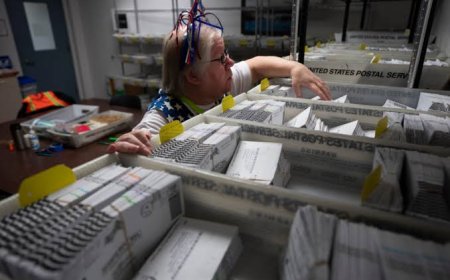
THE U.S. Supreme Court on Monday rejected President Donald J. Trump’s bid to restrict mail ballots for the November midterm elections, ruling in favour of Connecticut and a coalition of other states that sought to block the U.S. Postal Service from implementing parts of the president’s executive order.
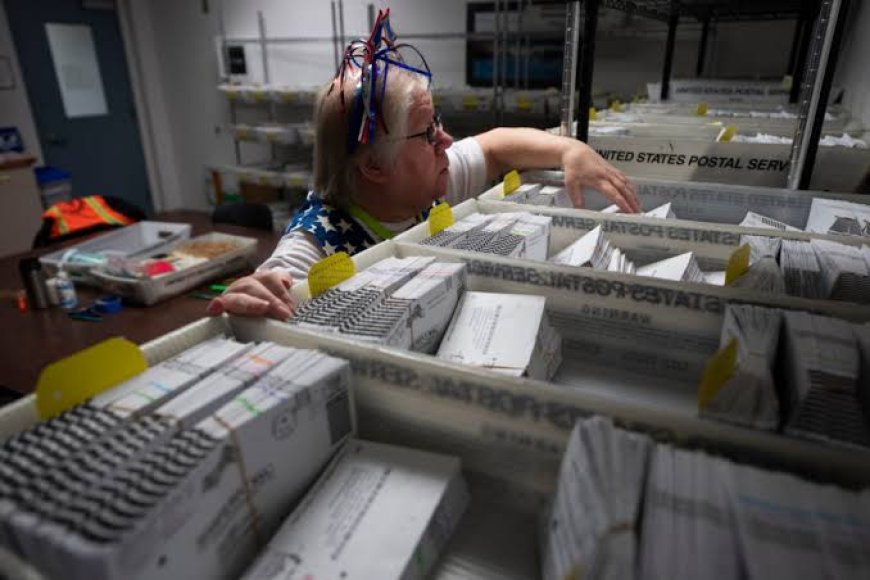
The decision allows states to continue sending out mail ballots under the same processes they’ve used for years and have accounted for nearly a third of votes cast.
It represented a stark defeat for Trump on an issue he consistently has emphasised as vital to ensuring election integrity even though there is virtually no evidence of fraud with mail ballots.
Attorney General William Tong applauded the decision by the Supreme Court Monday night and heralded it as a victory. But he warned of the president continuing to sow doubt over voting less than two months before the Nov. 3 midterm elections, when the balance of power in Congress will be at stake.
By upholding the preliminary injunction from a federal judge, Tong said the ruling by the Supreme Court continues to block states like Connecticut from needing to get approval of ballot and return envelope design as well as include information on each state’s voters in a portal.
“This is a huge win for free and fair elections. Donald Trump has tried over and over again to seize control of this election, to pick and choose who gets to vote and how we cast our ballots,” Tong said in a statement issued shortly after 9 p.m.
“Tonight, the United States Supreme Court sided with states and gave Donald Trump a big no. I have no illusions that this president is done trying to inject chaos and confusion into this election, but we’re going to be there at every step to fight to protect voters and our democracy.”
This year, for the first time, any voter in Connecticut can vote by absentee ballot for any reason. A state constitutional amendment approved by referendum and an act of the General Assembly ended the state’s policy of restricting absentee voting to those able to attest an inability to vote in person on election day.
States have the constitutional authority to administer their own elections. And Congress, not the president, can make changes at the federal level through legislation. But Trump, who says he wants to “nationalize the voting,” has sought to do so both through unilateral action and legislation he wants Congress to pass.
On March 31, months ahead of the November midterm election and as primary season was starting, Trump issued an executive order that could change how mail-in or absentee ballots work. He has argued it’s an attempt to crack down on noncitizen voting, which is already prohibited by federal law and rare.
His order instructed the U.S. Department of Homeland Security to compile a “state citizenship list” through citizenship, naturalization, and Social Security records and send that to election officials in each state. It would allow for investigating or prosecuting local officials if they provide a ballot to someone who’s ineligible to vote in a federal election.
The order also gave the U.S. Postal Service rulemaking authority on voting by mail. In response, the agency proposed a rule in early June that would require states to submit a “mail-in and absentee participation list” of voters who intend to vote by mail. If a state isn’t in compliance, the Postal Service could block the transmission of mail ballots. The executive order required USPS to submit a final rule by the end of July.
The Supreme Court majority on Monday wrote that the administration’s push to implement the restrictions this year is likely to lose in court, though the brief emergency order didn’t detail its reasoning. Two justices, Samuel Alito and Clarence Thomas, publicly dissented.
The Trump administration had asked the justices, once again at the center of a roiling political controversy, to clear the way for restrictions before the pivotal November contests for control of Congress.
Alito wrote in his dissent that the Postal Service “has broad authority to regulate the mail” and likely does have the power to enforce Trump’s restrictions.
Justice Brett Kavanaugh, meanwhile, agreed that the restrictions should not go into effect for the midterms but indicated he might rule in favor of the Trump administration if the issue comes back before the court at a later time.
Lower courts agreed to block Trump’s plan, including a preliminary injunction issued by a judge nominated by the president.
But the Trump administration appealed to the Supreme Court, arguing that federal control of the Postal Service allows them to set rules for mail ballot handling and that compliance was possible.
The federal government won an early procedural decision at the Supreme Court, but the justices pointedly did not decide the legality of the plan.
Trump has long opposed mail voting and falsely blamed it for his 2020 election loss to Democrat Joe Biden, even though he often uses that method to cast his own ballot, including as recently as this year.