










































How VD Satheesan fought his way to Kerala’s top post
Follow TNM's WhatsApp channel for news updates and story links.With VD Satheesan finally emerging as the Congress’ choice for Kerala Chief Minister, it turned out to be third time lucky for the leader who had repeatedly seen major positions slip away at the last moment. After missing out on a ministerial berth in 2011 and the post of Kerala Pradesh Congress Committee (KPCC) chief in 2016, Satheesan had to battle his way to the top post this time too, with party heavyweights such as KC Venugopal and Ramesh Chennithala emerging as key contenders.Despite leading the Congress-led United Democratic Front (UDF) to a resounding victory in the Assembly election, Satheesan was reportedly not the party high command’s automatic choice for Chief Minister. The reasons were familiar, the same ones seen in 2011 and 2016 — his strained relationship with influential community lobbies, lack of strong backing within sections of the national leadership, and his assertive political style that has often unsettled even leaders within his own party. Unlike in the past, however, Satheesan was not ready to bow out so easily this time. According to party insiders, it was “Chief Minister or nothing” for Satheesan, echoing his refusal to accept a compromise ‘Speaker’ post when he was denied a ministerial berth in 2011. In many ways, the Congress leadership’s eventual decision also reflected the political reality within Kerala after the election. Much of the credit for the UDF’s emphatic comeback had gone to Satheesan, who spent the last five years reshaping himself into the face of the opposition against the Left Democratic Front (LDF) government.Satheesan had been one of the few Congress leaders who confidently predicted that the UDF would cross the 100-seat mark in the Assembly election. He had even declared that he would go into political exile if he failed to bring the UDF back to power — a statement many Congress workers later said energised the cadre during the campaign.The irony of Satheesan’s elevation lies in the fact that the very traits that once cost him positions eventually became central to his political appeal.In 2011, when Satheesan was denied a ministerial berth in the Oommen Chandy cabinet, his “attitude” was widely cited as one of the reasons. For instance, unlike some colleagues who actively sought support from influential community organisations such as the Nair Service Society (NSS), Satheesan was unwilling to lobby for positions.Senior mediaperson Jacob George recalled meeting Satheesan at the Assembly hostel soon after he was denied the berth. “He told me that one of the reasons for denying ministership was his lack of NSS support. Satheesan was told that he had a chance if he could secure the backing of NSS. But he told the party that he did not need a ministership post that way. Oommen Chandy had offered him a post under the quota of A (Antony) group then, but he declined that too,” Jacob said.In a podcast released last October, Satheesan had addressed perceptions surrounding his personality by recalling social reformer Sree Narayana Guru’s observation that while confidence is good and arrogance is bad, only a thin line separates the two. “So our confidence could be read as arrogance. We should be careful to avoid such misunderstanding,” he said, adding that such perceptions were often cultivated by political rivals.Satheesan made his electoral debut in the 1996 Assembly election, when he was picked as a last-minute candidate in the Paravur constituency. Though he lost by a slender margin of 1,016 votes in the seat held by the Communist Party of India (CPI), Satheesan, then a successful lawyer, drew attention within the Congress party. He subsequently began focusing on Paravur, one of the seven Assembly constituencies in his home district of Ernakulam. There was no looking back after Satheesan won the seat with a margin of over 7,000 votes in the 2001 election. Paravur has stood firmly with him for the past 25 years, including during the Left wave that swept Kerala in 2021. That year, Satheesan landed a significant role — Leader of Opposition in the 15th Kerala Assembly. The task before him was immense: to bring the UDF back to power at a time when the LDF government was riding high on the popularity of its welfare measures, crisis management, and infrastructure projects. Opposition within the ruling frontWhen the ministerial berth slipped away between cup and lip in 2011, Satheesan did not shy away from expressing his displeasure, both within and outside the party. He was unwilling to settle for the post of Speaker that was offered to him then. “It was painful. It won’t be honest, if I say otherwise. But I have never gone after positions,” Satheesan said in the recent podcast. During the UDF government from 2011 to 2016, the Oommen Chandy-led administration often found itself dealing with two kinds of Opposition — the LDF outside, and dissent from within the Congress led by figures such as VM Sudheeran and Sa
Follow TNM's WhatsApp channel for news updates and story links.
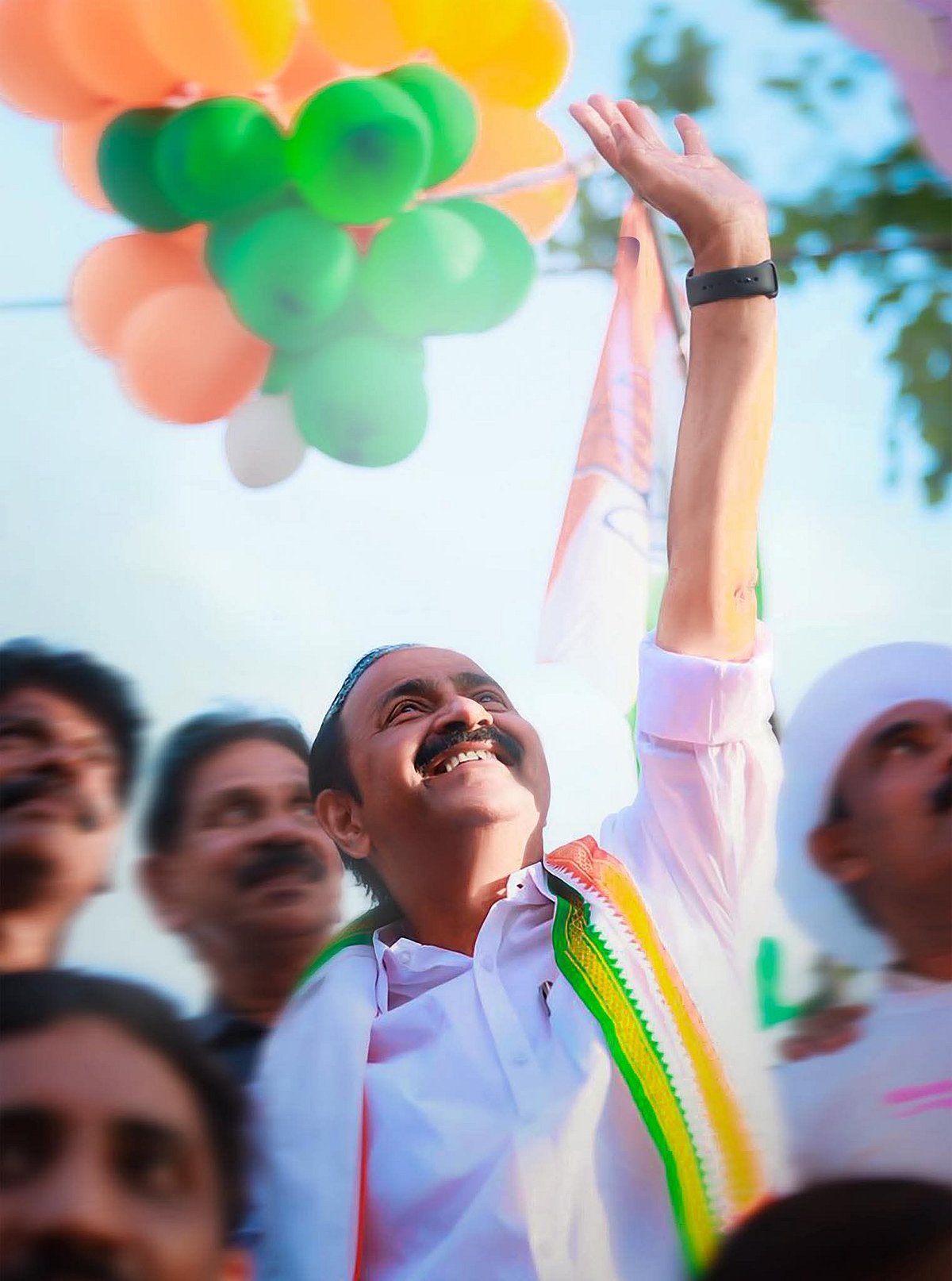
WITH VD Satheesan finally emerging as the Congress’ choice for Kerala Chief Minister, it turned out to be third time lucky for the leader who had repeatedly seen major positions slip away at the last moment. After missing out on a ministerial berth in 2011 and the post of Kerala Pradesh Congress Committee (KPCC) chief in 2016, Satheesan had to battle his way to the top post this time too, with party heavyweights such as KC Venugopal and Ramesh Chennithala emerging as key contenders.
Despite leading the Congress-led United Democratic Front (UDF) to a resounding victory in the Assembly election, Satheesan was reportedly not the party high command’s automatic choice for Chief Minister. The reasons were familiar, the same ones seen in 2011 and 2016 — his strained relationship with influential community lobbies, lack of strong backing within sections of the national leadership, and his assertive political style that has often unsettled even leaders within his own party.
Unlike in the past, however, Satheesan was not ready to bow out so easily this time.
According to party insiders, it was “Chief Minister or nothing” for Satheesan, echoing his refusal to accept a compromise ‘Speaker’ post when he was denied a ministerial berth in 2011.
In many ways, the Congress leadership’s eventual decision also reflected the political reality within Kerala after the election. Much of the credit for the UDF’s emphatic comeback had gone to Satheesan, who spent the last five years reshaping himself into the face of the opposition against the Left Democratic Front (LDF) government.
Satheesan had been one of the few Congress leaders who confidently predicted that the UDF would cross the 100-seat mark in the Assembly election. He had even declared that he would go into political exile if he failed to bring the UDF back to power — a statement many Congress workers later said energised the cadre during the campaign.
The irony of Satheesan’s elevation lies in the fact that the very traits that once cost him positions eventually became central to his political appeal.
In 2011, when Satheesan was denied a ministerial berth in the Oommen Chandy cabinet, his “attitude” was widely cited as one of the reasons. For instance, unlike some colleagues who actively sought support from influential community organisations such as the Nair Service Society (NSS), Satheesan was unwilling to lobby for positions.
Senior media person Jacob George recalled meeting Satheesan at the Assembly hostel soon after he was denied the berth.
“He told me that one of the reasons for denying ministership was his lack of NSS support. Satheesan was told that he had a chance if he could secure the backing of NSS. But he told the party that he did not need a ministerial post that way. Oommen Chandy had offered him a post under the quota of the A (Antony) group then, but he declined that too,” Jacob said.
In a podcast released last October, Satheesan had addressed perceptions surrounding his personality by recalling social reformer Sree Narayana Guru’s observation that while confidence is good and arrogance is bad, only a thin line separates the two.
“So our confidence could be read as arrogance. We should be careful to avoid such misunderstandings,” he said, adding that such perceptions were often cultivated by political rivals.
Satheesan made his electoral debut in the 1996 Assembly election, when he was picked as a last-minute candidate in the Paravur constituency. Though he lost by a slender margin of 1,016 votes in the seat held by the Communist Party of India (CPI), Satheesan, then a successful lawyer, drew attention within the Congress party. He subsequently began focusing on Paravur, one of the seven Assembly constituencies in his home district of Ernakulam.
There was no looking back after Satheesan won the seat with a margin of over 7,000 votes in the 2001 election. Paravur has stood firmly with him for the past 25 years, including during the Left wave that swept Kerala in 2021. That year, Satheesan landed a significant role — Leader of Opposition in the 15th Kerala Assembly.
The task before him was immense: to bring the UDF back to power at a time when the LDF government was riding high on the popularity of its welfare measures, crisis management, and infrastructure projects.
Opposition within the ruling front
When the ministerial berth slipped away between cup and lip in 2011, Satheesan did not shy away from expressing his displeasure, both within and outside the party. He was unwilling to settle for the post of Speaker that was offered to him then. “It was painful. It won’t be honest if I say otherwise. But I have never gone after positions,” Satheesan said in the recent podcast.
During the UDF government from 2011 to 2016, the Oommen Chandy-led administration often found itself dealing with two kinds of opposition — the LDF outside and dissent from within the Congress led by figures such as VM Sudheeran and Satheesan. As KPCC vice-president, Satheesan positioned himself as a corrective force within the ruling front, at one point even raising graft allegations against his own party.
He was openly critical of the Oommen Chandy government over the controversial reclamation of paddy land in Kadamakudy and Methran Kayal, which earned some Congress leaders like him the label ‘Haritha MLA’ (green MLA). In several television interviews during the last leg of the UDF government, Satheesan also openly expressed dissatisfaction with his own front’s performance. Such remarks widened rifts within the Congress at the time, with some leaders branding him power-hungry.
In an old interview with Manorama News, Satheesan candidly admitted that, as a public worker, he liked power. “I don't like to wear a fake mask of someone who hates power. I am someone who proved what an MLA could do. So I have a clear understanding of what I could do as a minister or someone in a powerful position,” he said in the interview.
Rise as Congress’ ‘Captain’
Born on May 31, 1964, in Nettoor in the Ernakulam district, Satheesan was the fourth of six children of K Damodara Menon, a Kerala Forest Department employee, and V Vilasini, a homemaker. Describing his upbringing as solidly middle class, Satheesan became active in politics during his college years, eventually serving as chairman of the Mahatma Gandhi University Union and secretary of the National Students’ Union of India.
After a brief stint as a practising lawyer, he returned to active politics in 1996. Soon after his Assembly debut, he married Aluva native R Lakshmi Priya. The couple has a daughter, Unnimaya.
The last few years saw Satheesan’s rebranding as one of the most powerful leaders in the Congress, even pushing several seniors to the sidelines. As leader of the opposition, he got a fair share of credit for the UDF’s strong electoral performances after 2021, including the 2024 Lok Sabha polls, the 2025 local body elections, and multiple bye-elections.
After the Congress won the Nilambur bye-election in 2025, Congress workers, including its youth brigade, began referring to him as “Captain”, a development that reportedly unsettled rival camps within the party.
Satheesan’s image makeover was not just confined to his political persona. He is seen as a politician who reads 40-60 books every year. Of late, he had even begun publicly sharing his annual reading lists. Last year’s list included a highly interesting mix of 60 books, including Nobel prize-winner Han Kang’s novel The Vegetarian, the memoir Patriot by slain Russian opposition leader Alexei Navalny, and Malayalam novels like Maria verum Maria by Sandhya Mary. He is often seen carrying books during his travels, and is also known for his fondness for trekking.
Despite his growing popularity, Satheesan faced a huge setback from an unexpected quarter. Credited for raising a set of young leaders in Congress, he had to face severe criticism when Palakkad MLA Rahul Mammkootathil was embroiled in a series of sexual harassment allegations. Eventually, it was Satheesan’s firm stand that led to Rahul’s expulsion from the Congress in December last year.
A section of political observers sees Satheesan as a symbol of a timely political shift within the Congress party. Mediaperson and political observer NP Chekkutty said Satheesan’s assertive style of politics was exactly what the Congress needed at a time when the BJP was emerging as a stronger force in Kerala.
Chekkutty sees a sharp distinction between the styles of former leader of opposition Ramesh Chennithala and his successor Satheesan. “Rameshan’s style was less confrontational, more of a consensus-building. He comes from a league of leaders who gave priority to the appeasement of caste and community groups. His political ideology lacks clarity,” he said, adding that people don’t trust a politician who is unwilling to articulate his convictions.