




















































































Sharon Kuriakose: Building local dominance for national success at Platesfull
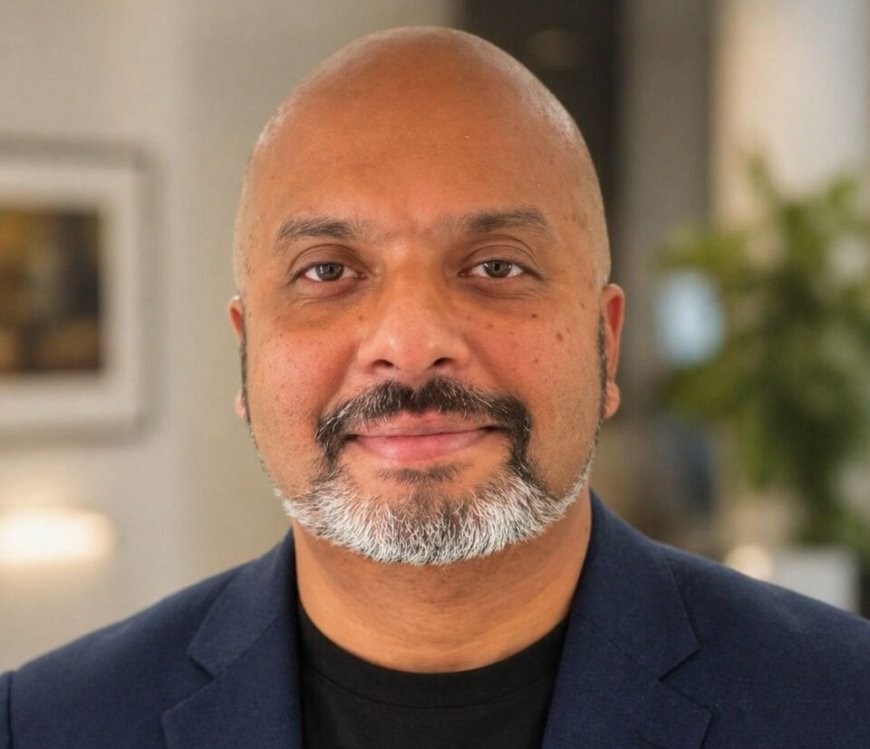
Sharon Kuriakose is the Co-Founder of Platesfull, a marketplace connecting customers with private chefs and curated in-home hospitality experiences across multiple cities in the United States. Prior to entrepreneurship, he spent nearly two decades at Visa in global technology leadership roles focused on data platforms and business growth.
ValiantCEO Magazine’s interview
WE are thrilled to have you join us today, welcome to ValiantCEO Magazine’s exclusive interview! Let’s start off with a little introduction. Tell our readers a bit about yourself and your company.
Sharon Kuriakose: My name is Sharon Kuriakose, and I’m the Co-Founder of Platesfull, a marketplace focused on helping people celebrate at home through private chefs and curated hospitality experiences. Prior to entrepreneurship, I spent nearly two decades at Visa, where I grew from a software engineer into a global leadership role leading Data Platforms for Business & Corporate Cards.
Platesfull was built from a very personal problem that my wife and I experienced ourselves. Like many working families, our “plates were already full” balancing careers, family, parenting, and everyday responsibilities. We loved hosting people at home, but we also understood the stress that came with planning, cooking, coordinating, and cleaning afterward.
That experience inspired us to create a platform that makes hosting easier while helping people create meaningful experiences with family and friends. Today, Platesfull connects customers with private chefs for dinners, brunches, bachelorette parties, vacation rental experiences, corporate gatherings, and other curated in-home celebrations across multiple cities.
One of the most interesting parts of building the company has been understanding how differently regional markets behave when it comes to hospitality and celebrations. We’ve focused heavily on combining hospitality, operational systems, AI-assisted workflows, and localized marketplace strategies to create a more personalized customer experience while scaling efficiently.
At its core, Platesfull is really about bringing people together through food, hospitality, and memorable experiences in a way that feels personal, meaningful, and stress-free.
What was your strategy for achieving true dominance in your local or regional market before attempting national expansion?
Sharon Kuriakose: Our initial focus was proving product-market fit in Austin before thinking aggressively about expansion. Austin gave us the opportunity to closely understand customer behavior, chef expectations, operational challenges, pricing sensitivity, and the overall dynamics of a hospitality marketplace.
Once we started seeing consistent organic demand, repeat customer behavior, and growing marketplace engagement, we realized the core model was working. From there, the strategy became less about reinventing the business in every market and more about thoughtfully replicating and adapting the operational playbook to additional cities.
At the same time, we’ve been very intentional about not expanding too quickly. One of the biggest lessons we’ve learned is that every city and state behaves differently when it comes to hospitality, celebrations, regulations, customer expectations, and chef ecosystems. What works in Austin may not translate identically to Miami, Nashville, Scottsdale, or New York.
For marketplace businesses especially, balancing supply and demand is one of the hardest challenges. Expanding into a city without enough high-quality chefs creates customer friction, while onboarding too much supply without sufficient demand creates frustration on the chef side. Maintaining that balance requires patience, operational discipline, and continuous refinement.
Trust is another critical factor. We are building trust simultaneously with both customers and chefs. Customers need confidence that they are booking reliable, high-quality experiences, while chefs need confidence that the platform is creating genuine opportunities and supporting their success.
Our strategy has been to grow steadily, strengthen operational systems, improve responsiveness, and build localized trust market by market rather than pursuing rapid expansion at the expense of experience quality.
How did dominating your home market give you advantages (data, systems, brand trust, or capital) that made national scaling easier or less risky?
Sharon Kuriakose: Building traction in our home market gave us something extremely valuable early on — real operational learning. As an early-stage marketplace, Austin became our testing ground to better understand customer expectations, booking behavior, chef onboarding challenges, pricing dynamics, and the realities of running a hospitality-focused platform.
More importantly, it helped us validate that there was genuine demand for curated in-home chef experiences and that customers were increasingly looking for more personalized ways to celebrate at home.
The experience also helped us improve many of our operational systems before expanding further. We learned where friction existed in the customer journey, how important response speed was, what chefs needed to succeed on the platform, and how trust plays a critical role on both sides of a marketplace.
Rather than viewing Austin as a “finished success story,” we see it as a foundational learning environment that continues to shape how we grow into other cities. It gave us confidence that the core concept works while also teaching us how much operational discipline and localization are required to scale responsibly.
As we expand, we are applying many of those lessons — improving workflows, strengthening onboarding systems, refining communication processes, and building more localized marketplace strategies — while still remaining cautious and adaptable because every market behaves differently.
For us, early traction in Austin did not eliminate the risks of scaling, but it significantly reduced uncertainty by giving us real-world operational insights and a stronger understanding of how to build the business more thoughtfully over time.
Can you share one key decision or operational practice that helped you own your region but would have been difficult to execute if you had tried to go national too early?
Sharon Kuriakose: One of the most important operational decisions we made early on was staying deeply involved in the marketplace experience instead of trying to automate or scale everything too quickly. In the early stages, we spent significant time personally understanding customer expectations, chef onboarding challenges, response quality, operational bottlenecks, and the nuances behind why bookings either converted or failed.
That close involvement helped us refine workflows, improve communication systems, build stronger trust with chefs, and better understand the emotional side of hospitality experiences. Since many bookings involve birthdays, anniversaries, family gatherings, and bachelorette celebrations, customer experience and responsiveness matter tremendously.
Had we attempted to scale nationally too early, we likely would have missed many of those operational learnings because the complexity grows exponentially across multiple markets. Marketplace businesses are very sensitive to supply-demand balance, local behavior patterns, and trust-building, and those issues become much harder to diagnose when expanding too broadly without operational maturity.
By growing more intentionally, we were able to gradually build systems, workflows, chef onboarding processes, AI-assisted operational tools, and localized strategies based on real-world marketplace behavior rather than assumptions. That foundation continues to help us expand more thoughtfully today.
What challenges arose when transitioning from regional leadership to national competition, and how did your regional success help you overcome them?
Sharon Kuriakose: As an evolving marketplace that is still in the early stages of expansion, one of the biggest realizations for us has been understanding how different each market behaves once you move beyond your initial region. Customer expectations, booking patterns, chef availability, hospitality culture, and even response behaviors can vary significantly from city to city.
One challenge we quickly recognized was that marketplace growth is not simply about entering more cities — it is about building localized trust, operational consistency, and balanced supply and demand within each market. Expanding too quickly without enough high-quality chef supply or without understanding local customer behavior can create friction on both sides of the marketplace.
Our early traction and operational experience in Austin helped us approach expansion more thoughtfully. It gave us real-world insights into customer expectations, onboarding processes, response workflows, pricing dynamics, and the importance of fast, reliable communication.
We also learned how important operational systems become as marketplaces grow. Many of the workflows, AI-assisted tools, structured response systems, and onboarding processes we are implementing today were shaped by lessons learned while building our initial market.
Rather than viewing expansion as “conquering markets,” we see it more as continuously learning, adapting, and refining the experience city by city. Our regional experience gave us confidence that the core concept works, while also teaching us the patience and operational discipline required to scale more sustainably over time.
For founders currently dominating or trying to dominate their local market, what’s the most important advice you’d give them before they look to expand nationally?
Sharon Kuriakose: One of the biggest pieces of advice I would give founders is to stay extremely hands-on in the early stages and learn how to separate real market signals from noise.
It’s very easy for startups to become overly focused on vanity metrics, external opinions, social validation, or hearing only the positive side of the story. But some of the most important growth opportunities actually come from listening carefully to operational friction, customer complaints, failed conversions, negative feedback, and uncomfortable truths about what is not working.
Founders should not be afraid of bad news. In many cases, bad news is actually valuable data. The faster you hear it, understand it, and adapt to it, the stronger the business becomes over time.
For us, being closely involved with customers, chefs, operational workflows, and marketplace challenges helped us identify problems early and continuously improve the experience. Those learnings would have been much harder to capture if we had tried to scale too aggressively too soon.
I also believe founders should avoid assuming that success in one market automatically translates everywhere else. Every city, customer base, and operational environment behaves differently. Expanding nationally requires patience, adaptability, and a willingness to continuously learn and refine the playbook rather than simply copy and paste it.
Ultimately, sustainable growth comes from staying grounded, listening carefully, solving real problems consistently, and building operational discipline before chasing scale.