







































Tony Burke says migrants are the ‘solution, not the problem’, defends pre-election citizenship ceremonies
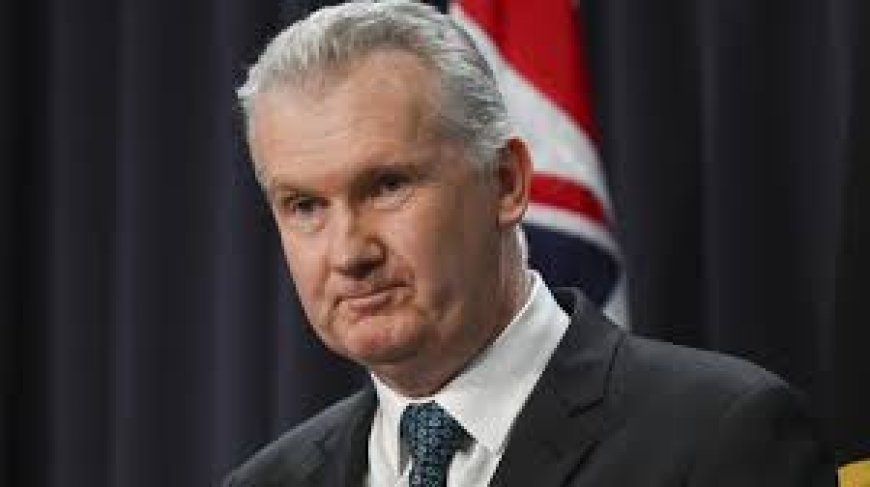
MINISTER for Home Affairs of Australia Tony Burke has declared immigration, particularly from India, is the “solution, not the problem” for the housing crisis, while brushing off “angry” critics of massive citizenship ceremonies in the lead-up to the last election.
Speaking with Indian Link Media Group’s The Pawan Luthra Podcast last week, the Immigration Minister vowed to address the problem of “permanently temporary” visa holders, saying they should be given a chance to “become fully part of Australia’s democracy”.
During the 14-minute sit-down interview with the niche ethnic media outlet, Mr Burke offered effusive praise for the contribution of “the best and the brightest” Indian migrants and accused the Liberal Party of “singling out” the Indian community as it seeks to counter One Nation on immigration.
“[Over the past 20 years] we have needed to find the best skilled migrants more than ever before,” he said.
“Half of our doctors now are born overseas, half of our registered nurses are born overseas, about a quarter of the tradespeople we need to build homes are born overseas. So effectively we can’t run our health system or build the houses we need without immigration.
“We have really geared up the targeting, and there’s still more that I want us to keep doing, to make sure that we can get the best and the brightest, to make sure we can fill those skills gaps. Because a whole lot of the economic strength of Australia relies on us having a really well targeted immigration program.
“And can I say, in the time that that story has happened, that we’ve needed the best and the brightest and more and more skilled immigrants, has been the exact time that we’ve seen the growth in the Indian community in Australia.”
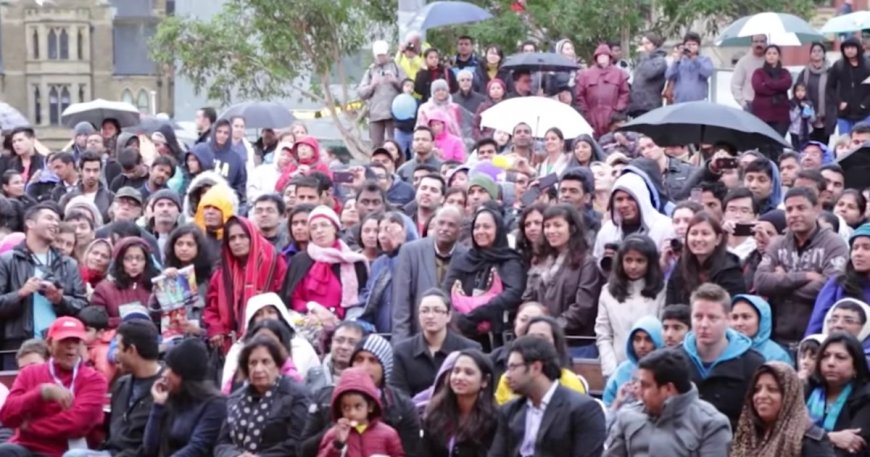
India last year overtook England as the largest source of overseas-born migrants in Australia for the first time in the country’s history, figures from the Australian Bureau of Statistics (ABS) revealed this week.
Indian-born residents now make up 971,020 of the 8.8 million people born overseas, while the UK-born population sits at 970,950. People born in India also recorded the largest increase in the decade between 2015-2025, adding more than 500,000 people.
Three quarters of Australia’s world-leading 1.6 per cent population growth comes from immigration, with natural increase — births minus deaths — adding just 112,600 people in the year ending September 30.
In the 12 months to February 2026, net permanent and long-term arrivals were close to half a million at 478,910, according to the ABS.
Net overseas migration was 306,000 in 2024-25, down from 429,000 a year earlier. The last federal budget had forecast net overseas migration for the full financial year to be 260,000 — this month’s budget is expected to show a revised forecast of a little over 300,000.
AMP chief economist Dr Shane Oliver has long called for net overseas migration to be brought down to pre-Covid-19 levels of at least 200,000 for a few years in order for housing construction to catch up with the estimated current shortfall of 200,000 to 300,000 homes.
Over the past two decades, just 1.8 per cent of “skilled” migrants to Australia were in a construction trade.
Mr Burke said population growth needed to be calibrated to housing and infrastructure constraints.
“Two things are true,” he said.
“The first is that economically, we need immigration. We need the skills, we need the people. And culturally we’re stronger because of it.
“But secondly, we also need to make sure that the infrastructure and services are keeping pace as well. So this is where the targeting has to be done really carefully. So it is true that you need to make sure you are building enough houses … to deal with the housing shortage that we have.
“Getting the right immigrants is actually part of the solution, not necessarily part of the problem. As I said, about a quarter of the tradespeople that we need are born overseas.
“But it is also true, it’s not like you could have unlimited immigration without creating a problem with housing and infrastructure. So we need to make sure that it’s managed and it’s paced.
“One of the things that really worries me about the current debate though, if you get into a world of just saying effectively immigration is bad, you get into a world of people casting suspicion on immigrants, you get into a world of singling out some of the countries — and obviously the Indian community has seen that be done in a really horrible way — then effectively it’s bad for the economy, it’s bad for the cohesion of Australians, it’s not who we are and it leads people to feeling, why is the country that I love questioning me?”
Mr Burke said he views immigration “in terms of getting us the skills that we need” while opposition leader Angus Taylor “is viewing it as trying to get the votes from One Nation that he needs”.
“Effectively, a whole lot of what he says is about getting Australians to blame each other, and I think that’s an ugly, horrible thing to do, and I don’t think it’s in the interest of Australia,” he said.
The Liberal Party, under the new leadership of Mr Taylor, last month announced its migration policy, which aims for a reduction in annual net overseas migration of around 100,000 and a focuses on adherence to “Australian values”.
One Nation, which has been soaring in the polls in the wake of the Bondi terror attack in December, wants to cap visas at 130,000 per year, end student visa “backdoors” to permanent residency and deport unlawful nonresidents including visa overstayers and failed refugees.
Mr Burke said Mr Taylor “on coming to the leadership did two things very quickly”, one of which was bringing Senator Jacinta Nampijinpa Price back to the front bench, “the person who had specifically singled out migrants from India”.
Senator Price was dumped from the shadow ministry by former leader Sussan Ley in September after refusing to apologise for comments claiming more Indian migrants were being brought to Australia because they vote for Labor.
“And the second thing he did was start this weaponising of immigration and in particular when he talks about immigration, to say that one of the critical issues with respect to Bondi was immigration,” Mr Burke said.
“Of course, one of the two people was born here, the other, yes, he did migrate from India but he migrated 30 years ago.
“Anything about their radicalisation will be an argument about what happened in Australia, and to somehow blame that as being relevant to the immigration from India 30 years ago, I just think was an ugly thing to do and it was about effectively detonating an argument within Australia where communities like the Indian-Australian community were going to suffer abuse and judgement from fellow Australians that they just don’t deserve.”
Mr Burke was asked about opinion polling which has consistently shown most Australians think migration is too high.
“The migration numbers always need to be tailored to where the country is at and where the economy is at different points in time,” he said.
“At the moment, we do have a significant housing shortage, so that is why I’ve been bringing the numbers down. So I’ve been doing that in a measured way, in a targeted way. Effectively it’s now 45 per cent lower than its peak.
“What I will never do is start this blame of immigrants. So it’s on the government of the day to make sure that we’re tailoring the numbers to get the people we need to build the houses and build the infrastructure but also to make sure the numbers don’t get too far beyond.
“This is where, we’ve said to the universities effectively that you need to provide enough student housing, if you provide the student housing then you can have the students. If you’re not providing the student housing, then we’re not going to increase your numbers … that’s the way we need to do it.
“But the way Angus Taylor has just blamed immigrants and used a narrative that very much singles out the Indian community in Australia I think is ugly.”
The host questioned how Mr Burke would rebuild public trust and “restore the social license for migration”.
“Part of that is why I’m here now, to make sure people know how strict the security checks are, how targeted the process is that we’re doing, but also how important immigration is to the economy,” Mr Burke said.
“There is not a single hospital that you could run in Australia without people who are on visas, not one. Aged care, our elderly effectively don’t have the care they need without our immigration system. Yes we do have a housing shortage, but unless we get the skills we need to build the houses we will continue to have a housing shortage.
‘Citizenship ceremonies are the most patriotic events you can have.’ Picture: Jeremy Piper/NewsWire
‘Citizenship ceremonies are the most patriotic events you can have.’ Picture: Jeremy Piper/NewsWire
“A big part of this is explaining … to people that when they talk about problems with infrastructure not keeping up they are right, we don’t deny that there is a housing shortage, infrastructure is behind, but then to explain immigration is part of the answer to that.
“If we were to stop immigration, if we were to single out the Indian community of all communities, which has so many highly trained people coming to Australia, would be to simply hurt Australia, not protect it.”
The host closed off by questioning what the Minister planned to do to address the long-term problem of “permanently temporary” visa hoppers.
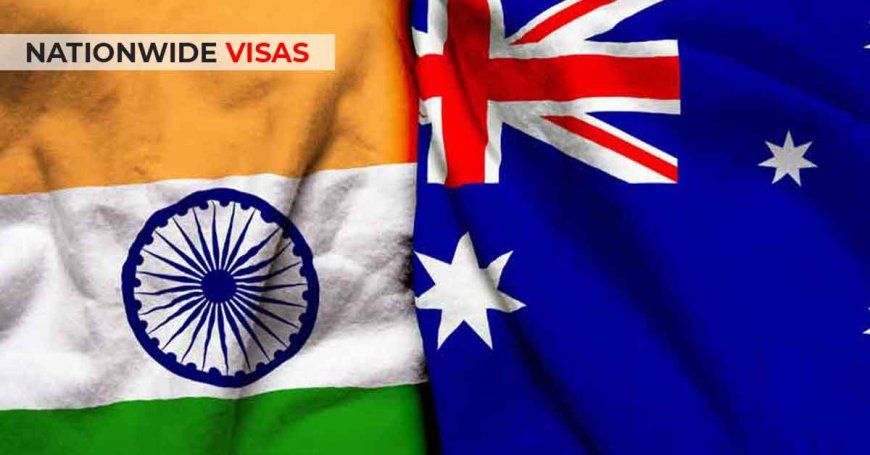
The number of temporary visa holders in Australia hit another record high of 2,615,947 in the year to March 2026, Department of Home Affairs (DHA) visa statistics show.
Indian nationals have overwhelmingly driven the growth in temporary visa numbers, with including bridging visas and student visas.
“There are lots of countries that have effectively part of their economy as guest workers who will never become citizens — I don’t believe that should be the model for Australia,” Mr Burke said.
“I believe that people who are still here, people who are going to continue to be here and are working here should have an opportunity to become fully part of Australia’s democracy.
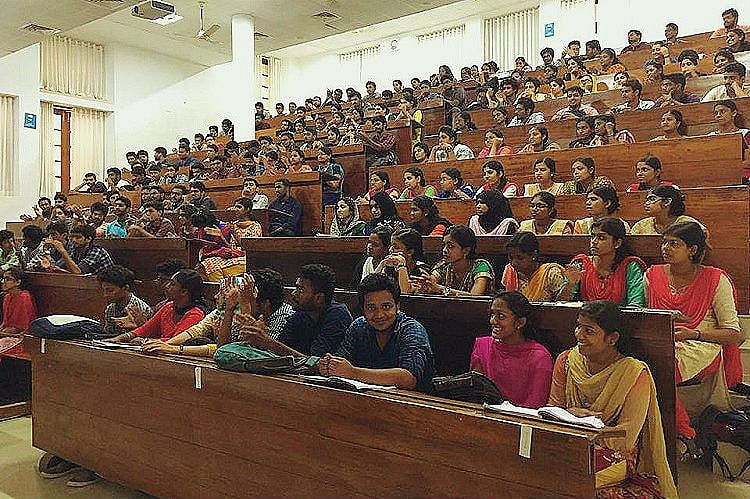
“There was a lot of publicity at the start of last year when I was holding very large citizenship ceremonies and people were angry, the Liberal Party was very angry with me for doing it. But for me, those citizenship ceremonies are the most patriotic events you can have. Like, they are events where we have people who have chosen us.”
He said his “special memory” from all of the citizenship ceremonies was reading out the list and going country by country.
“I get to India and the cheer is always the loudest,” he said.
“And there is just this complete sense of celebration from everybody that their whole migration journey, the final step, is now about 15 minutes away. And the final thing I say to them after I’ve made them citizens is, ‘Welcome home.’”