






















































.jpg?#)






India begins building first indigenous bullet train in Bengaluru
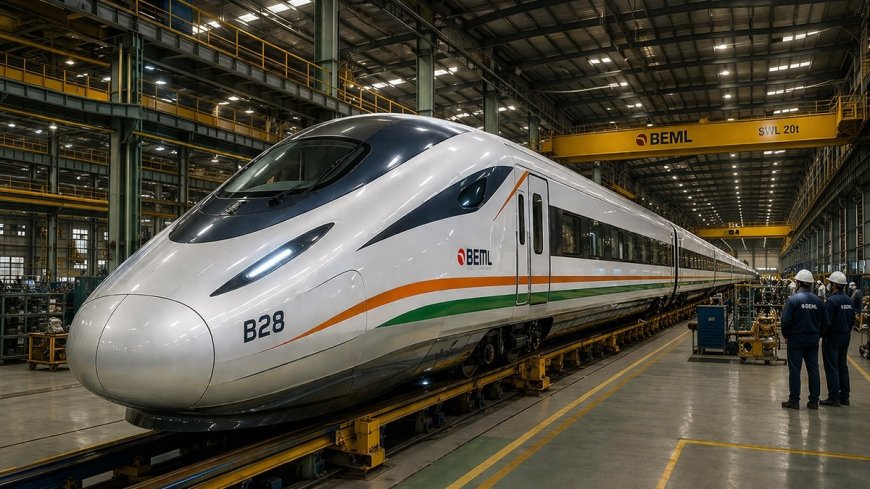
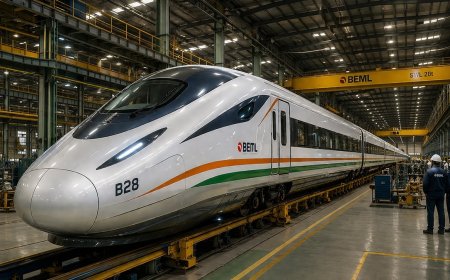
UNION Railway Minister Ashwini Vaishnaw inaugurated BEML's Aditya manufacturing complex in Bengaluru, purpose-built to produce India's first fully indigenous bullet train, the B-28.
The facility, developed under the Atmanirbhar Bharat mission, spans 80 acres and features advanced systems like robotic laser welding and CVC technology to meet high-speed rail's precision demands. With an annual capacity exceeding 800 coaches, it is also designed for future projects like the 350 kmph B-35.
Cost advantage and strategic control
The B-28's estimated Rs 27.86 crore per coach is about 40% cheaper than comparable Japanese Shinkansen coaches, offering significant savings as India plans multiple corridors. Past negotiations for imported technology were slowed by cost escalations and conditions, but the B-28 project allows India to retain control over technology, supply chains, and expansion pace.
This positions the initiative as a blueprint for a domestic high-speed rail manufacturing industry.
South India connectivity vision
Vaishnaw outlined a plan for a 'high-speed diamond' network linking Amaravati, Hyderabad, Chennai, Bengaluru, Pune, and Mumbai, drastically reducing travel times.
The Chennai–Bengaluru route could be cut to 73 minutes, effectively merging two major southern metros into a single economic zone. The model mirrors the Mumbai-Ahmedabad project’s regional integration, aiming to spur economic activity across South India.
The Rs 867 crore contract for the B-28 was awarded to BEML in October 2024, in collaboration with the Integral Coach Factory. Manufacturing is underway, with the prototype expected by March 2027, followed by testing before commercial deployment.
Initial operations will begin on the 97 km Surat–Vapi stretch of the Mumbai–Ahmedabad corridor by August 2027, a cautious phased approach typical of new high-speed rail systems. ET Now + 4