


























































Behind CBSE’s Class 12 evaluation contract, a trail of unanswered questions
The Central Board of Secondary Education (CBSE) is under scrutiny over the processes it followed while awarding the tender for Class 12 answer sheet scanning and e-evaluation through its on-screen marking (OSM) platform. The selection process for finalising the service provider and the security of the platform are being questioned by students, activists and also Congress leader Rahul Gandhi.According to documents viewed by The News Minute, there were four bidders for the May 2025 tender, including Coempt Edu Teck, Tata Consultancy Services (TCS) and Xlict Software, but none of the four was found to comply with technical specifications. Another tender was called in August, and both Coempt Edu Teck and TCS were found to satisfy the technical criteria, while Rankguru Technology Solutions’ bid was rejected, with the status updated on November 19, 2025. This left just about three months before the CBSE 12 exams began.While the commercial bid opening date is also mentioned as November 19, 2025, sources told TNM that the rules for this stage of the bidding process were not followed. “As per process, both parties that qualify are supposed to be called the day the bids are opened and informed that this was your commercial bid and that X or Y had won and the qualifying amount. This did not happen,” said a source, who requested not to be named. However, a top official in CBSE refuted this and said that since the bid process takes place online, parties don't need to be physically present and that the qualifying bidders are able to view the results online once the winner is decided. “When the bid is opened, the mail goes from the system, and the result can be viewed online.”Since CBSE is a government body, it has to make public the results of the tender, but in the case of the OSM bid, the CBSE has yet to announce these details, including the qualifying amount, the source quoted first said. “It’s mandatory for a government body to make these details public because it is the taxpayers’ money.”The CBSE official, however, said that the winner and details of the winning bid would not be announced publicly, such as on the CBSE website, over concerns about competition but said the governing body was informed about the results. Another allegation that has been raised was that the CBSE changed the terms of the tender quite extensively between May and August 2025, and relaxed certain parameters. The government usually insists on a CMMI level five certification for such contracts, but this criterion was lowered to a level three certification in the August tender. CMMI, or capability maturity model integration certification, is a globally accepted standard for process improvement, particularly for software development companies.The May tender mentions that “service providers should have authorised and globally accepted software certification, viz., CMMI Level 5 for both development and services.” In the August request for proposal (RFP), this was changed to CMMI Level 3 or above. According to the CBSE official, this was done to widen the pool of candidates that could bid. Both TCS and Coempt have CMMI Level 5 certification, the source said, and shared a scanned copy of Coempt’s Level 5 certification. This was also among several charges raised online by another Class 12 student, Sarthak Sidhanth, both on X and in a detailed blog in which he alleged tender conditions were altered to favour Coempt Edu Teck. The tender floated in May said that a bidder would be disqualified if they had been blacklisted previously by the central or any state government. In the August tender, the word “currently” was introduced in the clause and stated that “The Bidder must not be currently blacklisted, banned, debarred, or under a declaration of ineligibility by any Central Government, State Government, or any other Government institution/agency in India.” With the CBSE introducing the word “currently”, companies that were blacklisted earlier but were no longer under blacklisting could potentially apply for the tender. The August tender also removed a clause that said bidders who showed poor performance in the past could be disciplined. The May tender had said, “Even though Bidder may satisfy the qualifying criteria, it is liable to disqualification if it has a record of poor performance or is not able to understand the scope of work or blacklisted earlier by the Board in any earlier projects.”In both tenders, all bidders had to submit an undertaking stating that they are not blacklisted. The phrasing of the undertaking was the same in both tenders, TNM found on examination of the two tender documents. The blacklisting clause gained attention because Coempt was previously called Globarena Technologies and was responsible for building the software to digitise exam-related administrative work for the Telangana intermediate exam in April 2019. A huge row broke out as 3.8 lakh students out of the 9.7 lakh who took the exam failed, and over 20 students di
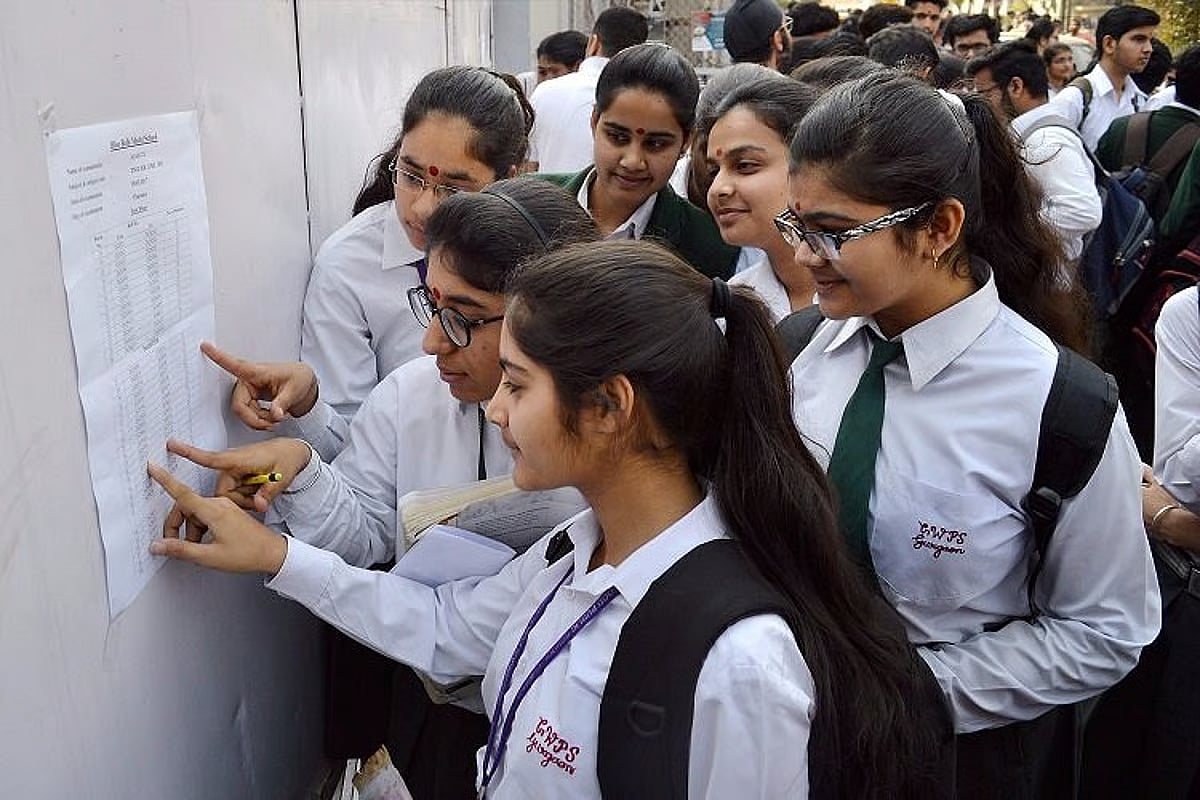
THE Central Board of Secondary Education (CBSE) is under scrutiny over the processes it followed while awarding the tender for Class 12 answer sheet scanning and e-evaluation through its on-screen marking (OSM) platform.
The selection process for finalising the service provider and the security of the platform are being questioned by students, activists and also Congress leader Rahul Gandhi.
According to documents viewed by The News Minute, there were four bidders for the May 2025 tender, including Coempt Edu Teck, Tata Consultancy Services (TCS) and Xlict Software, but none of the four was found to comply with technical specifications.
Another tender was called in August, and both Coempt Edu Teck and TCS were found to satisfy the technical criteria, while Rankguru Technology Solutions’ bid was rejected, with the status updated on November 19, 2025. This left just about three months before the CBSE 12 exams began.
While the commercial bid opening date is also mentioned as November 19, 2025, sources told TNM that the rules for this stage of the bidding process were not followed.
“As per process, both parties that qualify are supposed to be called the day the bids are opened and informed that this was your commercial bid and that X or Y had won and the qualifying amount. This did not happen,” said a source, who requested not to be named.
However, a top official in CBSE refuted this and said that since the bid process takes place online, parties don't need to be physically present and that the qualifying bidders are able to view the results online once the winner is decided.
“When the bid is opened, the mail goes from the system, and the result can be viewed online.”
Since CBSE is a government body, it has to make public the results of the tender, but in the case of the OSM bid, the CBSE has yet to announce these details, including the qualifying amount, the source quoted first said.
“It’s mandatory for a government body to make these details public because it is the taxpayers’ money.”
The CBSE official, however, said that the winner and details of the winning bid would not be announced publicly, such as on the CBSE website, over concerns about competition but said the governing body was informed about the results.
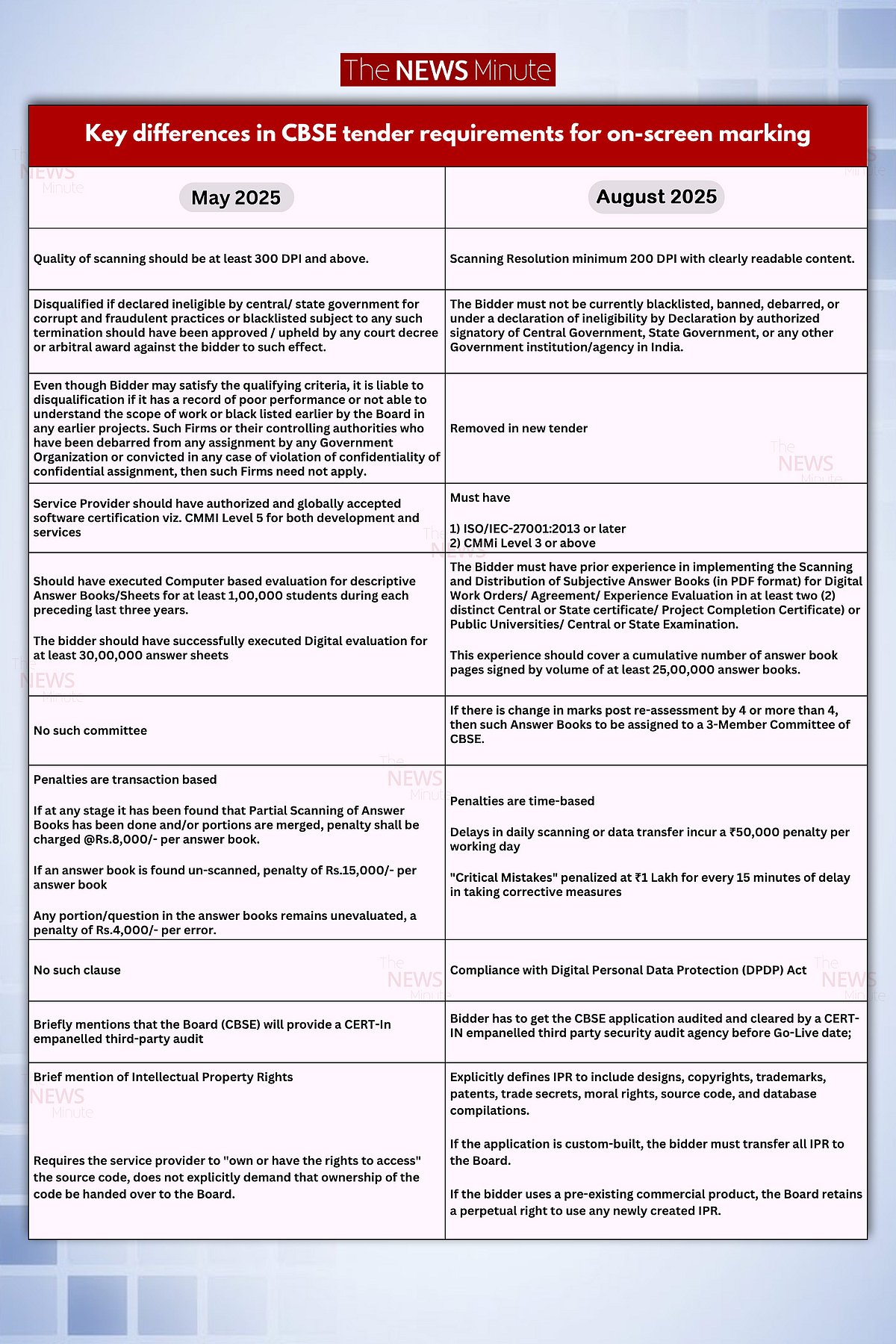
Another allegation that has been raised was that the CBSE changed the terms of the tender quite extensively between May and August 2025, and relaxed certain parameters.
The government usually insists on a CMMI level five certification for such contracts, but this criterion was lowered to a level three certification in the August tender.
CMMI, or capability maturity model integration certification, is a globally accepted standard for process improvement, particularly for software development companies.
The May tender mentions that “service providers should have authorised and globally accepted software certification, viz., CMMI Level 5 for both development and services.”
In the August request for proposal (RFP), this was changed to CMMI Level 3 or above.
According to the CBSE official, this was done to widen the pool of candidates that could bid. Both TCS and Coempt have CMMI Level 5 certification, the source said, and shared a scanned copy of Coempt’s Level 5 certification.
This was also among several charges raised online by another Class 12 student, Sarthak Sidhanth, both on X and in a detailed blog in which he alleged tender conditions were altered to favour Coempt Edu Teck.
The tender floated in May said that a bidder would be disqualified if they had been blacklisted previously by the central or any state government.
In the August tender, the word “currently” was introduced in the clause and stated that “The Bidder must not be currently blacklisted, banned, debarred, or under a declaration of ineligibility by any Central Government, State Government, or any other Government institution/agency in India.”
With the CBSE introducing the word “currently”, companies that were blacklisted earlier but were no longer under blacklisting could potentially apply for the tender.
The August tender also removed a clause that said bidders who showed poor performance in the past could be disciplined.
The May tender had said, “Even though Bidder may satisfy the qualifying criteria, it is liable to disqualification if it has a record of poor performance or is not able to understand the scope of work or blacklisted earlier by the Board in any earlier projects.”
In both tenders, all bidders had to submit an undertaking stating that they are not blacklisted. The phrasing of the undertaking was the same in both tenders, TNM found on examination of the two tender documents.
The blacklisting clause gained attention because Coempt was previously called Globarena Technologies and was responsible for building the software to digitise exam-related administrative work for the Telangana intermediate exam in April 2019.
A huge row broke out as 3.8 lakh students out of the 9.7 lakh who took the exam failed, and over 20 students died by suicide, sparking outrage and protests. TNM had reported on the protests in Telangana in June 2019, asking for Globarena to be blacklisted.
A Times of India story recently said the company was not blacklisted, despite a state government-appointed panel finding many shortcomings.
In October that year, the company changed its name to Coempt Edu Teck. Raju had told TNM the company was not hiding its name change and denied that there was any link with the Telangana exam controversy, adding that the courts had cleared the company. Raju also said neither Coempt nor Globarena has been blacklisted.
Another part of the tender that’s come under scrutiny is the average annual turnover requirement for bidding companies. Both the May and August tenders require the bidders to have Rs 50 crore turnover in the previous three years.
But the pre-bid clarification document mentions that another bidder, Shree Info Solutions, had asked for this threshold to be lowered to Rs 30 crore to give upcoming service providers a chance since this would still be above the tender value.
This suggestion was not implemented, but Sarthak, in his post, highlights that Coempt’s average turnover of three years is just marginally above the required threshold. Company documents show Coempt’s average turnover for three years to be Rs 51.03 crore, allowing them to bid each time.
Another change was in the minimum scanning resolution criteria, which was reduced from “300 DPI and above” in the May tender to “minimum 200 DPI with clearly readable content". DPI stands for dots per inch and indicates image quality and resolution.
This assumes significance in the context of multiple complaints over answer sheets being blurry. TCS had urged CBSE to lower the DPI threshold, as mentioned in a corrigendum to the May tender.
When asked about the lowering of the scanning resolution in the bid criteria, Coempt’s CEO had told TNM that the resolution was perfect and denied that tender conditions were changed in its favour.
On Saturday, May 30, Srikanth Lakshmanan, a technologist working on issues of data rights, posted on X that he had found that Coempt Edu Teck was developing and testing the OSM platform even after its pilot phase started, raising questions about preparedness.
Source code he found on GitHub showed that the automation software to test the OSM platform was developed only on February 24.
“The CBSE pilot was around the same time, so that means the software was still being developed,” Srikanth told TNM. The Class 12 examinations began on February 17 while a CBSE circular states that a mandatory mass mock evaluation of OSM was scheduled on February 26.
Earlier, a Class 12 student, Nisarga Adhikary, had said he found several vulnerabilities, including how the OTP could be bypassed while logging into the CBSE’s OSM platform. He said he had flagged these issues with the Computer Emergency Response Team (CERT-IN).
However, both CBSE and Coempt Edu Teck denied that there were vulnerabilities, with the CEO telling TNM that the main server was not compromised.
Congress leader Rahul Gandhi questioned why the CBSE contract was awarded to Coempt Edu Teck, posting on X that “the technical bar was lowered until COEMPT could clear it.”
In a long post, citing a report in the Hindustan Times, Rahul wrote that scanning resolution had been cut, CMMI certification lowered and penalties for errors in answer sheets removed, and called for an independent judicial probe.