

























Vietnam, India seek closer ties to hedge against dependence on superpowers
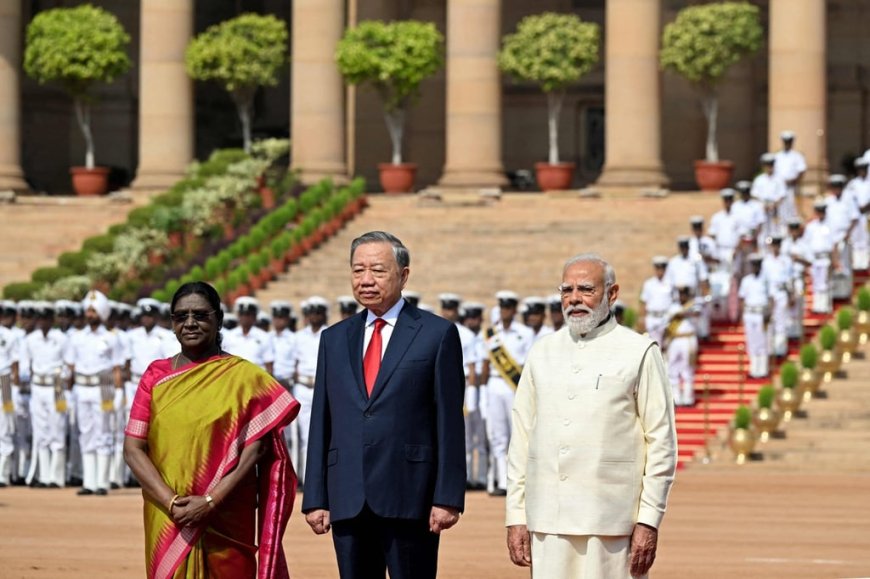
A VISIT by Vietnam’s leader to India is set to enhance New Delhi’s growing influence with Hanoi while allowing the Southeast Asian country to hedge against China in the event of any escalation in maritime disputes.
Vietnamese President To Lam’s trip underscores concerns from both countries of being “overly dependent” on any superpower, according to political analysts.
Lam arrived in Delhi on Tuesday for a three-day visit, marking his first trip to India since assuming office. The visit coincides with the 10th anniversary of the India-Vietnam Comprehensive Strategic Partnership.
At a meeting between Indian Prime Minister Narendra Modi and Lam on Wednesday, Modi told reporters that Delhi was targeting trade between India and Vietnam to rise to US$25 billion by 2030. Both sides also upgraded their relationship to an “enhanced comprehensive strategic partnership”.
India’s Ministry of External Affairs earlier said the high-level engagements would provide “fresh momentum to the robust bilateral relations” and open new avenues for cooperation between the two countries.
On April 7, Modi congratulated Lam on his election as president and expressed his readiness to deepen bilateral ties.
Rajeswari Pillai Rajagopalan, resident senior fellow at the Australian Strategic Policy Institute, said Lam’s visit to India soon after assuming office showed the continuing importance of India in Vietnam’s foreign and security policy.
“With both countries staring at a belligerent China, beefing up each other’s political, strategic and defence wherewithal is an important imperative. A key goal for the visit would be to elevate the partnership to one that delivers on defence capabilities,” she said.
A BrahMos deal between Hanoi and Delhi is likely to be part of the agenda, according to Rajagopalan. Under the deal valued at US$629 million, Vietnam is set to acquire BrahMos supersonic cruise missiles, which are co-produced by India and Russia.
India, which has been boosting its defence sector’s manufacturing capabilities, signed a deal for the Philippines to buy the missiles in 2022, and reached a similar agreement with Indonesia in March.
Huynh Tam Sang, a lecturer at Ho Chi Minh City University of Social Sciences and Humanities, said a BrahMos deal between Hanoi and Delhi – if concluded – would compel China to recognise Vietnam’s strategic autonomy in diplomacy and defence.
This could make Beijing cautious about escalating maritime tensions with Hanoi in the South China Sea, he added.
Vietnam’s maritime row with China stems mainly from Beijing’s land reclamation on disputed reefs, increased maritime surveillance, and harassment of fishing and energy vessels.
Carlyle Thayer, a Southeast Asia specialist and emeritus professor at the University of New South Wales in Canberra, said if the two countries were to sign a BrahMos deal, it would mark the most significant arms purchase by Vietnam since 2021, when Hanoi announced a major military modernisation programme.
In line with India’s maritime doctrine to expand its security beyond the Indian Ocean region, Delhi could extend such cooperation with Hanoi to the South China Sea, Thayer said.
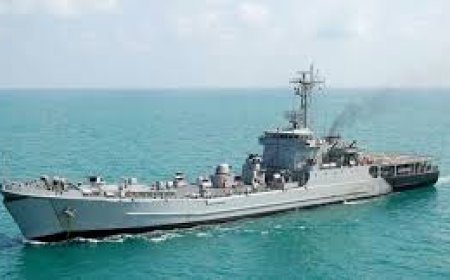
Both sides could also discuss ways for Vietnam to tap a US$300 million line of credit offered by India under a bilateral agreement in which Hanoi would boost its maritime security through vessel acquisitions, according to Thayer.
Huynh said middle powers such as India and Vietnam were “striving to chart their own paths, fearful of being overly dependent on any superpower”. Under Lam’s leadership, “strategic autonomy has become a guiding concept”, Huynh added.
Vietnam’s “bamboo diplomacy” to navigate around the intensifying US-China competition comes as the country seeks to become a developed, high-income industrialised nation by 2045.
Jitendra Nath Misra, a former Indian ambassador currently serving as professor of diplomatic practice at O.P. Jindal Global University, said Lam’s visit was aimed at building strategic ties with India as part of Hanoi’s “hedging” policy.
Nonetheless, Vietnam was also focusing on cooperation with China, Misra said.
“Vietnam will not accommodate India at China’s expense. Strong party-to-party ties to China are essential for the stability and legitimacy of the regime. Consider the South China Sea. Vietnam is careful not to antagonise China. Indian policymakers are aware of the structural limitations of the relationship,” said Misra, a former consul general in Ho Chi Minh City.
Despite a rise in trade between Vietnam and India in recent years, the level was “underwhelming” relative to their trade with other partners, and Lam’s visit to the National Stock Exchange in Mumbai and the Business Forum would likely address this issue, Misra said.
Two-way trade between Vietnam and India tripled to US$16.4 billion between 2016 and last year, according to Hanoi’s official data.
Thayer said both countries would be expected to sign cooperation agreements on critical technologies, critical minerals processing, Indian investment in Vietnam’s IT and pharmaceutical sectors, and manpower training.