




































India–South Korea sign 15 pacts to boost trade, AI cooperation, more: Prez Lee says aim is to ‘double bilateral trade’
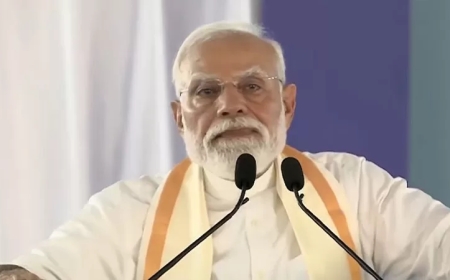
In a joint press conference with PM Narendra Modi, the South Korean President said, ‘We aim to increase the current 25 billion dollar level of annual trade volume to around 50 billion dollars by 2030.’

SOUTH Korean President Lee Jae Myung, who is on a bilateral visit to India, said on Monday, April 20, that the goal is to increase the bilateral trade between the two countries to $50 billion by 2030 as he outlined an ambitious roadmap to significantly deepen economic ties with India.
India and South Korea have signed 15 documents aimed at boosting trade, investment and cooperation in areas including shipbuilding and AI, and establishing a ministerial-level industrial cooperation committee dedicated to economic cooperation.
In a joint press conference with PM Narendra Modi, the South Korean President said, “We aim to increase the current 25 billion dollar level of annual trade volume to around 50 billion dollars by 2030.”
Emphasising the steady rise in the bilateral ties between the two countries, Lee Jae Myung said that the countries are now ushering in a new decade of the special strategic partnership. PM Modi and Lee Jae Myung also held a summit to hold “in-depth discussions” on advancing cooperation across sectors and exchanged views on regional and global issues.
President Lee described India as " a leader in the Global South" and praised its rapid development under the “Viksit Bharat 2047 vision.”
On his reception, Lee Jae Myung expressed gratitude and said, “I would like to express my deepest gratitude for your invitation and warm hospitality extended to me and my delegation.”
"India is the world's largest democracy and achieving the most dynamic growth," he said, adding that he was “very pleased to pay a state visit...for the first time in eight years.”
Lee said, “We will establish an Industrial Cooperation Committee, the first ministerial platform for economic cooperation between our two countries.” The South Korean president also said that the ICC body will focus on ensuring the ties in trade, investment and key sectors remain strengthened.
Highlighting priority areas, Lee noted to strengthen cooperation "in strategic areas such as critical minerals, nuclear energy, and clean energy." These sectors are seen as crucial for long-term economic security and sustainable growth.
Amid global uncertainties, particularly in West Asia, energy security also featured prominently in the talks. "Considering the current situations in the Middle East, we will sustain cooperation for the supply stability of energy resources and key commodities such as naphtha," he said.
“We agreed to speed up the negotiations to upgrade our CEPA to create more favourable trade and investment conditions,” he said.
He said support for small businesses is another key focus area. "We will also revise the MOU on cooperation in the field of SMEs," Lee said, adding, “Through these efforts, we aim to increase the current 25 billion dollar level of annual trade volume to around 50 billion dollars by 2030.”